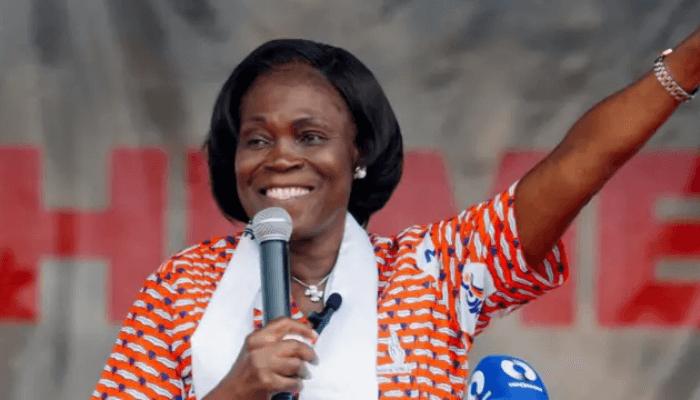
Simone Ehivet Gbagbo is wagering that Ivory Coast is ready to forgive and perhaps to be led by her. More than a decade after being dragged from a bunker beside her husband, former president Laurent Gbagbo, the 76-year-old ex–first lady is making an audacious run for the presidency, hoping to transform her reputation from hardliner to healer.
Her return marks one of the most extraordinary comebacks in African politics. Once known as the “iron lady” for her unflinching stance during her husband’s rule, Gbagbo is now campaigning on reconciliation, social justice, and “true independence”, a bid for national renewal built on her own redemption story.
Read also: Ivory Coast: Simone Gbagbo trial can proceed without her, judge says
From dissident to first lady
Before she became one of the continent’s most controversial political figures, Gbagbo was a teacher, trade unionist and activist. Alongside Laurent Gbagbo, she helped lead the movement for multiparty democracy in the 1970s, enduring imprisonment and torture for her activism.

When her husband became president in 2000, Simone stepped into a central role, blurring the lines between political spouse and political operator. Supporters called her tough and decisive, critics accused her of wielding power from the shadows. Her influence spanned two civil wars, and during the conflict between 2002 and 2007, she became both feared and admired.
But the end of her husband’s presidency brought chaos. After he refused to concede defeat in the disputed 2010 election, the country plunged into violence that left more than 3,000 people dead. French and UN forces, backing Alassane Ouattara, stormed the presidential palace in 2011, pulling the Gbagbos from a bunker.
Read also: Judges reject release request by former Ivory Coast president Gbagbo
Trial, prison and a pardon
Gbagbo’s downfall was swift. She was sentenced by an Ivorian court to 20 years in prison for crimes against humanity, while the International Criminal Court also sought her arrest. Though she was never handed over to The Hague, the charges left an indelible mark.
After serving three years, she was pardoned in 2018 by president Ouattara as part of a national amnesty. Her release marked the beginning of a quiet but calculated political reinvention.

In 2022, she launched her own political party, the Movement of Skilled Generations (MGC), rooted in social democratic ideals. Its platform calls for reconciliation, the release of political prisoners, and a new national currency to replace the CFA franc, which she argues keeps Ivory Coast economically dependent on France.
Read also: Côte d’Ivoire votes: Key facts about the October 25 presidential election
A softer tone, a familiar mission
On the campaign trail, she mixes nostalgia with humility, urging Ivorians to heal divisions that have long defined their politics.
“These elections can be won without bloodshed,” she said at a rally in Gagnoa, a central city that remains loyal to her.
“A beautiful Ivory Coast with roads is good, but happy Ivorians are better. The right solution is to vote, not to fight.”
Her message resonates with voters tired of political feuds between the same ageing rivals. Ivory Coast’s incumbent, Ouattara, is seeking a fourth term. Several major contenders, including Laurent Gbagbo and former Credit Suisse CEO Tidjane Thiam, were disqualified from the race, leaving Gbagbo as the most recognisable face of the opposition.
A legacy that still divides
Analysts say her campaign is less about winning now than reasserting herself as a political force. “She is positioning herself for the future,” said Arthur Banga, a political analyst in Abidjan to Reuters. “Even if she loses, Simone Gbagbo will likely emerge as the main leader of the opposition after these elections.”
Read also: The success of Ivory Coast is Africa’s best kept secret
Yet her candidacy also revives the ghosts of Ivory Coast’s violent past. Many still associate her with the 2010–2011 crisis and the alleged role of pro-Gbagbo militias. Gbagbo has consistently denied the accusations, framing her trial and imprisonment as the price of political conviction.
Reconciliation or reinvention?
Ivory Coast today is an economic powerhouse, the world’s largest cocoa producer but inequality remains stark, with nearly 40 percent of Ivorians living below the poverty line. Discontent lingers beneath the surface, particularly among youth who feel excluded from the country’s growth.
“Ivorians are angry and frustrated, and rightly so,” she told the Associated Press. “The wise thing to do is to turn out and vote and defeat the candidate they don’t want.”