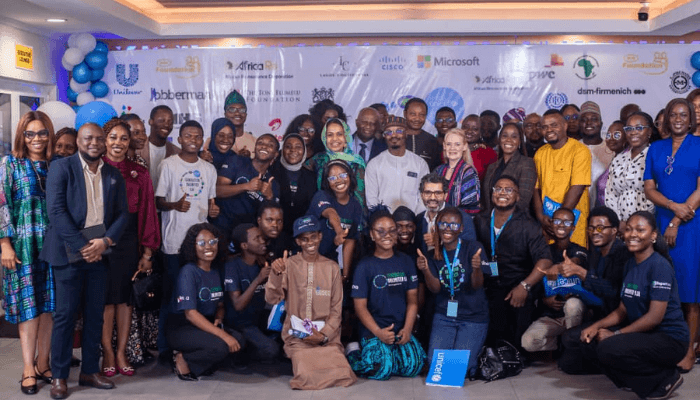
The federal government has integrated the United Nations Children’s Fund, UNICEF’s Generation Unlimited Nigeria (GenU 9JA) platform, into its national strategy under the office of the vice president (OVP), as part of a broader push to create 2.5 million youth jobs and training opportunities in 2026.
The decision, announced during the annual GenU 9JA Steering Committee meeting in Lagos, marks a significant policy milestone for Nigeria’s human capital development agenda.
Co-chaired by the office of the vice president, UNICEF Nigeria, and the Tony Elumelu Foundation, the meeting brought together senior government officials, private sector executives, development partners, and youth representatives to review progress and set future priorities.
Since its inception in 2021, GenU 9JA has impacted more than 11 million young Nigerians across the 36 states and the Federal Capital Territory, connecting them to digital learning, employment pathways, and civic engagement opportunities. With its formal institutionalisation, the initiative is now positioned as a central component of Nigeria’s Renewed Hope Agenda, a framework that emphasises inclusive growth, innovation, and job creation.

According to Rimamskeb Nuhu, special assistant to the president, strategy and policy (workforce development), office of the vice president, “the mission of GenU 9JA aligns with the Government of Nigeria’s Renewed Hope Agenda and the Digital Access and Livelihoods Initiative (DALI), initiatives that aim to open more pathways for youth employment and entrepreneurship.”
UNICEF’s Generation Unlimited initiative is a global multi-stakeholder platform that connects learning to earning for young people aged 10–24. The Nigerian chapter, GenU 9JA, has evolved into one of the most dynamic in Africa, powered by partnerships with corporate giants including Airtel, MTN, IHS Towers, Microsoft, Unilever, Jobberman, CISCO, AfricaRe, and ATC Nigeria.
Through these partnerships, more than 255,000 young people have gained access to mobile data and digital learning resources, while the Youth Agency Marketplace (YOMA) has linked over 400,000 youth to skills development, livelihoods, and entrepreneurship opportunities.
In 2025 alone, the Future-X Campus Ambassadors Program trained around 20,000 young women in digital and technical skills, and more than 85,000 youth received mentorship support. Civic engagement also saw a surge, with 665,000 youth participating in social impact projects and over 300,000 mobilised for environmental action through the Green Rising initiative.

Ms. Wafaa Saeed, UNICEF Nigeria country representative, announced that GenU 9JA has been institutionalised under the Office of the Vice President. “With over 11 million young Nigerians impacted in four years, we are on track to achieve our goal of supporting 20 million young people in their transition from learning to earning by 2030. This step reflects the government’s strong commitment to creating opportunities for young people across the country,” Wafa stated.
The next phase of the initiative will focus on supporting 2.5 million youth in 2026 through new jobs, entrepreneurship, and vocational training opportunities. Plans include expanding the YOMA platform to 2 million users, extending the Green Rising project to Nigerian universities, and offering seed funding to youth-led start-ups across the country.
“The private sector, particularly young entrepreneurs, is the engine of Africa’s transformation. The Tony Elumelu Foundation will continue to provide Africa’s youth with the mentorship, resources, and networks that is required to build sustainable businesses through our partnership with UNICEF’s Generation Unlimited,” added Somachi Chris-Asoluka, CEO of the Tony Elumelu Foundation.
Read also: Become job creators, not seekers, FG urges Nigerian youths
Young people involved in the programme say GenU 9JA has provided not just skills, but a sense of agency.
Shamiyah Umar, a member of the UNICEF Young People’s Action Team (YPAT) and the founder of the We Are Special Foundation, stated, “Being a part of UNICEF GenU 9JA has allowed me to make a meaningful difference in my community and positively impact the lives of people with disabilities. At GenU 9JA, young people are not just participants; we are leaders shaping the future we want, despite our diverse abilities.”
The move to bring GenU 9JA under the Office of the Vice President formalises its role as Nigeria’s flagship youth development framework. It ensures stronger policy alignment, sustainable financing, and coordination with national priorities around digital inclusion, green growth, and entrepreneurship.
As partners reaffirmed their commitments at the Lagos meeting, UNICEF and the Nigerian government emphasised that unlocking the potential of young people will remain central to the nation’s social and economic progress.
By 2030, GenU 9JA aims to empower 20 million Nigerian youth with digital skills, entrepreneurship support, and civic engagement opportunities, cementing its role as a transformative engine for inclusive growth in Africa’s largest economy.