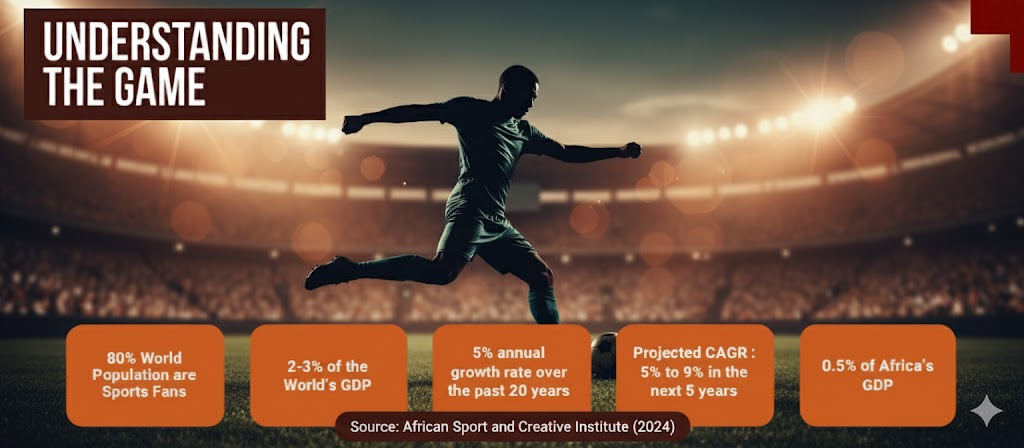
Sports have evolved far beyond weekend recreation, becoming one of Nigeria’s most promising economic sectors. From the roar of packed stadiums to the energy of online fan communities, a new industry is emerging, driven by passion and digital engagement. The African Sports and Creative Institute (ASCI) report estimates that sports and entertainment already contribute over $2 billion to GDP, and with the right strategies, sports alone could triple that figure by 2030.
This momentum shows a wider continental surge. Across Africa, the sports business has expanded by approximately 5% annually over the last twenty years, estimated at over $14 billion, attracting significant investments, including NBA Africa’s $1 billion valuation and Senegal’s $284 million commitment to new sports facilities. Home to a young population of more than 70 per cent under 30 and a deep love for sport, Nigeria is poised to take the lead in this next phase of growth.
Football remains the heartbeat, but basketball, athletics, and e-sports are gaining popularity. A young fan in Lagos streaming a match while buying team merchandise online shows the evolution of fandom, now monetised through media rights, betting, merchandise, and sports technology.

Upcoming global events like the Youth Olympic Games in Dakar 2026 and the FIFA World Cup 2030 highlight Africa’s growing sports profile. Nigeria must capitalise on this moment. With the right policy, infrastructure, and private investment, sport could become the country’s next billion-dollar industry—not just a hobby, but a vital part of its prosperity. The question now is simple yet urgent: Can Nigeria turn its passion for sport into its next billion-dollar industry, or will it miss this great opportunity?
From stadiums to streams
The nation’s passion for sport, especially football, has evolved into a thriving digital economy. No longer confined to stadiums or weekend viewing centers, fandom now lives on screens, apps, and social feeds. More than 25 million Nigerians engage with sports content online every month (Statista 2025), turning fan culture into one of the country’s most dynamic social markets.
Across the continent, a powerful sports wave is transforming economies and culture. Africa has more than 400 million football fans, and the 2023 Africa Cup of Nations attracted nearly two billion viewers worldwide. Expectations are even higher for the 2025 tournament in Morocco. Nigeria plays a central role in this movement as the Nigerian Premier Football League (NPFL) expands its reach through platforms like NPFL Live. Streaming, mobile internet, and social media have opened new possibilities, turning every match into an opportunity to monetise.

Major brands such as MTN, Budweiser, Bet9ja, and Pepsi are betting big on sponsorships, fantasy leagues, and digital experiences that bring fans closer to the game. During AFCON 2024, online chatter around the Super Eagles sparked millions of engagements across TikTok, Instagram, and X, proving that national pride has real commercial influence.
Players like Asisat Oshoala and Victor Osimhen have become powerful voices beyond the pitch, blending sport, influence, and storytelling. Beyond football, basketball, e-sports, and mixed martial arts, other sports are drawing dedicated online communities. Broadcasters such as New World TV and international partners like Visit Saudi are further deepening global attention on African sports.
The modern fan economy is mobile, data-driven, and thriving commercially. As entertainment, technology, and sports continue to blend, every stream, share, and swipe adds value, fueling a new era where passion powers business.
Nigeria’s sports industry is experiencing a significant transformation, evolving from mere entertainment to a substantial economic driver. The expanding sports value chain, which includes media rights, merchandise, sponsorships, and technology, has become one of the country’s most promising new opportunities. Football, through the NPFL and the Nigeria Women’s Football League (NWFL), remains at the center, redefining fan engagement and opening up new commercial avenues.
Broadcast and digital rights are leading the change. The Nigerian Football Federation’s partnerships with private broadcasters are helping to capture local audiences that once tuned in mainly to foreign leagues. Streaming of NPFL matches is creating fresh revenue streams, with projections showing media rights could generate between one and one and a half billion dollars yearly by 2027. Merchandising is gaining ground as fans rally around local club identities, and sales of jerseys and memorabilia could reach $200 to 300 million each year. Corporate sponsorships from telecoms, breweries, and fintech firms are expanding, expected to inject another $500 million into the sector by 2026.
Innovation is reshaping how passion becomes profit. Startups in Lagos and Abuja are building performance analytics tools, ticketing platforms, and fan engagement apps that could add up to $400 million in revenue by 2028. The fan experience now stretches into travel, hospitality, and digital entertainment, multiplying the industry’s total impact.
Challenges remain, including poor infrastructure, weak data systems, and limited private financing. Yet targeted investments similar to Africa’s five-billion-dollar infrastructure drive, backed by clear regulations, could push the sector’s value to four billion dollars by 2027, roughly five per cent of Nigeria’s GDP, and much higher by 2030. The next chapter is about creating a sustainable, profitable ecosystem that channels the nation’s sporting energy into lasting economic prosperity.
The future of the fan economy
Nigeria’s next big growth story may not come from oil or fintech, but from the collective passion that unites its people in sports. As global sports evolve from pastime to enterprise, the country is well placed to tap into its vibrant fan culture, where more than 60 percent of citizens follow football, gaming, or online sports communities.
Investment opportunities are springing up across the value chain, from streaming platforms and e-sports to fan engagement and content creation. Private investors are showing growing interest in this young, digitally active market. Fantasy sports, mobile gaming, and influencer-led marketing are redefining what it means to be a fan, turning spectators into participants in what analysts call the fan economy.
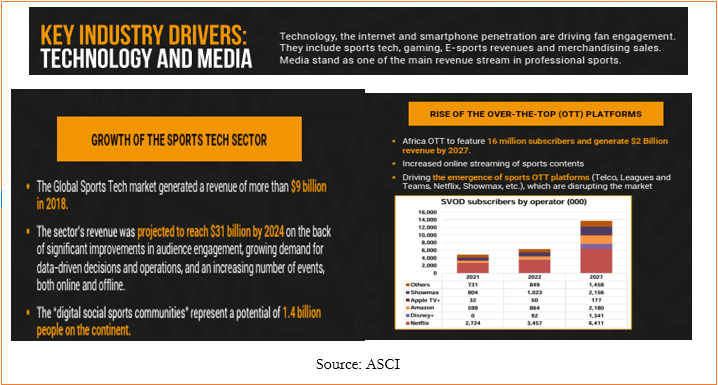
The rise of sports tech, OTT platforms, and influencer-led marketing is reshaping fan engagement. Platforms like TikTok drove 3.6 billion views for AFCON 2023, showcasing how digital-first strategies can amplify reach and revenue. Nigeria’s youthful, mobile-savvy population is fueling demand for fantasy sports, mobile gaming, and content creation, transforming fans into economic participants.
To harness this potential, Nigeria needs stronger sports governance, private capital incentives, and digital broadcasting reforms that promote the monetisation of local content. Transparent licensing, intellectual property protection, and tax-friendly policies would help make the industry more attractive.
As the global economy shifts toward experiences, Nigeria’s sports scene holds a billion-dollar promise. Every cheer, click, and stream represents untapped energy waiting to be converted into real value. Strategic policies and investment could transform the roar of the crowd into a powerful driver of inclusive growth, a reminder that in this digital age, passion itself is a kind of currency lending credence to Michael Long statement that, “Sport will finally realise Africa’s untapped potential”.