|
Getting your Trinity Audio player ready...
|
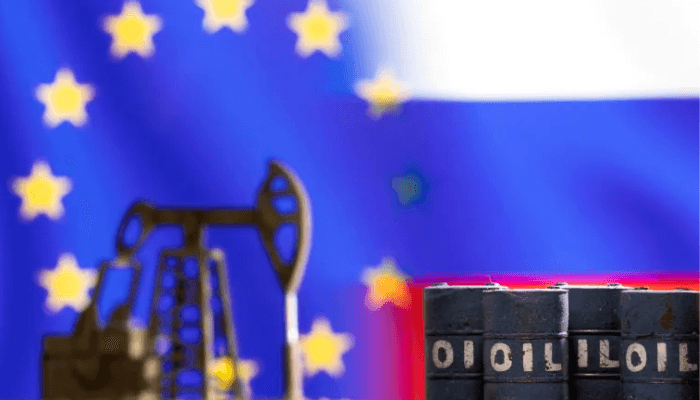
European Union states have agreed to ban Russian oil and gas imports by 2028, taking a decisive step to sever one of the continent’s last major economic links with Moscow. The move, hailed by Brussels as a milestone for Europe’s energy independence, is designed to cut off a key source of revenue that the bloc believes has helped fund Russia’s war in Ukraine.
At a meeting in Luxembourg on Monday, almost all EU energy ministers backed the plan, which will phase out new Russian gas contracts from January 2026 and fully prohibit imports of both pipeline oil and liquefied natural gas (LNG) by the start of 2028. The legislation, a central element of the EU’s REPowerEU roadmap, still needs approval from the European Parliament — a step that is widely expected to pass.
Read also:EU commits to decongesting Lagos traffic with €410m electric waterways transport
“This is an ambitious signal of Europe’s determination to achieve a resilient and independent energy market,” the Council of the European Union said in a statement. “Imports of Russian gas will be prohibited from January 1 2026, with a transition period for existing contracts until January 2028.”

The plan marks the bloc’s most ambitious energy reform since the invasion of Ukraine in 2022, when Europe began weaning itself off Russian fossil fuels amid global price shocks and political pressure from allies, including the United States. Washington has long urged Europe to “stop funding the war against itself”, as Donald Trump United States president put it.
Lars Aagaard Denmark’s energy minister, whose country currently holds the EU’s rotating presidency, said the agreement was “crucial” for European security.
Read also:FG, EU deepen ties on education through €570m Erasmus+ programme
“Although we have worked hard and pushed to get Russian gas and oil out of Europe in recent years, we are not there yet,” Aagaard said. “An energy-independent Europe is a stronger and more secure Europe.”
Under the proposal, member states will be required to submit national diversification plans, outlining how they intend to secure alternative energy supplies and overcome potential disruptions. Countries that can demonstrate they no longer import Russian energy directly or indirectly will be exempt from the requirement.

The regulation also sets up new mechanisms for information-sharing between governments, the EU Agency for the Cooperation of Energy Regulators (ACER) and the European Commission, alongside a review clause that will assess progress two years after implementation. A suspension clause allows temporary lifting of the import ban in case of severe threats to energy security.
Read also:Nigeria woos foreign investors ahead $2.3bn Eurobond issue
Despite strong backing from most member states, Hungary and Slovakia, two countries that remain heavily reliant on Russian energy and maintain warmer ties with Moscow, voted against the proposal.
Their opposition, however, was not enough to block the decision, which only required support from a weighted majority of 15 countries.
The EU has already slashed its dependence on Russian oil to around 3 percent of total imports, down from nearly 30 percent before the war. Russian gas still accounts for about 13 percent of EU gas imports, worth roughly €15 billion annually, according to the European Council.
Analysts say that while the new regulation may not significantly dent Russia’s overall fossil fuel revenues — much of which now comes from exports to China, India and Turkiye — it underscores Europe’s political resolve to decouple from Moscow and invest in a more diversified energy future.
If approved by the European Parliament in the coming weeks, the new rules will formalise a complete phase-out of Russian energy from the EU market within the next three years.