|
Getting your Trinity Audio player ready...
|
Antimicrobial resistance (AMR) may be the most pressing health security threat of our time, yet it remains one of the least understood by the public and least prioritised by policymakers. Unlike pandemics that erupt suddenly and dominate headlines, AMR is a silent pandemic: slow-moving, largely invisible, but far deadlier in the long run. Without decisive policy action, it threatens to reverse decades of medical progress, rendering common infections untreatable and routine procedures unsafe.
At its core, AMR occurs when bacteria, viruses, fungi, and parasites evolve to resist the medicines designed to kill them. This makes once-treatable infections harder and sometimes impossible to cure. It also undermines the foundation of modern medicine, as routine surgeries, cancer chemotherapy, and safe childbirth all depend on effective antibiotics.
According to a 2022 Lancet study, AMR is responsible for approximately 1.27 million deaths globally each year and is associated with nearly 5 million more. Sub-Saharan Africa bears the heaviest burden, and Nigeria, like other African countries, bears a disproportionate burden. Estimates suggest drug-resistant infections claim over 200,000 Nigerian lives annually. If left unchecked, AMR could cost the global economy $100 trillion by 2050, with low- and middle-income countries like Nigeria suffering the most.
Nigeria’s unique challenge

Nigeria’s AMR challenge is rooted in decades of weak regulatory enforcement and the widespread normalisation of informal antibiotic sales, where self-medication and unverified dispensing have become routine public health risks. Yet this challenge is not merely contemporary; it is historical. Since the colonial era, Nigeria has struggled to build a culture of prescription control.
The 1949 Pharmacy Act, the country’s first regulatory effort, focused largely on professional conduct rather than antibiotic governance. This early oversight created a structural vacuum that allowed informal dispensing and self-medication to take root, setting the stage for the AMR crisis we face today.
For many Nigerians, healthcare costs further reinforce this behaviour. With only about 7 percent of the population covered by health insurance, visiting a doctor is often unaffordable. As a result, people turn to community pharmacies or roadside Patent and Proprietary Medicine Vendors (PPMVs), where antibiotics are sold without prescriptions despite regulations. Treatments are started and stopped midway, dosages are improvised, and drug choices are rarely guided by laboratory testing.
Deeply ingrained habits, such as cutting doses short once symptoms ease, seeking advice from friends instead of clinicians, and relying on unlicensed vendors, continue to accelerate resistance across communities.
Adding to the crisis is the circulation of substandard and falsified medicines, which deliver sub-therapeutic doses that train microbes to resist future treatment. Weak market surveillance and insufficient disposal systems have allowed such drugs to persist, eroding public trust and fuelling antimicrobial resistance.

This widespread misuse creates a vicious cycle: the more antibiotics are abused, the less effective they become. Patients then seek stronger or newer antibiotics, driving up costs and accelerating resistance even further. Compounding the problem, the antibiotic pipeline is drying up, meaning fewer new drugs are being developed to replace those that are losing their effectiveness.
The consequences are not only medical but also economic. A Nigeria where antibiotics routinely fail would face plummeting productivity, rising maternal and child mortality, worsening surgical outcomes, and weakened investor confidence in the health sector. AMR is therefore not just a health issue; it is a development and national security threat.
Read also: $50m investment fuels research for antimicrobial resistance treatments
What has Nigeria’s response to AMR been?
Recognising the scale of the threat, Nigeria, through the Nigeria Centre for Disease Control and Prevention (NCDC), which coordinates the country’s National AMR One Health response, has taken commendable steps to confront AMR in collaboration with key One Health sectors, including the Federal Ministries of Agriculture and Food Security, Livestock Development, and Environment.
The country has developed its second National Action Plan on AMR and is scaling up laboratory-based surveillance nationwide. Public campaigns continue to be used to help raise awareness about the dangers of inappropriate antibiotic use.
But the government cannot succeed alone. Surveillance networks remain underfunded, diagnostic capacity is limited, and enforcement of prescription-only policies for antibiotics is weak. Without strong collaboration with financing authorities, frontline providers, and the private sector, progress will stall.
Tackling AMR requires a One Health approach, recognising that resistance is not confined to hospitals but extends into agriculture, food production, and the wider environment.
The role of NHIA: Breaking the self-medication cycle
In the fight against AMR, health insurance goes beyond financing and becomes a powerful vehicle for influencing behaviour towards antimicrobial use. This is where the National Health Insurance Authority (NHIA) must take on a truly transformative role in line with its mandate to expand health insurance coverage, reduce out-of-pocket spending, and guarantee financial protection. When patients are insured, they are far more likely to seek care at accredited facilities, undergo proper diagnostics, and receive prescriptions from qualified professionals. Insurance packages can also be designed to explicitly include diagnostics and antibiotic stewardship programmes, ensuring antibiotics are used in accordance with a doctor’s prescription and guidance.
Another overlooked piece of the puzzle is integrating community pharmacies and PPMVs into NHIA’s service network, given their role as the first point of care for many Nigerians. Rather than being left unchecked, enrolling them as accredited providers could turn today’s drivers of misuse into tomorrow’s partners in antimicrobial stewardship, ultimately enforcing dispensing standards while expanding access to quality healthcare.
Simple but enforceable measures, such as ensuring antibiotics are sold only in complete treatment packs and tying reimbursement or supply to diagnostic testing, can help reshape antibiotic use at the community level.
Leveraging the private sector: The role of HFN
With over 60 percent of healthcare in Nigeria delivered through private providers, their role in scaling access to quality healthcare is increasingly gaining recognition, just as it is indispensable in the AMR fight. As the umbrella body for private healthcare stakeholders, the Healthcare Federation of Nigeria (HFN) is uniquely positioned to coordinate and amplify private sector contributions in several critical ways:
Expanding coverage through insurance partnerships: Working with NHIA, HFN member hospitals, clinics, pharmacies, PPMVs, and HMOs can expand coverage through micro-insurance, tech-enabled enrollment, and fintech integrations, reaching underserved populations and reducing self-medication.
Pulling the private sector into National AMR Surveillance and Implementing Stewardship and IPC Programmes: Private hospitals, clinics, pharmacies, and PPMVs can participate in the national AMR surveillance, antibiotic stewardship, and Infection Prevention and Control (IPC) programs aligned with NCDC guidelines. Also, by adopting digital prescribing and dispensing platforms, private providers can both reduce misuse and contribute real-time data to national surveillance systems.
Scaling Diagnostics: Nigeria’s private diagnostic labs can expand rapid testing and culture-based services, allowing clinicians to prescribe based on evidence rather than guesswork. Pharmacies and PPMVs can also be linked with point-of-care diagnostic tools to guide treatment at the community level.
Driving Awareness Campaigns: Private providers interact with millions of patients every day, giving them a powerful platform to influence behaviour. Hospitals, pharmacies, PPMVs, and corporate CSR initiatives can reinforce NCDC’s public campaigns by turning every drug purchase or consultation into a teachable moment about proper antibiotic use. This consistent, community-level messaging can significantly reduce misuse.
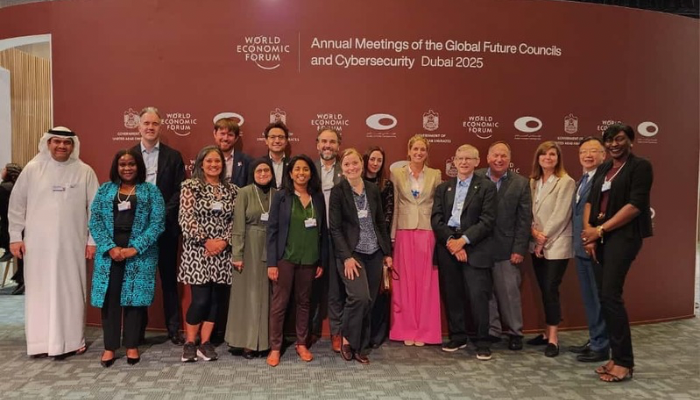
Global Engagement: HFN’s leadership continues to elevate Nigeria’s presence on the global stage. Its president, Njide Ndili, serves on the World Economic Forum’s Global Futures Council on AMR, contributing to global policy dialogues that align closely with Nigeria’s domestic priorities. Nigeria was also represented on the council by Dr Tochi Okwor, who leads the AMR and IPC Programme at the NCDC. At the recent meeting of Council Members in Dubai, October 14-16, 2025, one of the discussion points was local resource mobilisation to fund National Action Plans on AMR and the role the private sector could play to bridge the funding gaps. Lessons from Nigeria’s Covid-19 response were highlighted, where the private sector mobilised substantial resources to support government action. The council members also agreed on a roadmap structure and tangible milestones to be presented at the 2026 Ministerial Summit on AMR to be held in Abuja, Nigeria.
The urgency of now
Without urgent action, antimicrobial resistance (AMR) could undo decades of progress in health and development. Common infections may once again become deadly, surgeries riskier, and cancer treatments unsafe. Yet Nigeria still has a window of opportunity to lead Africa’s response.
Tackling AMR will also demand sustained investment. Global projections suggest an annual commitment of about $63 billion is needed to combat AMR worldwide; Nigeria’s proportional share could be roughly ₦35 billion per year. This would cover expanded surveillance, stewardship training, regulatory enforcement, and public awareness campaigns, a modest cost compared to the human and economic toll of inaction.
By strengthening collaboration among the NCDC, NHIA, HFN, and frontline providers such as community pharmacies and PPMVs, Nigeria can build a coordinated model that integrates surveillance, financing, and responsible drug use. The NCDC should lead surveillance and stewardship efforts; the NHIA can work to expand insurance coverage to reduce self-medication; HFN and the private sector can drive awareness, innovation, and accountability; while pharmacies and PPMVs serve as trusted frontline stewards of appropriate antibiotic use.
As Nigeria looks ahead to the 2026 Ministerial Summit on AMR, the message is clear: AMR is not just a health threat but a test of national resolve. The cost of inaction will be counted in lives lost and credibility diminished. Nigeria must act now, decisively, collaboratively, and boldly.