|
Getting your Trinity Audio player ready...
|
Stakeholders in the health sector and media professionals have stressed the urgent need for the state governments to prioritise funding for Family Planning (FP), Maternal Newborn and Child Health (MNCH) programmes so as to reduce maternal and child mortality in the country.
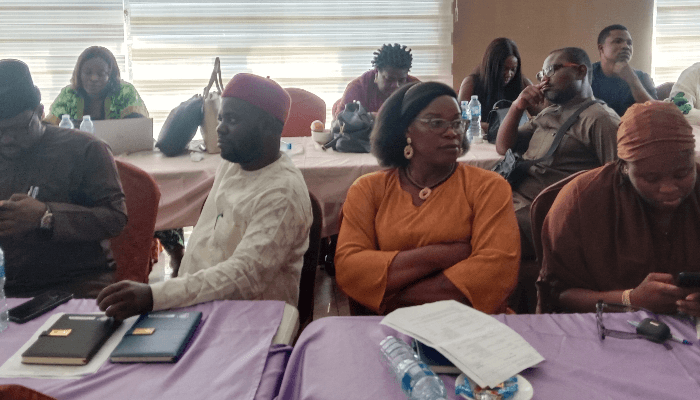
The stakeholders and the media experts who spoke at a two–day training workshop organised for journalists in Abuja by the Pathfinder International under its Smart Advocacy for Strategic Action (SASA) Project, opined that proper funding of FP and MNCH projects would also lead to improved health outcomes and significant cost savings from preventing unintended pregnancies and child births.
Speaking at the training which held in partnerships with Population and Development Africa Regional Office (PPDARO) and Johns Hopkins Programme for International Education in Gynecology and Obstetrics (Jhpiego) of Kenya, Chairman of the management committee of the Association for the Advancement of Family Planning, Ejike Oji appealed to governments at all levels to take the issue of family planning commodities serious lamenting that at the beginning of this year, out of a total of $ 4 million approved by government, only N60 million was released.
While commending the Minister of Health for gradually changing the narratives which led to the ministry approving $60 million for procurement of family planning commodities through the National Primary Health Agency, Ejike said:”We must commend the present Minister of Health for taking the bold initiative to approve such an amount which is the first time in Nigeria such a huge amount is allocated to family planning commodities.

“Apart from this, the Presidential Initiative For Value Chain also allocated N5.77 billion for the purchase of FP commodities while in the third trench, the President approved $200milion which was basically to take care of the counterpart funding of USAID for HIV, malaria and tuberculosis programme which was one of the things trending. It would have been very catastrophic for the nation medically because the absence of these drugs means that anti-retroviral will become prevalent and more people will be infected.
Oji who is a medical practitioner, the Civil Society representative of FP 2030 Commitment as well as the convener of the 5 million women data base was also emphatic that buying these commodities through USAID would not only be more beneficial and cost effective for the country but, would lead to accountability in the whole process.
“USAID uses what is known as economy of scale of purchase for about 53 countries of the world which enables them to buy commodities at a reduced price for countries and there is need for Nigeria to channel the monies through the organisation to enable it benefit from the economic subsidy.
“The way USAID operates is that if you purchase commodities worth $357,000, you’ll get a marching grant of $2million. So, if the Federal Government contributes $100,000 and all the states were able to contribute the balance of $357,000, the country will still unlock the $2 million grant.
“Through this process, the country will also unlock more financial expenses like quantification exercises because if you don’t have proper quantification, you won’t know how much commodity to buy”, he stressed.

He posited that in view of the huge amount of money the government approved, people should be concerned about the accountability process since nobody is sure whether these commodities would be purchased through USAID or by individuals.
On his part, Senior Media and Communication Officer at Pathfinder International Nigeria, Bayo Ewuola, said that the two-day training was designed to deepen journalists’ and influencers’ understanding of FP/MNCH priorities in Nigeria.
Emphasising, the power of storytelling in advancing maternal health and family planning issues in the country, Ewuola said : “The training was designed to go beyond abstract discussions and focus on life-saving narratives that resonate with communities’’.
According to him, media practitioners have a unique responsibility to highlight the lived experiences of women and families while ensuring accuracy, ethics, and depth in their reporting.
“These are not abstract concepts, they are about saving the lives of our mothers, sisters, daughters, and aunties, people who matter to us.”
He stressed that the training was aimed at equipping participants with techniques in investigative, data-driven, and solution-based journalism that would bring attention to real challenges, policies, and community perspectives.
“By framing issues differently and focusing on solutions, he noted, the media can contribute to saving lives and influencing policy.”
Also, president of the Nigeria Union of Journalists (NUJ), Alhassan Yahaya, described the initiative as timely and critical, given Nigeria’s troubling maternal mortality figures.
Citing the National Demographic and Health Survey, he reminded participants that communities practicing child spacing could reduce maternal deaths by up to 40 percent.
He therefor urged journalists to take ownership of maternal health and family planning reporting as a service to humanity and as a way of advocating for a healthier Nigeria.
On the other hand, Yahaya lauded Pathfinder International for its commitment to building the capacity of journalists, adding that health reporting should move beyond mere coverage to active advocacy.
He highlighted the importance of integrating family planning with maternal and child health services and called on journalists to champion critical funding mechanisms such as the Basic Healthcare Provision Fund and state-level counterpart contributions.
Drawing from his own state’s example, he pointed out Gombe’s pioneering release of counterpart funds to the UN Population Fund for reproductive health commodities.
He further encouraged journalists to review budget performance regularly, acknowledging modest government efforts while pushing for greater allocations to the health sector.
Despite the challenges of poor remuneration in the media, Yahaya reminded participants that they could still influence change by engaging directly with health commissioners, primary healthcare executives, and policymakers.
The NUJ president therefore called for active participation in government budget cycles to ensure maternal health receives the attention it deserves, insisting that journalists have both the platform and responsibility to change the narrative on maternal mortality in Nigeria.
Also speaking, Lead on strengthening health systems at the Budget Foundation’’,Biobelle Davidson, presented the Primary Health Care (PHC) portal, a tool designed to gather feedback from citizens on the state of facilities.
Biobelle who is a medical practitioner explained that the platform tracks service delivery, facility readiness, and community perspectives, providing opportunities for accountability and improvement.
Given a brief history of the portal, she said: “The PHC portal, which began with 75 facilities across 15 states, has now expanded to cover over 1,000 facilities nationwide. However, this remains a fraction of Nigeria’s 30,000 PHCs.”
She added that efforts are ongoing to scale up coverage, while also addressing challenges of internet access and digital literacy by deploying community champions to support residents in providing feedback.
“The platform has encouraged greater use of PHC services among young people and is gradually changing perceptions among older citizens who previously associated PHCs only with antenatal care, child services, or malaria treatment.
While stating that improving health systems does not only saves lives, she added: “but it, also strengthens Nigeria’s economy by supporting healthier, more productive communities and agreed that while government policies exist, stronger partnerships, wider community involvement, and greater visibility through the media are key to driving real progress in maternal, child, and family health across the country.’’