|
Getting your Trinity Audio player ready...
|
…as StudyIn Nigeria hosts Global Education Conference 2025
Behind every job interview lies a strategic process where employers assess far more than just qualifications. From cultural fit to problem-solving skills, hiring decisions are shaped by a range of subtle and specific criteria.
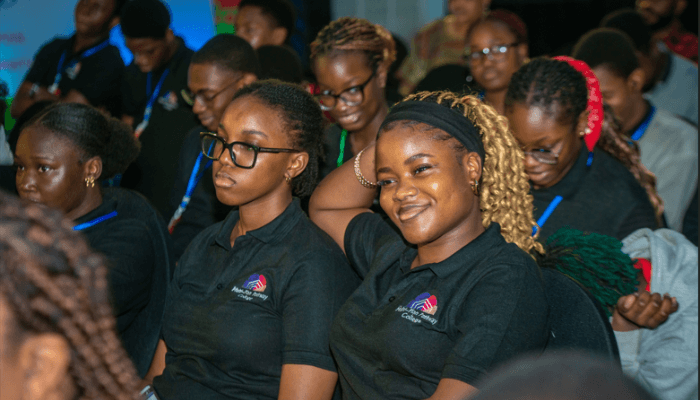
Experts at the 2025 StudyIn Nigeria Global Education Conference took exclusive look inside hiring rooms, recruitment and reveal what truly influences hiring managers, and what job seekers need to know to stand out in today’s competitive job market.
Zahra Parker, an infectious disease public health scientist, emphasised that in an ideal hiring room, employers would prefer experience to mere academic excellence.

“The key skills that employers are looking for beyond your certificate is your past experience, no matter how small the experience.
“Employers want to know if you have taken an initiative to do something, have you gone into a volunteering internship or shadowed your capacity in doing something,” she said.
Parker urged young job seekers to take out time to do something even while still in school because such will count for them during their hiring days.
She emphasised that employers are looking for people who have taken the practical steps to solidify their interest in the position they applied for.
Besides, experience, she said that attitude matters in hiring a person, “You have to have the right attitude. Are you confident in your position, and being a team player is an added afvantage.

“Because when you come into the workforce, you realise that no man is an island, so, you have to be a team player. You have to know how to navigate and collaborate even with people who are very different from you,” she said.
Buttressing on the right attitude for an interview, she explained that it is a mix of things.
“For me, it’s how confident you approach the interview. It’s about how calm you feel in the knowledge that you are coming with. So, have you looked up the company that you’re coming to interview for? Have you looked up the opportunity and what the requirements are that you would be expected to have?
“How do you present yourself knowing that there may be gaps in what is expected versus the skills you have, so, it’s your ability to display a certain calm in how much you know and how you present yourself moving forward,” she noted.
Besides, she emphasised that an intending employee should not come to an interview dressed in a sweatshirt. “You have to come professionally dressed and you have to be professional in your demeanour. That doesn’t mean you lose yourself,” she emphasised.
Parker reiterated that academic is the most important metrics of getting jobs, however, she explained that one must develop some skills to augment, because according to her, job placement is holistic, encompassing academic, experiences, and confidence, among others.
For Nigeria to bridge the gap between education and employability, she said that experience is sacrosanct.
“You can go to school and have all the technical know-how, but you need to have practical experience that makes you attractive to an employer.
“So, I would say that a huge factor in bridging the gap is gaining the hands-on and practical knowledge,” she emphasised.
Remi Odunayo, a former Exxon Mobil human resources chieftain, emphasised that in the oil and gas sector, technical skills such as wielding, fabrications and electrical and electronics, among others are crucial to hiring.
Besides, he said diving skills are also needed for aquatic jobs, however, he explained that students can acquire such skills while still in schools.
However, Odunayo maintains that attitude is essential in hiring rooms, because employers seek to see individuals readiness to learn, that is being teachable, comportment and ability to think critically, among others.
Dolly Kola-Balogun, founder of Retro Africa, encouraged students to consider alternative pathways besides academics to their career success such as acquiring entrepreneurial skills.
However, she emphasised that doing business in Nigeria is challenging, but insists that it is doable.
She emphasised that skills in essay writing, imaginative skills and inter-personal skills, among others are needful in arts business.