|
Getting your Trinity Audio player ready...
|
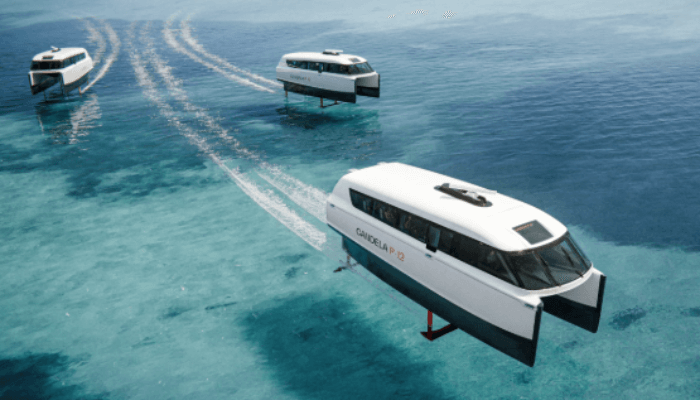
In a major boost to sustainable urban mobility, the European Union has pledged €450 million to support the development of electric waterways transport in Lagos, Nigeria’s commercial capital.
Gautier Mignot, European Union Ambassador to Nigeria/ECOWAS, disclosed this during the 18th annual research conference of the University of Lagos (UNILAG), Akoka, on Wednesday, when he explained that the investment aims to revolutionise water-based transportation in the city, reduce carbon emissions, and ease congestion on overcrowded roads, marking a significant step toward cleaner, greener, and more efficient public transit in West Africa’s largest metropolis.
“We will launch on Friday a very important project under our Global Creativity Strategy, which might help us perhaps in the future not to come late to this sort of event.
“It is about funding the electric waterways transport system in Lagos. So that we can go more quickly from one point to the other through the water, and not be stuck in traffic jams.

“It’s a 410 million euros investment with France and the European Union in a few years to have this network in place. It’s called the ‘Omi Eko’ project,” he said.
The EU-backed €410 million electric waterways transport project is expected to decongest Lagos traffic by shifting commuters from congested roads to the city’s waterways.
To achieve this, the European Union and its partners aim to build new infrastructure like terminals and dredging routes, introduce high-capacity electric ferries on new routes, and integrate the new water transport system with existing road and rail networks.
According to the EU ambassador, the goal is to provide a reliable, efficient, and sustainable alternative to road travel, reducing gridlock and improving urban mobility.
Meanwhile, Mignot emphasised that the union is committed to science-based decisions and all kinds of human sciences; hence, it has allocated €100 billion to support research through the Horizon Europe programme for science and research over the next seven years.

“We know that research is most efficient when it’s universal, when it’s international. It’s not efficient when it has to bend to borders, when national science is a narrow-minded concept.
“Our big package of support to research, the Horizon Europe programme, almost €100 billion between 2021 and 2027, is a very international-minded programme,” he said.
The EU ambassador further explained that the Horizon Europe programme funds research teams and research projects from all over the world, and emphasised that many Nigerian teams are also benefiting from it.
He explained that for the EU, its key objective is a human-centric digital transformation, and that this applies also to artificial intelligence.
“We need to make sure that these tools are put at the service of humanity as a whole, and at the service of a few human beings, if you see what I mean.
“We have to push many international actors, many countries in the same direction, and for us, the partnership with Nigeria is also key as a very big actor in the digital economy for the future,” he said.
He revealed that the EU also has a global cooperation strategy to help its partners undertake the same triple transition that they are attempting in Europe: the green, digital, and inclusive transition.
This strategy, he said, is called the Global Gateway Investment Strategy.