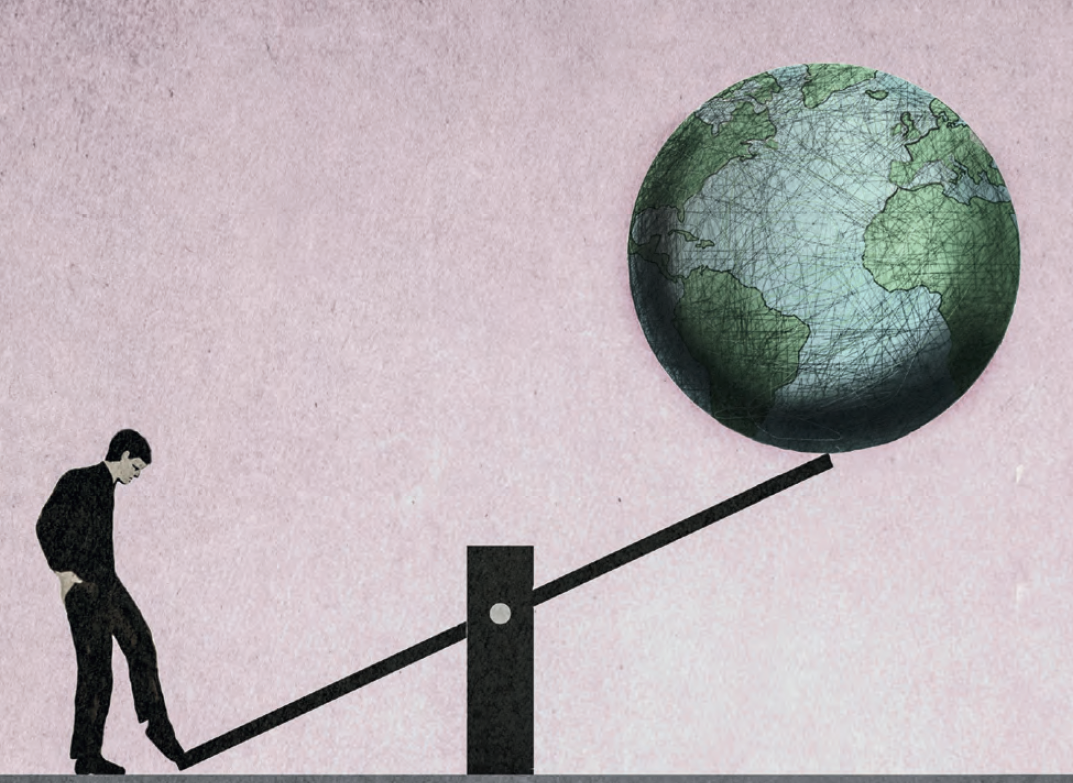
The world feels increasingly uncertain. Across continents, conversations about the future are clouded by fear, scepticism, and fatigue. Public narratives are shaped less by truth than by the constant recycling of crisis. It is as though humanity has become addicted to despair, sustaining conflict, amplifying outrage, and selling suffering as if it were a global commodity.
We can use the media as an example. News has become a theatre of propaganda; interviews are more performance than inquiry. Presenters interrupt guests to push pre-set narratives, while bias hides behind the mask of ‘fact-checking.’ Editorials that once shaped public understanding now function as tools of indoctrination. Deception has become sophisticated, often wrapped in erudition.
Globally, politics too has degenerated into tribal warfare among elites. The argument of force has replaced the force of argument. Elections no longer settle disputes but ignite prolonged contests for legitimacy. What should be the rhythm of democracy has turned into an echo of distrust — in institutions, in leaders, and among citizens themselves.
Even international development is not spared. Aid, once framed as solidarity, has morphed into a subtle instrument of control. Some donor agencies and multilateral organisations now deploy funds with ideological strings attached, undermining local institutions under the guise of reform. We claim to innovate for peace, yet much of our innovation seems to perfect the machinery of chaos.
The consequences are everywhere. In many Western democracies, lawfare has replaced lawful debate, with courts increasingly deployed as political weapons rather than instruments of justice. Judgments are shaped less by law than by ideology. Universities, once bastions of inquiry, now risk becoming echo chambers where facts are bent to fit prevailing agendas. If ever the world needed fresh eyes, deeper humanity, and bolder thinking, that time is now.
This erosion of trust and purpose abroad mirrors Nigeria’s own crises in haunting ways. Here, optimism has become the privilege of those in power or near it. The average citizen vacillates between endurance and cynicism, watching elites lament national decay while benefitting from it. Patriots in government turn critics once out of power; radicals become defenders of the establishment once appointed.
Criticism has become performance. Suffering has turned into political currency. Those who should speak for the poor are often insulated by privilege, while the truly poor – the traders, the artisans, the daily-wage labourers are too burdened to be heard. Nigeria’s contradictions are visible everywhere: new estates and hotels rise beside deepening poverty; luxury cars glide past potholes. It is as if the nation lives two parallel lives, one of appearance, one of struggle.
These contradictions reveal a deeper ailment, often appearing as a moral and mental crisis. Nigeria’s challenge is not just economic mismanagement or political failure; it is the collapse of compassion and coherence. Governance without moral vision becomes hypocrisy; opposition without integrity becomes sabotage.
What Nigeria needs now is a new humanity, one that begins with truth-telling and moral courage. Citizens and leaders alike must admit the nation’s contradictions and confront corruption without excuses. Politics must return to its original meaning: service, not survival. Leadership must be measured not by rhetoric but by empathy, accountability, and results.
A new humanity also calls for new citizenship. Nigerians must refuse to be rented crowds or echo chambers for the powerful. Civil society must reclaim its purpose — to amplify truth, not propaganda. Communities must rediscover solidarity, the forgotten glue of our nationhood. In this sense, rebuilding Nigeria begins not in policy papers but in collective conscience.
Nigeria must also redefine optimism. True optimism is not denial; it is disciplined hope and the resolve to act despite the odds. It is building schools that function, hospitals that heal, and institutions that outlive personalities. It is insisting on systems that reward merit, not mediocrity. The change Nigeria seeks cannot be outsourced to the government alone; leaders are drawn from the society that births them. When citizens rise in integrity, leadership inevitably follows.
The world today stands at a critical intersection divided by ideology, wounded by inequality, and hollowed by the erosion of truth. Nigeria cannot afford to replicate these dysfunctions but must instead offer a different model: a society grounded in sincerity rather than spectacle, in authenticity rather than artifice.
To lead with a new humanity is not to deny hardship but to confront it with courage. It is to model compassion in policy, sincerity in leadership, and fraternity in citizenship. Nigeria’s diversity, too often weaponised, should be reimagined as a source of collective genius.
Nigeria must at this juncture move from critique to creation, from cynicism to purpose. If the world is indeed on the brink, Nigeria must not stand idle at the edge. It must chart a new path, one defined by truth, courage, and moral imagination. If we can start here, perhaps the world will learn again, through us, that another future is still possible. Only through truth, courage, and shared humanity can Nigeria rise, restoring faith, rebuilding trust, and redefining tomorrow.