…Says nearly half of the population now in poverty
…Debt-to-GDP seen dropping to 39.8%
Nigeria’s cost of revenue collection has more than doubled in one year, constraining government spending on critical infrastructure needed to power development and engender growth, according to the World Bank.
Combined Federal Account Allocation Committee (FAAC) deductions to revenue agencies more than doubled from N871 billion in 2023 to N1.78 trillion in 2024, forcing the World Bank to urge authorities to “improve the use of public resources for development,” the Washington-based lender said in its bi-annual development update on Nigeria released on Wednesday.

Nigeria has seven revenue agencies such as the Federal Inland Revenue Service (FIRS), the Nigeria Customs Service (NCS), among others, with each getting a share from the funds generated. That compares to a single agency in Kenya, Ghana and South Africa.
But the new tax reforms, whose implementation begins in January 2026, is expected to phase out the multiple agencies into a single revenue authority now known as the Nigeria Revenue Service.
The World Bank however urged authorities to reduce the cost of collection of revenue agencies and increase fiscal transparency to bring reform gains home to millions of Nigerians whose purchasing power has been eroded by the strings of reforms undergone in the last two years.
Nearly half of Nigerians live in poverty
The World Bank, in its report, said poverty levels are projected to hit 61 percent in 2025 as 139 million people have slipped below $3 per person per day compared to 129 million people last year.

The lender said weak growth and high inflation eroded the purchasing power of Nigerians more sharply since 2019, largely reflecting pre-2023 policy missteps and external shocks.
Read also: 139m Nigerians still living in poverty despite reforms – World bank
“Between 2019 and 2023, average consumption fell by 6.7 percent, especially in urban areas, while poverty rose from 40 percent (81 million people) to a projected 61 percent (139 million people) by 2025, with three-quarters of the increase occurring before 2023,” the lender said.
“Recent reforms are correcting past policy missteps, but meaningful improvements in livelihoods will hinge on sustained disinflation, stronger inclusive growth, better public services, and continuous targeted support to the most vulnerable.”
Mathew Verghis, country director, World Bank Nigeria, noted that poverty, which started to rise in 2019 due to policy missteps and external shocks including COVID, has continued to increase even after the reforms.
According to Verghis, Nigeria’s economic growth has picked up, with revenues rising, debt indicators improving, foreign exchange market stabilising, reserves rising and inflation beginning to ease.
“So, these results are exactly what you need to see in a stabilisation. These are big achievements. However, despite these stabilisation gains, many Nigerians are still struggling. Most households are struggling with eroded purchasing power.
“In 2025, we estimate that 139 million Nigerians live in poverty. So, the challenge is clear, how to translate the gains from the stabilisation reforms into better living standards for all,” he said.
Verghis emphasised that Nigeria must reduce inflation, particularly food inflation, ensure effective use of public funds and expand safety nets to address the high rate of poverty in the country and ensure that citizens enjoy the gains of reforms.
“Food inflation affects everybody but particularly the poor and has the potential to undermine political support for the reforms. Use public resources more effectively, ensuring that spending drives real development results that benefit the people. Three, expand the safety net so that the poorest and vulnerable get support,” he added.
Presenting the overview of the report, entitled: ‘From Policy to people: bringing the reform gains home,’ Samer Matta, World Bank lead economist for Nigeria, noted that gross revenues collected as federation allocations have increased greatly in the past eight months of 2025.
He however decried the huge sum being paid as deductions to revenue collecting agencies, stating that it does not impact development in the country.
For Matta, the outlook is cautiously optimistic, supported by steady growth, easing inflation, fiscal stability, and a strong external position amid ongoing risks.
According to the World Bank report, GDP growth is projected to rise modestly from to 4.4 percent in 2027, driven by strong services, a rebound in agriculture, and improved industrial activity amid a more stable environment.
The Bank expects inflation to ease to 15.8 percent in 2027, supported by tight monetary policy and easing supply pressures, also the fiscal deficit is expected to average 2.7 percent of GDP in 2026-27, supported by rising revenues from tax reforms and lower interest payments, keeping debt stable in the low 40 percent of GDP.
The report showed higher spending by both federal and subnational governments. Subnational governments recorded increase in their capital expenditure (capex), which accounts for almost 60-65 percent of their spending.
It also rose from almost one percent of GDP in 2022 to 2.7 percent of GDP projected in 2025.
However, in the period under review, wages and salaries account for around 70 percent o
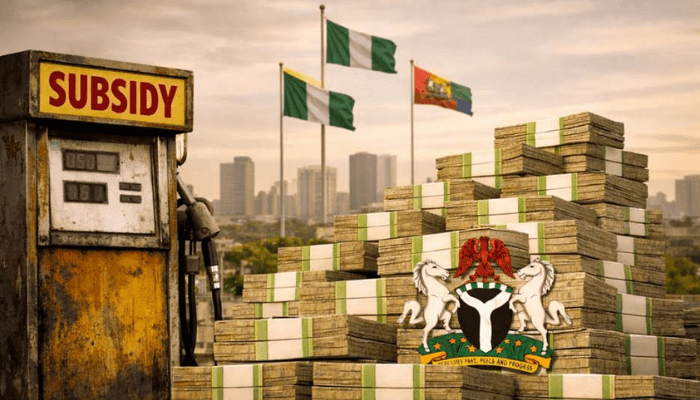
Nigeria has embarked on a series of reforms since President Bola Tinubu took the helm of affairs in May 2023, including scrapping decades of fuel subsidies that drained government finances and relaxing the exchange rates to be more market determined.
Those radical policies, though have restored long-lost investor confidence in Africa’s most populous nation, stoked inflation to a near three-decade high and saw the naira tumble by more than 70 percent.
But the storm might just be over as key economic indicators are showing signs of recovery and stability, a turnaround that’s expected to slow poverty levels in the medium to long term.
The bank noted that Nigeria’s share of debt as a percentage of its gross domestic product (GDP) would decline in 2025 to 39.8 percent from 49.2 percent, marking the first time in more than a decade, thanks to stronger growth and a more stable exchange rate.
This is despite the debt service-to-revenue ratio expected to surge 44 percent in 2025 from 38 percent in 2024, reflecting higher domestic interest rates and principal repayments on external debt.
GDP growth is projected to close the year at 4.2 percent after it grew at its quickest pace in the second quarter (Q2) to 4.23 percent, buoyed by improved oil production.
The World Bank wants authorities to bring “reform gains home to Nigerians” by reducing food inflation, improving the use of public resources for development, and strengthening the social safety net to protect the poor and economically insecure.