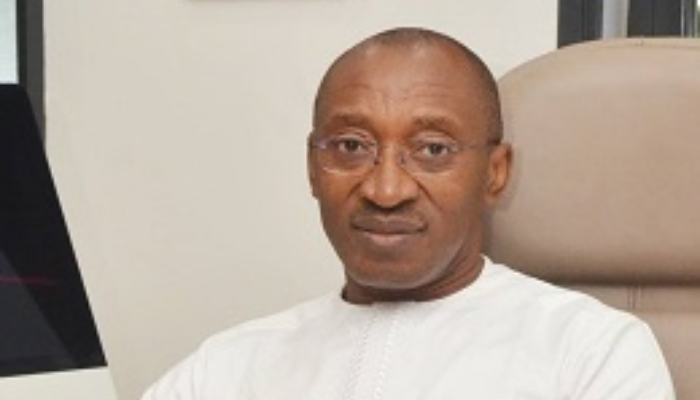
Momoh Oyarakhua, the chairman of the Crude Oil Refiners Association of Nigeria (CORAN), has reaffirmed the association’s commitment to transforming Nigeria into a major exporter of refined petroleum products, positioning the country as a key driver of energy security and economic growth across Africa.
Speaking at the second annual CORAN event in Nigeria’s commercial capital, Lagos , Oyarekhua emphasised that local refining is central to achieving sustainable energy independence for the continent.
Read also: CORAN summit to chart new course for Africa’s oil refining, energy security
“We want to ensure that Nigeria actually becomes an exporter of petroleum products to other parts of the world. We have started the journey already, and despite challenges, our focus remains clear, Nigeria must become an exporter of refined petroleum products,” he declared.

Oyarekhua described energy security as more than just the ability to power homes or drive vehicles, calling it a fundamental right for every African.
“Energy security is about sustainability, versatility, and the right of every African to access energy when and how they need it,” he said.
The CORAN chairman noted the paradox of Africa producing over seven million barrels of crude oil daily while still importing a large share of refined products such as petrol, diesel, and aviation fuel. He lamented that every imported litre represents lost foreign exchange, missed job opportunities, and technological stagnation.
Oyarekhua painted a picture of a self-sufficient continent where crude oil from the Niger Delta, the Gulf of Guinea, and the Rift Valley is refined within Africa. Such an ecosystem, he argued, would create skilled jobs, stabilize fuel prices, and strengthen African economies against global market disruptions.
“Imagine an Africa where our crude is refined at home, creating jobs from engineering to logistics, ensuring stable energy prices, and empowering industries. That is the Africa we can build — and Nigeria must lead the way,” he stated.

He highlighted that Nigeria currently boasts the highest refining capacity in Africa, citing the growth of private modular refineries across the Niger Delta and the emergence of mega facilities such as the Dangote Refinery and other modular plants. These developments, according to him, show that “momentum is building” in the quest for self-reliance.
However, Oyarekhua cautioned that progress remains slow and several challenges persist — notably inadequate financing, inconsistent regulations, poor infrastructure, and unreliable crude oil supply to domestic refineries.
“Without a consistent flow of feedstock, even the best-designed refinery will stand idle. Energy security begins not just at the refinery gate but at the wellhead,” he stressed.
He called for consistent policy support, reliable crude supply, and competitive operating conditions to make Nigeria’s refining sector globally competitive. He also underscored the importance of regional cooperation through the African Continental Free Trade Area (AfCFTA), which could help harmonize standards, encourage investment, and create an integrated African refining market.
Oyarekhua further emphasized that refining more crude oil locally would not only ensure steady fuel supply but also catalyze industrialization, generate jobs, and retain economic value within the continent.
“Every refinery project stimulates growth — from construction to operations and supply chains. It drives demand for skilled labour, boosts research and innovation, and supports local industries like petrochemicals, fertilizers, and plastics,” he explained.
Read also: NNPC targets $60bn investment to boost gas, refining capacity by 2030
Concluding his address, the CORAN chairman urged all stakeholders, government, private investors, and regional partners, to take collective action to realize Africa’s refining potential.
“Let us refine not only our oil but also our policies, skills, and shared future. Energy security is the foundation of every other form of security. By refining at home, we strengthen our economies, create jobs, and protect our sovereignty,” Oyarekhua affirmed.
He commended policymakers, investors, and engineers who have championed refinery development across the country, saying their dedication is lighting the path toward a self-sufficient energy future for Nigeria and Africa.