|
Getting your Trinity Audio player ready...
|
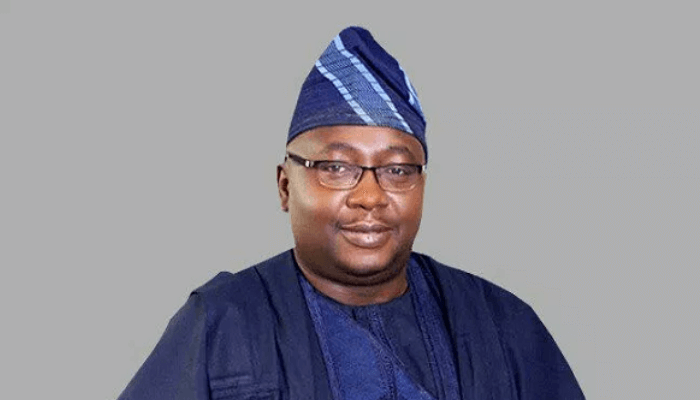
Adebayo Adelabu, minister of power has said that power sector revenue is expected to exceed N2 trillion, up from N1.7 trillion recorded in 2024.
This increase in revenue according to the Minister is driven by the tariff policy reform being implemented by the government.
The tariff policy reform was introduced in April 2024, when the Nigerian Electricity Regulatory Commission (NERC) approved the increase in the tariff payable by band A electricity customers, those who enjoy up to 20 hours of electricity a day, to N225/kWh.
The minister hinted on the expected revenue at the 31st edition of the Nigerian Economic Summit (NES31) in Abuja on Monday.

According to Adelabu, through tariff policy reforms which enabled cost-reflective tariffs for select consumers, electricity supply reliability has improved while reducing energy costs for industries.
He added that the industry revenue as a result of the tariff policy increased by 70 percent to N1.7 trillion in 2024 compared to previous year and the revenue is expected to exceed N2 trillion for 2025.
“This marks the first comprehensive, sector-wide policy framework in nearly two decades, and we deeply appreciate the industry experts and development partners many of whom are here today for their invaluable contributions in achieving this milestone.
“On sector commercialization, the government is deepening power sector commercialization to strengthen revenue, liquidity, and investor confidence.
“Through tariff policy reforms which enabled cost-reflective tariffs for select consumers, supply reliability has improved while reducing energy costs for industries, and industry revenue has increased by 70 percent to N1.7 Trillion in 2024 compared to previous year and the revenue is expected to exceed N2 trillion for 2025,” he said.

He explained that the Ministry has developed the Integrated National Electricity Policy, approved by the Federal Executive Council in February, with its accompanying Strategic Implementation Plan now being finalized to harmonize existing policies and provide a coherent roadmap for sustainable sector growth.
Adelabu speaking further, explained that to stabilize the Nigerian electricity market, President Bola Tinubu has approved a N4 trillion bond to clear verified GenCo and gas supply debts. Alongside this, he said a targeted subsidy framework is being developed to protect vulnerable households and ensure a sustainable path toward full commercialization and viable industry.
He also noted that in the area of infrastructure development, the Federal Government has introduced targeted national programs aimed at accelerating the viability, expansion, and modernization of the national grid.
Adelabu said that parallel to the grid expansion, generation capacity is being expanded through the rehabilitation of existing NIPP plants to unlock about 345MW, alongside the successful integration of the 700MW Zungeru Hydropower Plant into the grid.
“Collectively, these interventions have helped sustain an average generation capacity of approximately 5,300MW in 2024 up from 4,200MW recorded in 2023.
“Additionally, the Federal Government has operationalized the Presidential Metering Initiative (PMI) to close the national metering gap and improve sector viability. Already, N700 billion has been secured from FAAC to deploy 1.1 million meters by end of 2025, and 2 million annually over the next five years under the PMI.
“This complements the 3.2 million meters being procured through the World Bank’s DISREP program, positioning Nigeria to close the metering gap within five years and strengthen transparency and revenue assurance across the value chain,” he added.