…Free, fair elections key
In a confident tone, President Bola Ahmed Tinubu in his Independence Day speech celebrated what he described as the tangible fruits of his sweeping economic reforms.
“Under our leadership, our economy is recovering fast, and the reforms we started over two years ago are delivering tangible results. The second quarter 2025 Gross Domestic Product grew by 4.23%, Nigeria’s fastest pace in four years, and outpaced the 3.4 per cent projected by the International Monetary Fund. Inflation declined to 20.12% in August 2025, the lowest level in three years,” Tinubu declared.
Since assuming office in May 2023, Tinubu has pursued a bold economic reset, removing the decades-old fuel subsidy, liberalising the foreign exchange market, and laying the groundwork for a new tax regime scheduled to begin in 2026.

Economists have described these moves as “bold but painful,” with many Nigerians struggling to cope with the accompanying hardships.
Yet, as the president trumpeted progress on the economy, a growing chorus insists that Nigeria cannot achieve true transformation on the back of economic reforms alone. Across civil society, opposition circles, and international partners, the consensus is that reforms must extend beyond the marketplace to the very heart of Nigeria’s democracy: its constitution and its elections.
“Economic reforms without political reforms are unsustainable,” a reform advocate who doesn’t want to be mentioned told this writer.
“The government must also reform the political system to ensure rule of law, free and fair elections, and human rights are granted. A reformed political system will complement economic reforms, which will eventually boost investor confidence.”
Read also: EU wants urgent electoral reforms ahead of 2027 elections

This argument crystallised at the National Electoral Reforms Summit 2025 last week, where political leaders, reform advocates, and civil society converged virtually under the theme ‘Critical Constitutional Amendments for Credible Elections in 2027.’
“A government that is perceived as lacking legitimacy will never be effective in governing,” Pat Utomi, a professor of political economy and leader of thought, said at the Independence Day event.
“Legitimacy is earned when people believe elections reflect their will. If we do not do everything to ensure free and fair elections, everybody loses, including those who think they have power for the moment.”
Utomi went further, urging international pressure on Nigeria’s political class. “We should internationalise this problem to the point that our country could face isolation.”
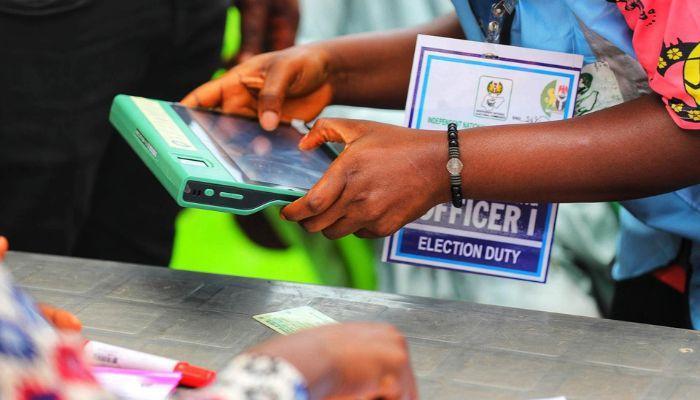
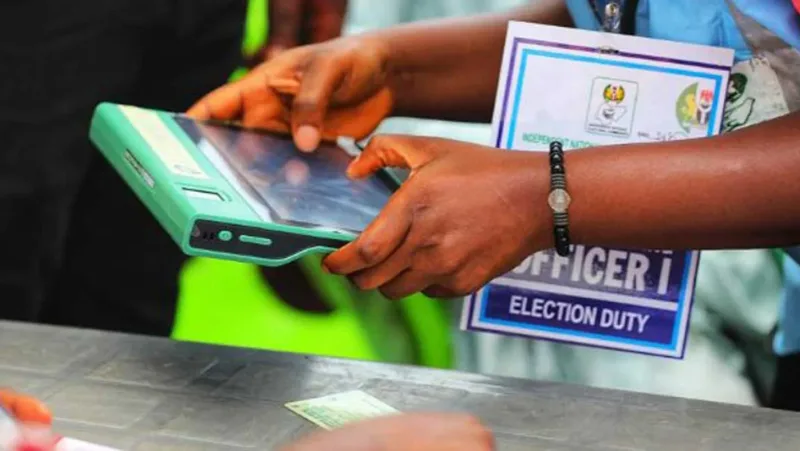
Oby Ezekwesili, a former minister of education, outlined concrete measures, including INEC’s financial and operational independence, mandatory electronic transmission of results, and stronger prosecutorial powers for electoral offenses.
“Relying on the police and attorney-general for prosecutions has only rewarded bad behaviour,” she said.
Her critique extended to what she called “courtroom democracy.” “Elections are being decided in court rather than at the polling station,” she lamented.
“That destroys the spirit of democracy. We need specialised electoral courts, automated systems for assigning cases to judges, and strict timelines for resolving disputes. Right now, elections have become an industry for the judiciary. For as long as our electoral system is a mess, it continues to destroy lives and futures.”
Peter Obi, who himself contested the last presidential election, wants the system to curb defections.
“Any politician who jumps party after winning an election should lose his seat,” he proposed.
“This is a very critical thing that has to happen before our next election,” he said. “Without a proper electoral system that can guarantee free and fair elections, our democracy will remain fragile.”
These voices inside Nigeria are now joined by pressure from outside. The European Union has urged Nigeria to act fast on reforms ahead of the 2027 general elections.
“We recognise that there are certain time constraints, both in terms of judicial reform as well as administrative reform, and of course, constitutional reform, which is much more difficult,” Barry Andrews, member of the European Parliament and chief of the EU Election Observation Follow-up Mission to Nigeria, said during a meeting with INEC last week in Abuja.
“But we are making all of these recommendations against international standards that the EU and Nigeria and most countries have signed up to… to support democracy, not just here in Nigeria, not just in Africa, but across the world, and in Europe as well.”
For many Nigerians, the tension is clear. On one hand, the president is pushing through market reforms meant to position Africa’s largest economy for future growth. On the other hand, the foundations of democracy, the rules of the game, the fairness of the vote, and the independence of institutions, remain fragile.
The question looming over the country is whether the political will exists to match the momentum in economics with equivalent ambition in governance.
“Economic growth without democratic legitimacy is a house built on sand,” the reform advocate said.