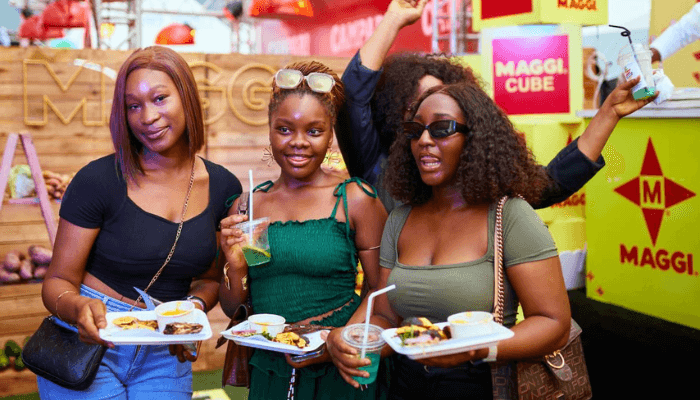
Smoke rose above Yakubu Gowon Stadium in Port Harcourt, Rivers state earlier this month as the scent of roasted plantain and sizzling fish filled the air.
Thousands of people gathered September 6-7 for the annual Bole Festival, a two-day celebration of Port Harcourt’s beloved street food.
This year, Maggi, the seasoning brand long associated with Nigerian kitchens, stepped out of the home and into the heart of youth culture. Its partnership with the festival, themed “Bolefication,” underscored a shift in how the brand wants to be seen, not just as a pantry staple but as part of the street food and cultural scene.
The event lived up to its theme. “Bolefication” was less a tagline and more the collective energy of the weekend; music, fashion, food and togetherness. DJs kept the crowd moving while creators and influencers documented the smoky grills, long queues, and laughter shared between friends and strangers alike.

“Day one was such a vibe,” said Jane Derry, a content creator who was at the Maggi arena at the festival. “They brought in a chef who showed us how to take bole to the next level, perfectly grilled plantain with roasted fish, ugba, otazi leaves, fresh pepper and that signature sauce.”
Reinventing tradition: The newspaper wrap
One of Maggi’s most talked about contributions was a playful reinvention of the humble newspaper wrap that traditionally accompanies bole on the streets. Instead of recycled print, each serving came in a Maggi-designed cultural newspaper filled with witty headlines, flavour hacks, and bite-sized bole recipes.
The retro-style paper transformed an everyday detail into a festival keepsake. For many young attendees, it turned the act of eating into an experience, sparking conversations as they read quirky commentary while enjoying their food.
Fashion meets flavour: The merch drop

The collaboration also spilled into fashion with a limited Maggi x Bole Fest merch drop. Styled like a streetwear release, the tote bags and T-shirts quickly became a symbol of belonging. Fans and influencers wore them proudly across the grounds, turning Maggi into more than a seasoning brand; it became part of youth identity and style.
Stories in smoke and flavour
The festival also became a stage for storytelling. Select influencers created content that captured the raw textures of the event; the fire, the smoke, the communal energy. In those short films, bole was more than food; it was memory, shared ritual, and togetherness, always seasoned with Maggi.
“It wasn’t just a wrapper, it was a conversation starter,” said influencer Esther Samuel, known as Miss_hotspots. “Maggi didn’t just season the food; they seasoned the whole experience.”
The Maggi Arena
At the heart of the stadium, the Maggi Arena drew crowds with its Flavor Bar, where festival goers customised spice mixes, swapped recipes, and created content together. It became a hub of interaction, reinforcing the idea that Maggi is not just a cube in the kitchen but the seasoning that makes shared experiences richer.
“The energy at the Bole Festival was incredible,” said Funmi Osineye, marketing manager for Maggi. “At our Maggi Bolefication Zone, we didn’t just share Maggi, we shared joy, culture and connection.”
The verdict: “Elite” vibes
By the festival’s close on September 7, many attendees agreed the partnership had elevated the event. “The bole? Delicious. The vibes? Perfect. The energy? Elite,” said creator Nancy, summing up what many described as a weekend of food, music, and community.
For Maggi, the festival marked an evolution from being seen mainly as a household product to positioning itself as part of Nigeria’s cultural fabric. In Port Harcourt, at least for one smoky, flavour-filled weekend, Maggi wasn’t just in the kitchen. It was on the streets, in the music, and in the moments that people said made them feel Bolefied.