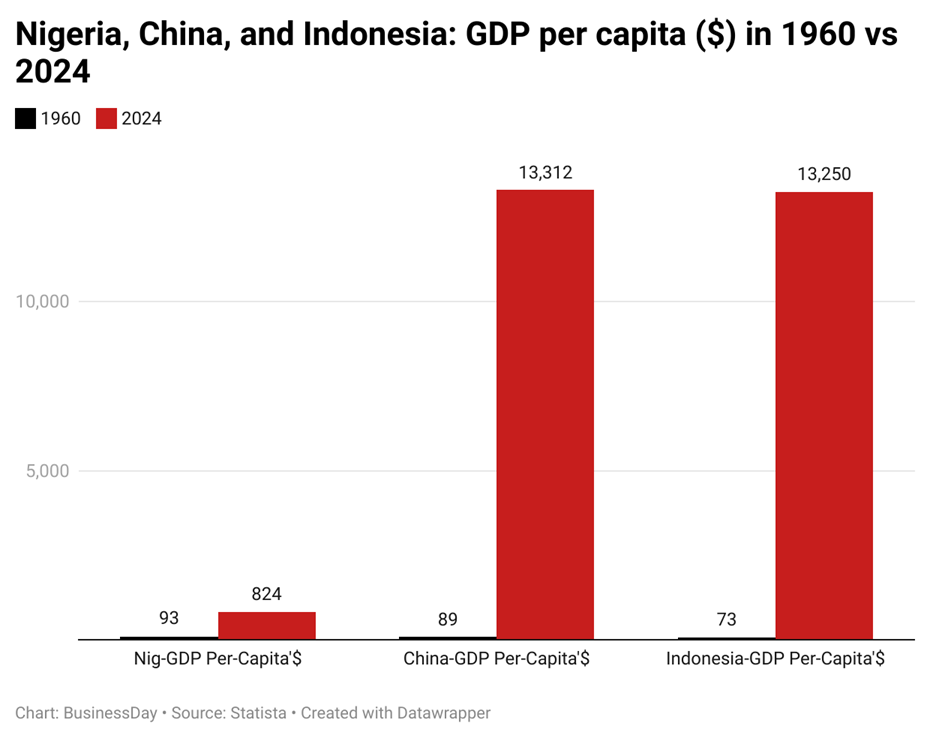
Sixty-five years after independence, Nigeria is still searching for the prosperity that freedom was meant to deliver. In 1960, oil wealth, fertile land, and a young population gave it an edge over China and Indonesia, then poorer and politically fragile.
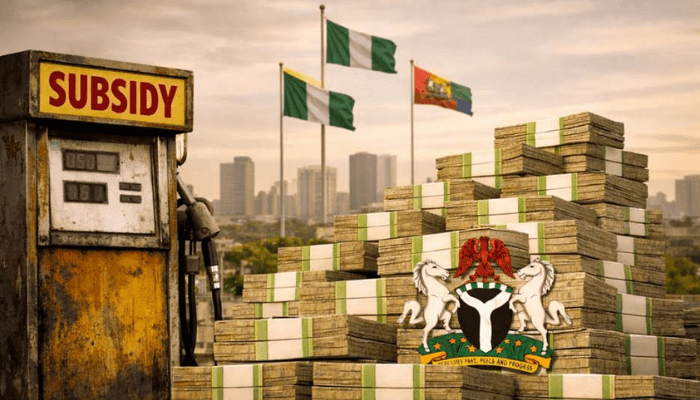
But history flipped. China became the world’s factory; Indonesia sits at the G20 table. Nigeria, despite early advantages, remains stuck in oil dependence, weak institutions, and uneven reforms. The 2023 policy shifts on subsidy removal and currency unification have steadied inflation and lifted reserves. The test is whether these gains can endure, or whether politics once again overwhelms economics.
Nigeria’s SWOT at 65
|
Strengths: Resources, people, and reform courage

Nigeria’s advantages remain significant. According to the Nigerian Upstream Petroleum Regulatory Commission (NUPRC), petroleum still delivers over 80 percent of foreign exchange and two-thirds of government revenue.
Demographics are equally powerful: with 220 million people, Nigeria has Africa’s largest labour force and consumer market. “Our population is a massive asset,” says Faruq Quadri, Managing Director of SPEC-Matrix Consulting. “If harnessed, it can fuel industrial growth and make Nigeria a continental leader.”
The 2023 reforms showed rare political will. Inflation has eased for five months, the naira steadied, and reserves are rising. “These reforms have given Nigeria a second chance,” Faruq said. “The question is whether we build on it or waste it.”
Weaknesses: Oil addiction and institutional fragility
Strengths are undercut by long-standing weaknesses. Oil dependence crowds out other sectors, leaving the economy vulnerable to price swings. “Independence was political, not economic,” said Akin Akinyemi, an economist. “The economy remains tethered to global oil markets.”

Institutional fragility deepens the problem. Corruption, policy inconsistency, and weak regulators erode trust. “Independence without strong institutions has meant recurring policy reversals,” historian Toyin Falola noted. Infrastructure bottlenecks from erratic power to congested ports keep Nigeria from industrialising as peers did.
Opportunities: Diversification, digital innovation, regional trade
Nigeria’s size offers scope for new growth engines. Agriculture, manufacturing, and services could deliver economic sovereignty if reforms deepen. “Strategic reforms in key sectors could finally deliver what independence promised,” Faruq argued.
Digital innovation already leads the way. KPMG estimates Nigeria captured one-third of Africa’s fintech investment in 2024, expanding financial access to millions. AfCFTA, if harnessed, could turn Nigeria’s domestic scale into regional export power.
Threats: Inflation, Insecurity, and Political Reversals
Risks remain heavy. Inflation, though easing, is still above 20% in 2025, according to the National Bureau of Statistics, squeezing households. Security challenges, from insurgency to banditry, raise costs and deter investment. “Without security, Nigeria’s demographic and resource advantages risk being squandered,” Falola warned.
Above all, reform reversals loom. Anger over rising living costs is growing, and without safety nets, leaders may backtrack. As the IMF’s 2024 Article IV put it, Nigeria’s growth is “highly vulnerable to oil price swings and capital outflows.”
Lessons from China and Indonesia
China’s post-1978 reforms built special zones, prioritised exports, and invested in infrastructure and education, lifting 800 million out of poverty (World Bank). Indonesia, after the mid-1960s crisis, stabilised its economy, boosted agriculture, and diversified, securing a G20 seat by the 2000s.
Both started poorer than Nigeria but built institutions and pursued consistent economic plans. That consistency, not natural wealth, explains their transformation.
The Next Test
Nigeria began with advantages China and Indonesia did not have. But while those countries-built institutions that carried reforms across decades, Nigeria’s gains were often lost to political cycles.
The reforms of 2023 show that progress is possible, but without institutional reform to lock in consistency, history risks repeating itself.
As Falola said: “Political independence is hollow without economic vision. Nigeria has another chance. The test is whether this time it will last.”