



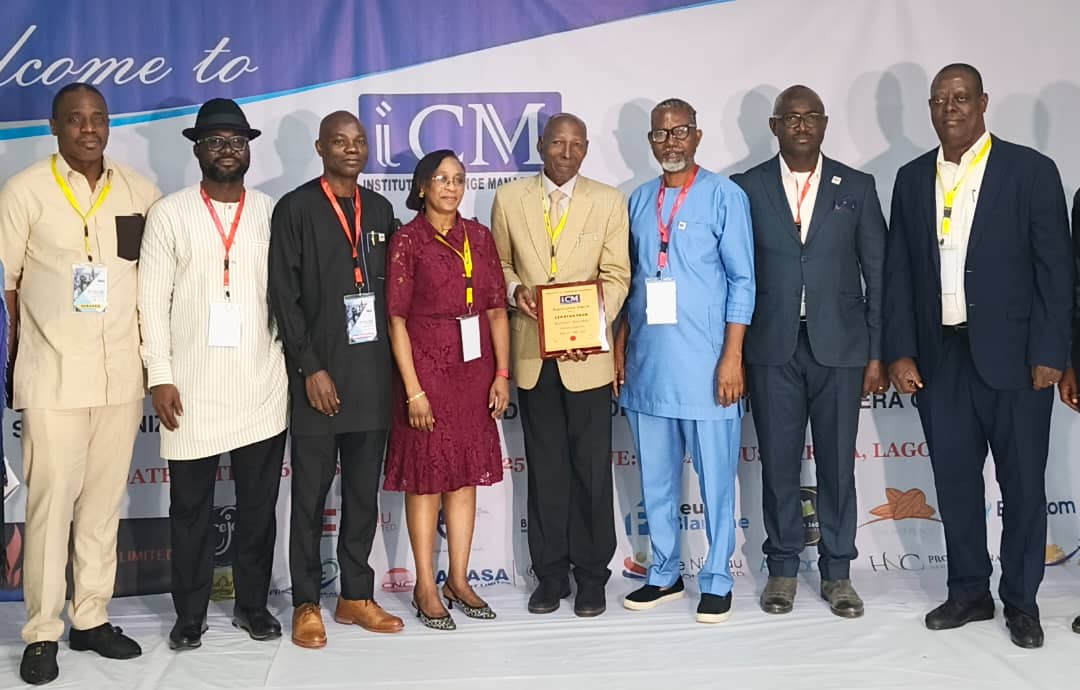
The Institute of Change Management (ICM) has called on Nigerian businesses to prepare for a future defined by the convergence of people, processes, and technology, noting that successful organisations will be those that approach digital transformation with intentionality and agility.
Nat Osewele, president/chairman of the council of ICM, during his address of welcome at the 2025 ICM Annual Conference themed, ‘Navigating to the Future: Synchronising People, Processes and Technology for the Next Era of Change,’ said the gathering was more than a meeting of professionals but a launchpad for transformation.
“This conference reflects our collective commitment to shaping the future with intention, innovation, and integrity,” Osewele stated.
He emphasised that the future is not to be feared but designed, while urging change leaders to build cultures that embrace agility, collaboration, and continuous learning.

During a panel session on ‘digital transformation and organisational agility,’ industry leaders highlighted both opportunities and challenges facing Nigerian firms.
Morolayo Igeleke, country marketing manager at UPS, stressed that successful transformation depends on leadership commitment.
“It starts from the top,” he said. “The shoulders of implementation begin with leadership, and everyone else will pick from it.
“To invest in digital transformation as a leader, you must be digitally literate, set visions and timings, and grow incrementally. Mindset change is very difficult, but with execution and time, things will change,” Igeleke noted.
Folorunsho Aliu, group chief information officer of Dangote Industries Limited, said agility is not just speed but alignment with an organisation’s realities.
“A lot of people are jumping to AI because it’s the real thing, but you can’t digitise processes if your business is still running on paper,” Aliu stated. “You must evaluate your stage, set the right foundation, and grow organically. There is no need to rush just to catch up with everybody.”

He added that small businesses may find it easier to embed digital systems from scratch, while larger organisations must take a more structured approach.
The panel agreed that Nigerian businesses must prioritise continuous learning, workforce audits, and communication when adopting AI. Small pilot projects, investment in digital literacy, and ethical considerations were also identified as critical success factors.
Obiageli Nwobi, managing consultant at HR Allied Services Ltd, noted that AI is already embedded in everyday work.
She stated that there is an urgency to prepare today’s workforce for an AI-driven future. “AI has come to stay. Many of us already use it daily without realising it – from personalised recommendations to research tools.
“The workforce of tomorrow will not only be assisted by AI, it will be shaped by it. The focus is shifting from jobs to skills, and success will depend on human-AI collaboration.”
It was noted that AI is increasingly taking over repetitive jobs, but new roles are also being created, from AI ethics officers to process improvement engineers.
“Our jobs are not disappearing; they are evolving.”





