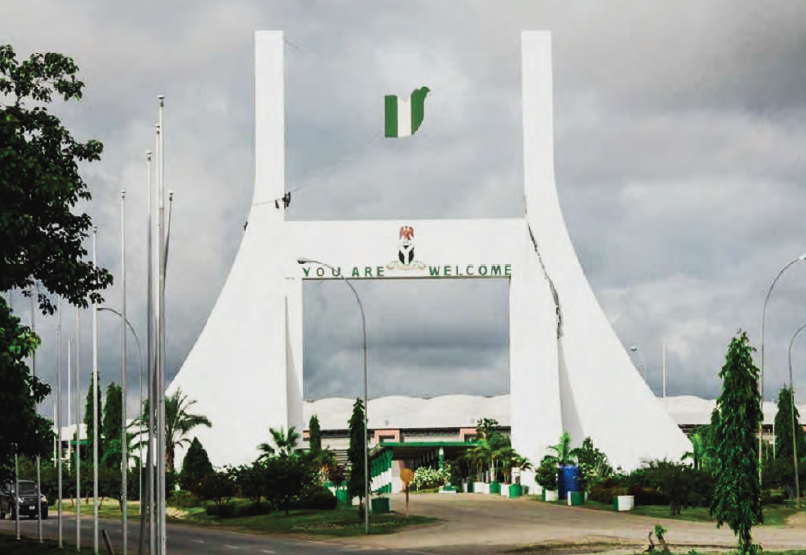
The physical environment of any city is more than stone, glass, and tar. It is a metaphor for the mentalities, values, culture and priorities of its people. The design of its buildings, the shape of its streets, and the texture of its planning reveal not just architectural tastes, but also the philosophies and heritage of those who built them. A city, like a campus, has a soul. Its gates may project privilege or exclude the meaningful interactions between the institution and its immediate community. Its walls may embrace history or erase it and may as well extend elitism against its vision and mission statements.
Abuja, Nigeria’s capital, is no exception. Yet in truth, it tells a troubling story. Built with ambition, the city exudes order and brilliance on the surface, but too often feels hollow within. Abuja was constructed, not built; grown, not developed. It wears modernity like a borrowed garment, one which is expensive, glittering, but devoid of cultural imprint. It is beauty without depth, and art without spirit.
Every visit to Abuja reinforces this impression. On a drive from Ibadan through the hills of Akoko and the valleys of the Niger River, one is greeted by the rich vegetation that sings the song of nature, villages with character, the River Niger beating its rhythm and meadows that tell stories. Then comes Abuja, a sharp contrast: a city of externalities, accessories and attachments, borrowed forms, and tasteless beauty. It feels like a pirated book, a fake spare part, though functional, perhaps, but lacking authenticity.
Unless one counts as culture the expensive lifestyle, the pretentious opulence, and the mimicry of Western modernism, Abuja bears little mark of Nigeria. Its architecture and planning reveal no inheritance of values, no continuity of systems, no artistic, ritual, or spiritual significance. Instead, the city is described in the language of concrete and glass, shape, size, height and colour, stripped of meaning. You may hear people speak of Abuja’s beauty, but it is beauty for beauty’s sake, a hollow definition that betrays a lack of depth and spirituality. A city, like a work of art, should embody the genius of its community.

The absence of cultural interrogation is striking. Cities around the world embody their people’s spirit. Paris reflects French romance, Kyoto honours Japanese heritage, Marrakech preserves Moroccan artistry. Abuja, by contrast, seems detached from Nigeria’s cultural genius. Its towers rise, but they tell no stories. Its boulevards stretch, but they echo no rhythm of history. Planning exists, yet order is absent.
Worse still, Abuja’s development often seems to dehumanise. Policies are crafted and enforced with zeal, but with little compassion. Demolitions displace the poor with bureaucratic satisfaction, all in the name of reform. The city speaks the language of rules without the spirit of culture. Ministers are praised for brilliance, yet brilliance without wisdom quickly becomes arrogance. Rules are worshipped for their own sake; reforms pursued for the pleasure of flux.
Culture, at its core, is compassion. It gives human meaning to policy, anchoring change in context. Without it, cities become soulless, glittering shells that poison those who run them. Abuja creates illusions of grandeur and offers the promise of having “made it” simply by residing within its territories. Yet beneath the polished surface lies an emptiness that corrodes governance and alienates its people.
This is not to deny the technical expertise invested in Abuja. Motorable road networks are built, bridges constructed and glass towers polished. But too much of it feels like imported templates, applied religiously yet stripped of relevance. Construction replaces building; destruction is carried out where thoughtful deconstruction is needed. Policies imitate rather than interpret.
Abuja, then, is not just a city. It is a metaphor for Nigeria’s leadership and elite culture. Glitter without depth. Intelligence without wisdom. Activity without meaning. Rules without compassion. It reflects a fixation on the visible rather than the valuable, the imported rather than the indigenous.

A city should inspire. Iconic architecture should spark creativity, green spaces should heal, and heritage sites should remind citizens of continuity. Abuja could still become such a city if its leaders embrace culture not as an ornament but as a compass. What Nigeria needs in its capital is not just construction, but building; not just beauty, but art; not just change, but transformation.
The challenge before us as a nation should awaken a national consciousness. Citizens must begin to see their Federal Capital Territory as a reimagined city that embodies Nigerian identity and values not as a symbol of alienation, elitism or a model of other cultures. A federal capital should be more than a seat of power; it should be a living classroom of culture, a sanctuary of inclusivity, and a reflection of national pride.
Abuja can yet be reclaimed. But it will require leaders who understand that development without culture is deformation, and that true reform begins with compassion. A city is not its walls or its glass; it is its people. To build Abuja into the city Nigeria deserves is to build with soul as well as steel.
The transformation of Abuja into an authentic Nigerian city should be one of the goals of the 65th Independence celebration. Abuja should serve as an instrument for the decolonisation of the mindset of the significant elites and for instituting sovereign thinking in policy and government planning, and the orientation of the general populace. After all, cultural identity is the formwork on which genuine independence is founded.