From breaking world records in reading marathons to exposing injustice and preserving memory, writers remain the conscience of society. Do the Writer’s Words Count in Nigeria? Or Are We Too Busy to Listen?
The role of a writer is more than stringing words together. Writers sit at the edge of silence and speech. They observe. They interpret. They reflect. That is why they are often referred to as the conscience of society. But here’s the real question: are Nigerian writers living up to that title today?
Most people are too consumed by survival to read. The loudest topic in many homes is not literature, but bills.
It is the writers who give shape to struggles that many people cannot express. Chinua Achebe once said the writer cannot avoid the task of re-education and regeneration. “When a community is silenced, literature can still carry its voice.” Maya Angelou did this for African Americans, she wrote about pain, but also about resilience and dignity. My favourite is “’Cause I walk like I’ve got oil wells / Pumping in my living room.”. A strong metaphor expressing self-awareness and inner wealth. Refusing to be diminished, a value that will go into extinction if we don’t care about the role of writers in shaping the psyche of the young generation.

And what about injustice? George Orwell didn’t write 1984 for entertainment. He was warning us about power, control, and the dangers of blind societies. In Nigeria, Wole Soyinka has consistently confronted corruption and repression. Through words, he demanded accountability when others kept quiet.
Writers also hold our memories. Without them, history vanishes. Holocaust literature reminds us how hatred and indifference can destroy humanity. Nigerian writers record wars, coups, and cultural shifts. “Without writers, future generations risk forgetting the lessons of the past.”
But words don’t only criticize. They inspire. Nelson Mandela imagined freedom from behind prison walls. Ngũgĩ wa Thiong’o urged Africans to reclaim their languages and cultural pride. Words remind us of what could be possible, even when reality feels unbearable.
Every society needs a compass. Writers often become that compass. They challenge what people accept as “normal” and force us to ask hard questions. Terry Eagleton once wrote that literature is the unconscious of ideology, it reveals what society hides. “Every society needs a compass. Writers often become that compass.” That is why writers are often jailed. Silencing them means silencing uncomfortable truths.
Do we value writers in Nigeria? Honestly, not enough. The Naija ReadFest was one bright exception. John Obot and his team of five resilient readers broke the Guinness World Record for the Longest Reading Aloud Marathon by a Team, 424 hours nonstop. Yet except for a few media houses like Law FM and Max FM, coverage was scant. If it had been a Big Brother-style show, many households would have tuned in, forgetting bills under the excuse of “catching a cruise.”

In Lokoja, one marathoner, Temitope Ogunremi Timothy, hosted “Lokoja Reading” through his platform Awareness’ Literary Society at Muhammadu Buhari Square. With media support from the Director General, Hajia Opotu Nana Yusuff of Kogi State Broadcasting Corporation, (KSBC), Graphics Newspaper headed by a renowned writer, poet, and Essayist Mr. Y.J. Itopa and Chairman Association of Nigerian Authors (ANA) Kogi Chapter, PEN Nigeria’s Young Writers Committee Chair, Mrs Abdulazeez Halima, and other partners. The programme was a testament to how we all can contribute to communal bonding. It was a sheer miracle for such an event to see the light of day despite the meagre resources available; vibrant minds from all walks of life paid homage to books and their authors. It displays what resilience, volunteering, and collaboration can achieve.
Our governments must wake up. They must support writers and literary event organisers who keep our cultural and political history alive.
And when writers are attacked, we must act faster. In Mozambique, poet and editor Alex Barga spent nine months in unlawful detention on false charges of plotting a coup. He was freed this September, but should he have been arrested in the first place? Absolutely not. His case shows how fragile freedom of expression still is. (PEN International)
So when we say writers are the conscience of society, it is not just a fancy phrase. Writers preserve memory. They amplify voices. They critique power. They offer hope. “To silence writers is to silence society itself.”
Word Speaks
I once used words to build blocks In different sizes and shapes.
The structure was stunning.
Every word must count. Tracks and pathways must connect, Whispering the sound of melodies.
That ease the misery of excesses In this world made for visitors. Though not all are evident, Only the vibrant souls can penetrate Verses with depth, And a path, clear.
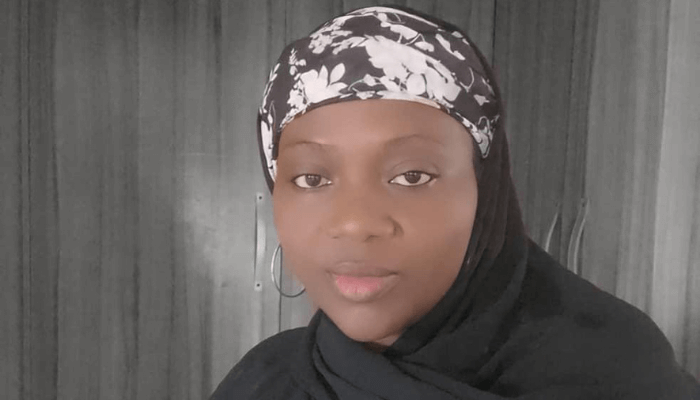
Halima Abdulazeez is a poet and the author of the poetry collection “Soul Rants: A Journey from Within.” She is the Communication Officer at the Caprecon Foundation, the Treasurer of PEN International, and the Nigerian Centre, and she resides in Lagos.
Contact: +234-8034816865