



…Toward a Nigerian Naval Cyber Transformation
Ports are the beating heart of Africa’s economy. With more than 90 percent of the continent’s imports and exports moving by sea, the efficiency and security of maritime infrastructure directly influence trade, food supply, and national stability. In recent years, African ports have embraced digital transformation, deploying automated cargo management systems, smart port technologies, and online platforms to streamline operations. Yet this rapid modernization has also opened a dangerous new frontier: cybercrime.
Globally, the maritime industry has already witnessed the devastating effects of cyberattacks. As I mentioned in my previous article, “Transforming Maritime Security: Navigating Cyber Threats and Piracy in the Digital Age”, the 2017 ransomware strike on Maersk remains a grim reminder of this reality. Known as NotPetya, the attack froze operations across 600 locations in 130 countries, caused an estimated loss of $300 million, and disrupted global supply chains. In 2018, the Port of San Diego also fell victim to a ransomware assault that paralyzed administrative systems, while several Asian ports reported breaches that compromised cargo data and customs processes. These incidents highlight a sobering truth: in the digital era, ports can be shut down not only by pirates or storms but also by malicious code.
Studies by the World Bank and other maritime-industry assessments often place ports in Sub-Saharan Africa among the weakest in the world in terms of efficiency, infrastructure, and governance. Ports such as Lagos (Nigeria), Tema (Ghana), and Douala (Cameroon) consistently rank low in global logistics indices, suffering from chronic congestion, outdated systems, and fragmented administration. Weakness in the physical domain naturally extends into the digital sphere. Without modern cybersecurity frameworks, these ports face a double vulnerability: physical insecurity from piracy and digital insecurity from hackers. In contrast, stronger ports like Singapore or Rotterdam have invested heavily in cyber defense, with dedicated command centres monitoring threats in real time. Africa’s weakest ports, on the other hand, remain exposed, offering cybercriminals easy access to outdated software, unmonitored networks, and poorly trained personnel.

The Gulf of Guinea, already infamous as a piracy hotspot, now faces a hybrid threat that blends digital and physical attacks. In recent years, there have been reports of AIS (Automatic Identification System) manipulation or interference intended to mask vessel positions, mislead naval patrols, or confuse tracking systems. While direct public confirmation is rare, industry observers often cite suspicious changes in vessel tracks or “dark ship” behaviour as suspect. Earlier in 2025, the Spanish warship Relámpago turned on its AIS as it transited westwards toward Dakar, some analysts suggested that pirate action groups may have been tracking its movement and preparing opportunistic attacks.
Moreover, cargo vessels like Orange Frost and Sea Panther were attacked in April and May 2025 in the Gulf of Guinea. On 21 April 2025, the Sea Panther was boarded roughly 104 nautical miles southwest of Brass Island; the crew sheltered in a citadel and avoided casualties. On 30 May 2025, the Orange Frost was boarded about 71 NM northwest of Santo António (São Tomé and Príncipe). Seven armed individuals boarded, one crew member was wounded, and another was reportedly kidnapped. In that same period, NIMASA confirmed a piracy incident in the Gulf of Guinea on 30 May 2025 at coordinates 2°37′35″N, 6°46′47″E, approximately 75 nautical miles offshore. These attacks, while kinetic in nature, occurred in an environment where data from vessel systems could provide planning advantages.
Going further back, on 1 January 2024, pirates attacked the chemical tanker Hana 1 in Equatorial Guinea waters and kidnapped nine crew members. Analysts have speculated that such attacks are becoming more intelligence-driven. Another incident: on 29 May 2024, two crew members of a general cargo ship were kidnapped 25 nautical miles south of Bioko Island, Equatorial Guinea, again pointing to organized patterns in the Gulf. In 2023, hijackings and kidnappings (three crew kidnapped from a Liberian tanker in March, and five crew kidnapped on 30 June from a Panama-flagged bulk carrier in Douala anchorage) further illustrate the persistent threat.
While none of the public reports confirm an incident where pirates explicitly used a compromised AIS or ECDIS to carry out an attack, many maritime security analyses treat the shifting vessel trajectories, anomalies in reported routes, and sudden target selection as suggestive of cyber-assisted reconnaissance. In other words, the evidence is circumstantial but increasingly credible.
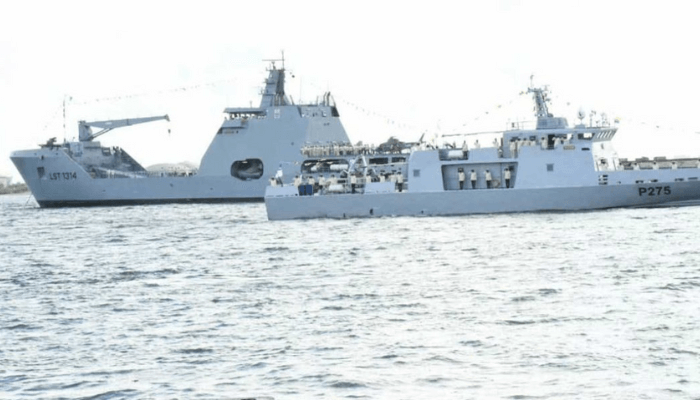
Nigeria has made significant strides in maritime security through efforts like the Deep Blue Project, which deployed special mission vessels, surveillance aircraft, and coastal patrol units. These initiatives have contributed to a drop in reported piracy in Nigerian waters (between 2022 and 2024, only three reported incidents occurred in Nigeria’s territorial waters or ports) underlining its impact. However, the digital dimension of maritime security remains underdeveloped. Naval doctrine continues to rely heavily on physical deterrence, while overlooking the growing necessity of cyber defence.

For the Nigerian Navy, the imperative is clear: a shift toward cyber operations. This requires creating dedicated maritime cyber units, investing in training naval officers in digital forensics, and securing shipboard systems (AIS, ECDIS, cargo tracking software) against intrusion. Joint drills between the Navy and port authorities should simulate scenarios where hackers disable navigation systems or corrupt cargo manifests to mislead crews.
International frameworks such as the IMO’s cybersecurity guidelines provide a useful baseline, but adoption across African ports is often superficial or incomplete. What is needed is not just compliance on paper, but a shift in culture, where cyber defence is treated as integral, not optional, to maritime security. This means consistent investment in cyber infrastructure, regular testing, training for port staff, and cooperation among governments, shipping lines, and regional bodies. ECOWAS and the African Union must build joint mechanisms for cyber-incident reporting, intelligence sharing, and coordinated response.
Africa’s blue economy holds enormous promise, whether in trade, marine resources, or energy corridors. But without cybersecurity at the core of maritime strategy, that promise remains vulnerable. Protecting African ports, shipping lines, and naval assets from digital threats is not a luxury, it is an urgent necessity. Just as navies patrol coastlines to deter pirates, governments must now shield their ports and vessels against invisible, virtual adversaries.





