Decrepit. Abandoned. Eyesore. Those words have clung to several of Enugu State’s iconic and cherished assets like ivy for several decades until recently. From the Hotel Presidential and Nigergas Company Limited founded by the administration of the late Premier of the defunct Eastern Region, Dr. Michael Iheonukara Okpara in the early to mid-sixties to the Enugu United Palm Products Limited (EUPPL) founded by the government of the defunct East Central State then to the Sunrise Flour Mills and Nike Lake Resort Hotel founded by former Governor of old Anambra State, Chief Jim Nwobodo and the sprawling International Conference Centre, ICC, Enugu, started by former Governor Chimaroke Nnamani, these otherwise treasured socioeconomic assets laid in ruins. No thanks to the lost years occasioned by military rule, a dysfunctional federal structure, and successive leaderships that were too often profligate or unimaginative.
It is against this bruised backdrop that Enugu’s current experiment of restoration, completion, and completion of the aforementioned long-abandoned assets under the Governor Peter Mbah leadership should be read—not merely as project announcements, but as a deliberate philosophical turn: convert moribund assets into productive ones, crowd in private capital, and make the state a partner rather than a proprietor. The aspiration is bold: shift from a public service-driven economy to a private sector-driven one and stretch gross state product from roughly $4.4 billion to $30 billion.
Ambition alone is theatre; ambition with instruments is governance. What matters now is the mechanism.
The architecture taking shape is simple to state and hard to execute well: use special-purpose vehicles (SPVs) and public-private partnerships that respect market logic while protecting public interest. In the Sunrise transaction, Jelfah Nigeria Limited acquires a 60% equity stake and brings ₦24 billion in fresh investment—₦22 billion to resuscitate the plant and ₦2 billion in cash to the government—while the state retains a 40% stake based on existing assets. Crucially, the SPV will also control approximately 10,000 hectares dedicated to cassava and grains, integrating the factory with the field. That single choice does more than tidy a balance sheet; it derisks the enterprise by anchoring supply, stabilising costs, and tying farmer incomes to industrial uptime. It replaces a hopeful slogan with a cash-flow logic. Do this repeatedly—across flour, palm, hospitality, gases, and healthcare—and you begin to rebuild an economy from value chains, not vanity.

Read also: Two years of evidence in Enugu State: Celebrating Governor Peter Mbah’s two years in office
Take Enugu United Palm Products Limited (EUPPL). It covers 6,700 hectares across Ezeagu, Oji River, and Uzo-Uwani, yet less than half of it was ever planted since it was established in 1970. The new plan is unapologetically full-stack: complete planting, expand to 20,000 hectares in five years, install world-class mills, scale refining to produce crude and kernel oils, olein and stearin, biodiesel, and refined, bleached, deodorised products, then push downstream into retail with an agent network that aggregates fresh fruit bunches from across the catchment. This is not a press release; it is a strategy that connects rural prosperity to industrial throughput. If it works, it delivers thousands of jobs, steadier incomes, and foreign-exchange savings that would otherwise be burned on imports. More subtly, it changes the social contract: when communities are organised as outgrowers with predictable pricing formulas and extension support, they become defenders of assets, partners in security, and stakeholders in order.
Sceptics will say we’ve heard such promises before. They are right to be wary because of serial failure.
Transparent boards with independent directors. Performance contracts with a handful of measurable Key Performance Indexes (KPIs) —hectares planted and yield per hectare; plant utilisation rates and downtime; oxygen cylinders delivered per week to named hospitals; bed occupancy and case-mix indices; events hosted at the International Conference Centre; occupancy and ADR/RevPAR at hospitality assets. Quarterly public dashboards, external audits, procurement that is open by default, and whistleblower channels that actually work. A state that measures itself invites citizens to defend progress because they can see it. Nothing burns trust faster than opacity; nothing builds it faster than verifiable delivery.
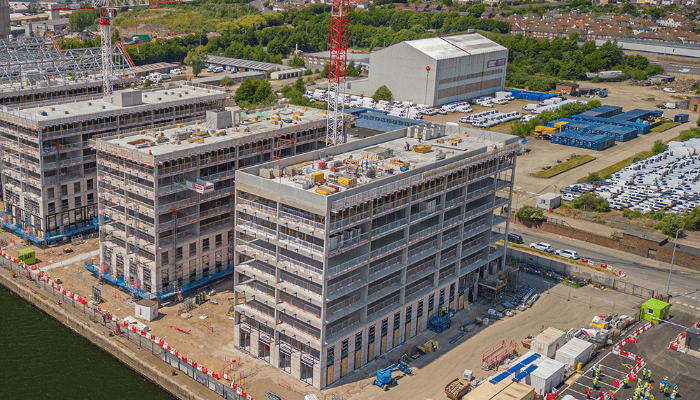
Consider the broader portfolio taking shape and how the dots connect. The over 5,000-seat ICC, commenced by Nnamani and abandoned since is now completed by Governor Mbah and commissioned by President Bola Tinubu on 4th January 2025. It will be paired with the 335-room ICC five-star hotel. Together, they seed a meetings-and-events ecosystem: conferences justify routes; routes justify hotels; hotels justify a service economy of caterers, printers, translators, drivers, florists, and AV technicians.

The stripped-bare Hotel Presidential abandoned for over a decade has been fully revamped, reconstructed, and unveiled to reclaim Enugu’s place on the West African hospitality circuit. Likewise, NIGERGAS having been completely overhauled, upgraded, and reopened to supply medical oxygen and industrial gases, etc. to an underserved market—an investment in both health security and manufacturing resilience. The 300-bed Enugu International Hospital with best-in-class ambitions is almost delivered on Rangers Avenue, Enugu.
There is a development grammar here. Lower investor friction: improve security, compress permitting timelines, clear land titles, and commit to credible dispute resolution. Publish predictable rules so that political cycles do not become commercial hazards. Insist on local content not as a chant, but as contracts: outgrower schemes with transparent price formulas; apprenticeship pipelines through the Technical and Vocational Education Training (TVET) system (of which a massive and state-of-the-art college has already been built at the Government Technical School Enugu, while seven others are in the making); supplier-development agreements for packaging, maintenance, logistics, and catering. Plan for volatility: hedge commodity risks, phase capex to match milestones, build redundancy in power and water, and embed environmental and social safeguards from day one—because a spill today becomes a shutdown tomorrow. In short, professionalise.
And professionalisation is not merely technical; it is cultural. We must learn to value maintenance as much as inauguration. The most radical act in a place accustomed to decay is to service a machine on schedule, to replace a gasket before it fails, to publish a dashboard even when the numbers are inconvenient. Citizens, too, must adjust our reflexes: demand timelines and data; celebrate delivery without deifying leaders and refuse the easy cynicism that nothing good can last.
There are human faces in this story. Imagine a cassava farmer in Umulokpa who previously sold into a fickle market, often at a loss after transport and spoilage. With Sunrise Flour Mill’s 10,000-hectare plan and a structured offtake agreement, her problem shifts from “who will buy?” to “how do I raise yield per hectare?”—and suddenly extension services, improved stems, soil testing, and access to micro-irrigation are not abstract programmes but tools of dignity. The change is not just macro; it is intimate.
Risk remains, and candour demands we name it. Nigeria’s macroeconomic environment is challenging: inflation, foreign exchange, and infrastructure. Policy continuity is usually one election away from uncertainty. The response cannot be bravado; it must be institutionalisation. Ring-fence deals in law; publish term sheets; embed independent oversight; and build bipartisan coalitions around jobs rather than credit. If the public knows what was promised, it will know what to defend. If investors know how disputes will be handled, they will stay long enough to learn the market. If communities see their share in prosperity, they will become stewards of assets, not saboteurs. And these are where the Mbah Administration stands out. Little wonder Enugu has become an investor haven in just a little over two years.
But this is also an opportunity to broaden the scope. Diaspora capital is often patient when the pipeline is credible; partnering with diaspora engineers, hospital managers, hotel operators, and agro-processors can deepen the bench of expertise. Universities and TVET boards can align curricula with the skills these projects require—mechatronics technicians for mills, process engineers for palm refining, biomedical technicians and critical-care nurses for the hospital, event managers and AV specialists for the MICE industry. Let procurement be a ladder for SMEs. A thriving economy is not a miracle; it is a choreography of competence – as Mbah has shown.
And then, there is the pipeline beyond the current slate. The lessons from Sunrise, EUPPL, the ICC, Hotel Presidential, NIGERGAS, and the Enugu International Hospital, etc. should inform what happens next with other moribund assets, including Ikenga Hotel in Nsukka, Aluminium Factory at Ohebe-Dim in Igbo-Etiti, Nike Lake Resort, the charred Anambra Vegetable Oil Products at Nachi, and more. Each will require honest diagnostics: which assets should be revived, which should be repurposed, and which should be retired? Not every memory deserves a bailout; some deserve a museum plaque and a new industry on the same land. And Mbah and his team are smart enough to make the right choices.
Progress will not be linear. A harvest may underperform; a commissioning date may slip; a boiler might refuse to behave. That is why the public dashboard matters: it turns disappointment into data and invites problem-solving rather than conspiracy theories. A government that says, “we missed Q3 throughput because a supplier failed, here is the penalty clause we triggered, here is the new delivery date,” earns the right to ask citizens for patience. In a trust-poor environment, specificity is a currency.
“Tomorrow is here,” the slogan goes. Perhaps. But let the people of Enugu bear this in mind: tomorrow, by itself, never arrives. It is made by uncomfortable choices, by contracts honoured, taxes paid promptly and honestly by citizens, by dashboards published, by boilers that fire on time and farms that harvest on schedule, by hospital wards that open with staff trained and equipment calibrated, by hotels that pay salaries on the 25th and taxes on the 30th, by conference centres that host not just galas but ideas that become companies, and importantly by each of the 260 Smart Green School equipping Enugu children with knowledge and hands-on skills that groom them into the drivers of emerging global economy, who do not need to do crimes or even “Japa” to be successful entrepreneurs.
Ogunleye is a public affairs analyst and writes from Lagos