|
Getting your Trinity Audio player ready...
|
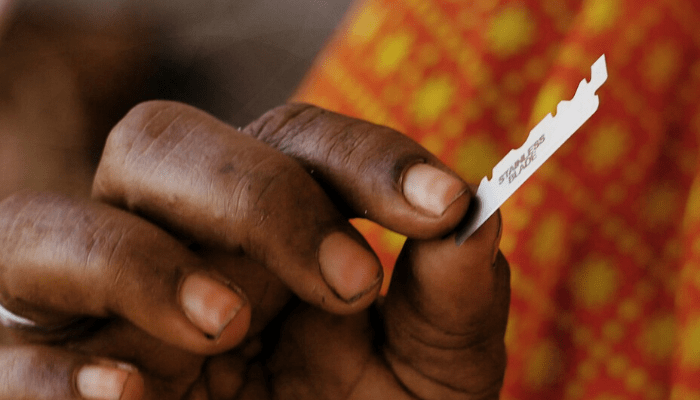
The United Nations Children’s Fund (UNICEF) said about 20 million women and girls in Nigeria have undergone Female Genital Mutilation (FGM).
Celine Lafoucriere, the UNICEF chief field office, Lagos, disclosed this in Benin at a-two day Media dialogue to support advocacy to end FGM in Nigeria organised by by the Oyo state ministry of information and Orientation in collaboration with UNICEF.
Lafoucriere lamented that the figure made Nigeria the third county with the highest cases of FGM in the world.
According to her, most victims were cut before their 5th birthday, at that age when they were completely powerless, couldn’t consent, resist or even understand what was happening to them.

Read also: FGM, a grave violation of human rights, UNICEF warns
She said despite being outlawed in Nigeria, this harmful practice continues in many communities, which according to her, is fuelled by myths and tradition. “But those myths and traditions must be recognised as harmful myths and traditions. No culture or custom should ever come at the expense of girls’ health, rights or their future”, she said.
Lafoucriere who noted that change is now happening through collaboration and initiatives, said the collaboration being led by the federal government of Nigeria in collaboration with UNICEF is for good. She opined that FGM is never a choice, but a violation that is inflicted on women and girls.
Also speaking, Aderonke Olutayo, sexual and reproductive/FGM consultant advocated the involvement of parents and men in the campaigns against FGM in the country.
“Men and boys are often excluded from FGM dialogue. Yet, men are key decision-makers in families. Lack of male champions prolongs FGM acceptance. We Need to engage boys and fathers as advocates”.

Aderonke however called for strict enforcement of law against female genital mutilation, as sustained awareness in the fight against the practice.
Earlier, Rotimi Babalola, permanent secretary, Ministry of Information, noted that similar dialogue had been organised for Civil Society Organisations (CSOs), judiciary and security agencies on FGM in Oyo and Lagos states.
Babalola said the Edo event was with the media who are critical stakeholders, because they set agenda for the society to follow. “So we are very, very critical concerning this FGM elimination campaign”, he said.
Akhere Doris, FGM victim and survivor said she was 18 years old when she discovered something was not right with her, that she decided to asked her mother who later told her that she was mutilated at the age of 5 and after serious bleeding they took her to Luth Hospital where she later spent another 3 months before recovery.
Read also: Oyo govt, UNICEF move to end open defecation by 2028
Another survivor Blessing Ogo a 38 years old victim and former FGM practitioner said she decided to forgive her parents all because they acted on the on ignorance but regretted being a former practitioner and now she is currently preaching against it.