



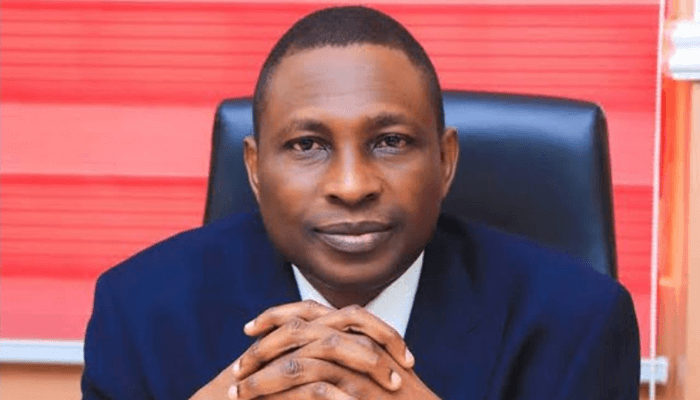
Ola Olukoyede, Executive Chairman of the Economic and Financial Crimes Commission (EFCC), has called for deeper collaboration and understanding among stakeholders as crucial tools in tackling corruption and financial crimes in Nigeria.
Olukoyede, represented by Wilson Uwujaren, Director of Public Affairs of the Commission, made the call on Wednesday during the 2025 EFCC Media/Civil Society Organisations (CSOs) Capacity-Building Workshop held in Abuja.
According to him, the media and CSOs remain critical partners in exposing corruption, strengthening public accountability, and sustaining anti-graft reforms.
“The nexus between the media and civil society organisations is very strong; they are like the right ear and left ear of the same horse.

“They share the mandate of exposing shadiness and integrity deficits in individuals and groups across the country.
“This is why the Commission considered it imperative to bring them together in a capacity-building workshop,” he said.
The EFCC Chairman stressed that discussions at the workshop centred on operational, legal, and media-related issues, which he said would improve public understanding of the Commission’s work.
He added that stakeholders play a vital role in preventive frameworks against corruption, noting that ownership of the anti-graft fight by citizens remains the most enduring way to ensure success.
Read also: Nigerian politician showcases Nasarawa as investment frontier in Dubai

Ben Ubi, Director of Legal and Prosecution, highlighted the challenges of prosecuting crime cases in Nigeria.
He, however, noted that the Commission’s painstaking efforts had ensured Nigeria’s removal from the Financial Action Task Force’s (FATF) list of non-cooperative countries and territories.
Without the EFCC’s consistent interventions, he said, the country might have been blacklisted.
Addressing the rise of cryptocurrency-related fraud, Sam Agbi Enahoro, an officer from the EFCC’s Cybercrime Section, warned stakeholders against falling for fraudulent online schemes.
He explained the technical complexities of cryptocurrency transactions and cautioned against “jumbo” offers that appear too good to be true.
Dele Oyewale, EFCC’s Spokesperson and Head of Media and Publicity, stressed the importance of prevention over recovery in the anti-corruption fight.
He explained that the Commission, since 2023, has prioritised a preventive framework to block looting before it happens.
“If we wait until the money is stolen, the assets are stolen and everything is stolen before embarking on recovery, there is no way you can recover all.
“But if there are safeguards to prevent the stealing in the first place, the society is better protected,” Oyewale said.
Michael Nzekwe, Chief of Staff to the EFCC, also commended the media and civil society for their continued support.
He urged them to remain steadfast despite pressures, reminding participants that Nigeria ultimately benefits from their collective work.
“Nigeria is the greatest beneficiary of the work that we all do. Sometimes there can be pressures here and there, but in all of that, always put the nation and EFCC first,” he said.
The workshop brought together journalists, civil society leaders, and EFCC officials.





