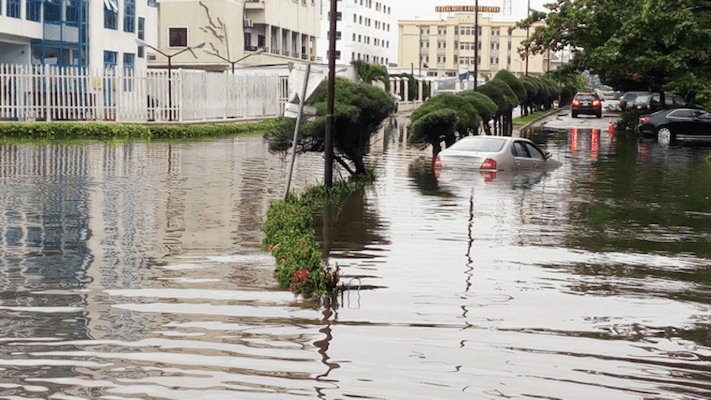
For two straight days, Lagos, Nigeria’s commercial nerve centre, was overwhelmed by early morning rains, triggering floods that crippled the city.
States such as Anambra, Delta and many states in the North also suffered devastating floods, leaving behind painful losses in lives and property.
Year after year, Lagos and these other states are brought to their knees by floods, fuelled by human failings in planning and infrastructure. Experts say if Nigeria approaches the problem differently, both the frequency and impact can be reduced significantly.
A lesson could be drawn from Taiwan, a country that is susceptible to natural disasters but has evolved approaches to contain them.

Nigeria and Taiwan differ. While Nigeria is larger, resource-rich and has a flood problem, Taiwan is vulnerable to disasters such as earthquakes, typhoons and flooding.
Taiwan, a country located along the southeastern coast of Asia, is known for occasional incidents of natural disasters. Andy Yih-Ping Liu, the country’s rep/head of mission in Nigeria, said despite their differences, there is a lot the two countries can learn from each other, especially in the area of construction.
Read also: Floods, storms to worsen as global heating continues, WMO says
Liu advised Nigeria to rethink the way housing estates and cities are built, ensuring that people live in safe environments with durable shelter.
“We as Taiwanese will be able to provide the needed expertise to help Nigeria develop good estates and counter-balance natural disasters. Nigeria does not have earthquakes but we have it along with Typhoons. Nigeria has flooding and we also have flooding.

“Construction and real estate firms have to focus on how people can actually live in a good environment, and to have a strong building that provides shelter over their head, and also to have good transportation to facilitate people moving around,” he said.
Liu suggested that the two nations’ agencies work together and learn from each other on how to cope with disasters, pointing out that government regulations, sound architectural design and quality construction are critical.
“We have never had any building collapse, but we have seen building collapse incidents in Nigeria. We have to provide what we have suffered to help Nigeria get it better. In real estate, we need every aspect of development to involve the government and the private sector,” the envoy said.
The National Emergency Management Agency (NEMA) said that no fewer than 232 persons lost their lives, while 121,224 others were displaced following floods that swept through parts of the country as of September 20, 2025.
The Nigerian Metrological agency (Nimet) has also warned that many states of the federation, especially the coastal states and those in the North, will witness severe rainstorm and flooding, which means more family dislocations and disruptions in economic activities.
Apart from Lagos, several states, including Kaduna, Nasarawa, Bauchi and Jigawa, have intensified campaigns to avert flooding crisis. The 2025 flood dashboard shows that at least 339,658 people also recorded some form of losses, with 681 sustaining various degrees of injuries.
According to the dashboard, the most impacted states are Lagos, where 57,951 people were affected, 3,680 displaced and 3,244 houses damaged; Adamawa, with 57,890 affected, 23,077 displaced, 438 injured, 59 killed, and more than 9,000 farmlands destroyed; and Akwa-Ibom, where 46,233 persons were affected, 40,140 displaced, with over 17,000 homes and farmlands damaged.