Rising seas and worsening floods are forcing residents of Lagos Island and Apapa to embrace grassroots climate action, as local communities mobilise youth and civil society groups to confront the mounting risks of coastal erosion, waste mismanagement, and sea-level rise.
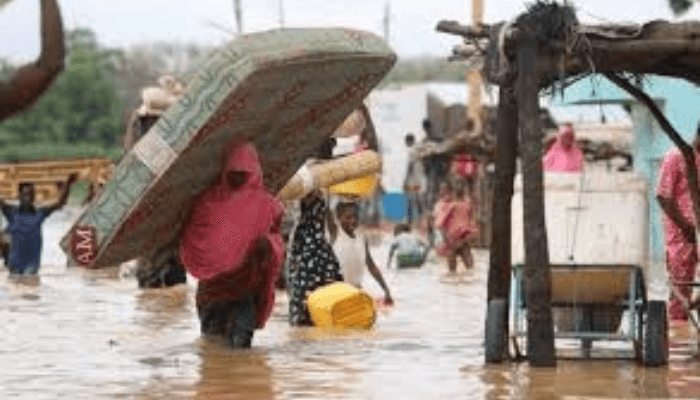
For residents of these two coastal hubs on the frontline of Nigeria’s climate crisis, rising seas and frequent flooding are no longer distant warnings; they are lived realities. As floodwaters eat into neighbourhoods and waste clogs drainage systems, local communities are turning to grassroots-led initiatives to build resilience.
A new 18-month pilot project led by the Lagos State Civil Society Participation for Development (LACSOP), with support from Bread for the World, is mobilising youth and civil society stakeholders to confront climate threats through citizen-led accountability. Known as the Citizen-Led Accountability Mechanism for Mitigating Climate Change Impact (CLAIM), the program is developing a training manual to help communities adapt.
Read also: How flood turned Taraba food producers to food beggars overnight

Dr Olushola Adeoye, director of the Ocean and Coast Programme at Nature Care Resource Centre, at the project validation workshop for the mitigating climate change impact project, in Lagos, said, “This is their product. If it doesn’t reflect their knowledge, language, or reality, then we have failed. Climate change is not mysterious or spiritual; it is real, and it affects us every day.”
At a validation workshop in Lagos, market women, young entrepreneurs, and government officials sat together to refine the draft manual, ensuring it mirrors the challenges of flooding, poor drainage, and waste disposal that define daily life.
The goal, Adeoye stressed, is awareness first: “Changing our way of life is part of adapting; that is how we can continue to have a livable Lagos. Rising seas won’t wait for policies to catch up. Resilience must begin at the grassroots, one community at a time,” Adeoye warned.
The CLAIM Project places young people between 18 and 35 at the centre of its strategy, betting on their ability to serve as climate advocates within their neighbourhoods.
“We want Lagos communities to stop being passive victims of climate change and start being active agents of adaptation. You see something, you say something. That is the kind of citizen participation that will make these solutions last,” said Omolara Olusaye, project manager

For Oluwaremilekun Abiodun Cole of Lagos Island Connect, the shift is overdue, stating that, “We have always thought climate change was for the government to solve, but it starts with us, in our homes and our communities. The youth are not leaders of tomorrow; we are leaders of today.”
Read also: Floods, storms to worsen as global heating continues, WMO says
In Apapa, where flooding has repeatedly damaged small businesses, digital advocate Tanimola Yusuf Dauda underscored the importance of awareness: “When floods come, it’s not politicians who suffer, it’s us. Clean drainage, proper waste disposal, and recycling can dramatically reduce the risks.”
The project, launched in May and running until September 2026, is designed to create a cadre of youth leaders able to sustain climate action beyond the program’s lifespan. Participants are being trained to monitor environmental practices, raise awareness about proper waste disposal, and press for policy enforcement at the local government level.
Government representatives at the workshop said they welcomed the collaboration, acknowledging that state efforts alone cannot address the scale of the problem. By combining citizen action, civil society engagement, and official backing, organizers say Lagos has a chance to turn vulnerable communities into models of adaptation.