Stakeholders have called for intensified efforts to eradicate Female Genital Mutilation (FGM) in Nigeria, highlighting its potential to save the nation an estimated $49 million in annual healthcare costs.
They made this call at a two-day media dialogue organised by the United Nations Children’s Fund (UNICEF) and the Oyo State Ministry of Information and Orientation, in Benin City, on Wednesday. The event, aimed at galvanising media advocacy to end the harmful practice, brought together journalists, government officials, FGM survivors, and advocates, all united in their commitment to protect Nigerian girls from a violation that undermines their health, rights, and future.
According to a 2022 analysis using the World Health Organisation’s (WHO) FGM Cost Calculator, Nigeria incurs approximately $49 million annually in direct healthcare costs to address complications arising from FGM.
With nearly 20 million women and girls in Nigeria having undergone the procedure, ranking the country third globally behind Egypt and Ethiopia, the practice imposes a significant burden on the nation’s healthcare system. Most victims are cut before their fifth birthday, a time when they are unable to consent or resist, leaving them vulnerable to lifelong physical and psychological trauma.

Read also: OAU unveils AI-powered smartphone, smartwatch to transform African healthcare
Globally, the economic toll of FGM is staggering, with WHO estimating that treating related medical needs costs high-prevalence countries around $1.4 billion each year, equivalent to roughly 10 percent of their annual health expenditure. Without urgent action, these costs are projected to rise by 50 percent as populations grow and more girls are subjected to the practice.
In Nigeria, where FGM remains prevalent despite being outlawed in 2015, stakeholders emphasised that ending the practice could not only alleviate this financial strain but also foster healthier communities and stronger economies.
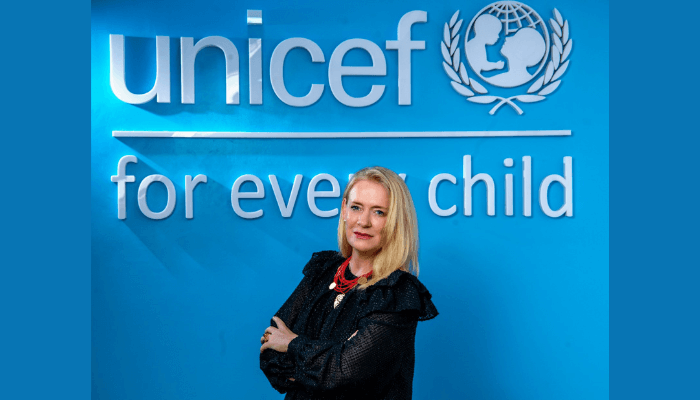
Celine Lafoucriere, chief of UNICEF’s Lagos field office, delivered a compelling address at the dialogue, emphasising the urgency of collective action to end FGM. “Female genital mutilation is never a choice but a violation inflicted on women and girls,” she declared, acknowledging the diverse group of journalists, government partners, FGM survivors, and advocates in attendance.
Lafoucriere underscored that their presence was a testament to the shared belief that ending FGM is both urgent and achievable. She highlighted the media’s unique power to shape narratives, amplify survivors’ voices, and challenge the myths and traditions that perpetuate the practice, urging journalists to leverage their platforms to drive societal change.

Lafoucriere painted a vivid picture of the stakes, noting that nearly 20 million Nigerian women and girls bear the scars of FGM, often inflicted before they could even comprehend the act. “Most of them were cut before their fifth birthday, at an age when they are completely powerless,” she said, emphasising the violation of their autonomy and rights.
She called for a future where every girl in Nigeria can grow up free from the fear and harm of FGM, urging the media to inspire families to break from harmful traditions. “No culture or custom should ever come at the expense of girls’ health, rights, or future,” she asserted, framing the fight against FGM as a moral and societal imperative.
Read also:Nigeria charts a post-donor future in health financing
Praising ongoing efforts, Lafoucriere highlighted the progress made through initiatives like the Movement for Good, a collaboration between Nigeria’s federal government and UNICEF that has mobilised millions to pledge protection for girls. She celebrated the courage of survivors leading advocacy efforts and the growing voices of young people demanding a better future.
“The stories you tell can spark the change we need collectively,” she told the media, encouraging them to use their reach and creativity to ensure every Nigerian girl can thrive. Lafoucriere thanked attendees for their longstanding collaboration with UNICEF, reaffirming her belief in their shared commitment to child rights and a safer future for Nigeria’s girls.
The dialogue also spotlighted the role of men and boys in ending FGM. Aderonke Olutayo, a sexual and reproductive health/FGM consultant, stressed that male involvement is critical, as men are often key decision-makers in families. “Lack of male champions prolongs FGM acceptance,” she noted, advocating for their inclusion in awareness campaigns.
Olutayo also identified barriers to progress, including fear of reprisal, lack of safe reporting channels, and minimal prosecutions, which deter survivors from speaking out due to stigma and social exclusion.
Rotimi Babalola, permanent secretary of the Oyo State Ministry of Information, described the media as critical stakeholders in setting the societal agenda to eliminate FGM.
Babalola referenced similar dialogues held with civil society organisations, the judiciary, and security agencies in Oyo and Lagos states, urging journalists to amplify efforts across the seven states under UNICEF’s purview. “The media can spark the change we need collectively,” he said.
Read also: Leveraging scale to expand access to healthcare
Denis Onoise, a UNICEF child protection specialist, framed FGM as not only a human rights issue but also an economic one. “FGM hurts girls, imposes lifelong health risks, and strains healthcare systems,” he said.
Onoise emphasised the broader economic toll, stating that globally, treating medical needs resulting from FGM costs high-prevalence countries around $1.4 billion each year, equivalent to roughly 10 percent of their annual health expenditure.
He warned that without urgent action, these costs could rise by 50 percent as populations grow and more girls are subjected to the practice. In Nigeria, where FGM remains prevalent despite being outlawed in 2015, Onoise stressed that ending the practice could alleviate this financial strain while fostering healthier communities and stronger economies.