…as stakeholders call for collaboration in building a healthier, safer, and cleaner Oyo
Oyo State Government, through the Rural Water Supply and Sanitation Agency (RUWASSA) in partnership with the United Nations Children’s Fund (UNICEF), has reaffirmed its commitment to strengthening policies, institutional frameworks, and capacity building to accelerate access to inclusive and sustainable Water, Sanitation, and Hygiene (WASH) services across the state.
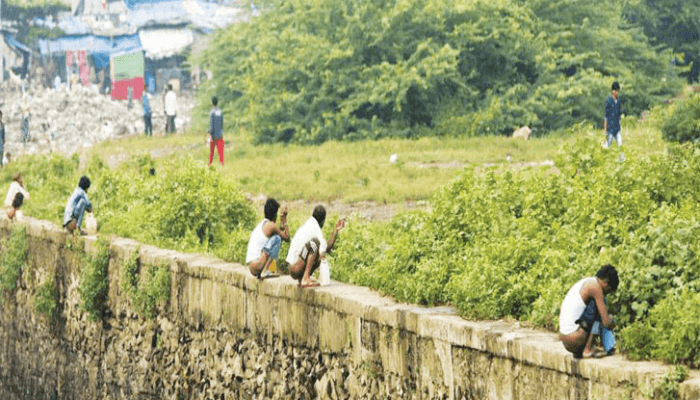
This is coming as the present administration in Oyo state, in partnership with UNICEF, is determined to eliminate open defecation in all 33 LGAs of Oyo State by 2028.
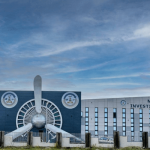
This commitment was renewed at a one-day roundtable on the Oyo State Open Defecation Free (ODF) and WASH Campaign, organised by RUWASSA in collaboration with UNICEF, held at the Ibadan Business School, Old Bodija, Ibadan.

Olubunmi Oni, the Oyo state head of service, represented by Adebukola Akinwale, stressed that access to safe water, sanitation, and hygiene is not just a social service but a fundamental human right and a cornerstone of sustainable development.
“The health, dignity, and productivity of our people are directly linked to the availability and sustainability of WASH services. It is our collective responsibility government, development partners, the private sector, civil society, and communities to build an inclusive system that leaves no one behind,” she said at the event.
Babalola Afobaje, the chairman of RUWASSA, raised concern over the high rate of open defecation in Oyo State, noting that according to the 2021 WASHNORM report, 53.7% of the state’s population still engages in open defecation while only 29.2% have access to basic sanitation services.
He described the practice as a public health crisis driving recurring outbreaks of cholera, diarrhoea, and typhoid, particularly among children.
In his remarks at the workshop, he also listed ongoing interventions, including the rehabilitation and drilling of boreholes, the construction of solar-powered water facilities, and the provision of sanitation facilities in public institutions across the state.

Jolly Ann Maulit, UNICEF WASH Manager, Abuja, on her part, presented a paper on “Unlocking the Potential of the Sanitation Economy in which she emphasised the importance of private sector partnerships in bridging the huge sanitation financing gap in Nigeria.
She, howeverr highlighted opportunities in the toilet economy, circular sanitation economy (recycling waste into biogas, fertiliser, and clean water), and smart sanitation economy (technology-driven sanitation services).
Monday Johnson and A. Abdulsalam, UNICEF WASH Specialist, Lagos Field Office, and Sanitation Marketing Facilitator, respectively, urged private sector actors, financial institutions, and NGOs to play active roles in scaling up sanitation solutions, stressing that Oyo cannot achieve its ODF target without their involvement.
The roundtable ended with a strong call to action for all stakeholders to work together in building a healthier, safer, and cleaner Oyo State where every household has access to clean water, safe sanitation, and good hygiene practices by 2028.