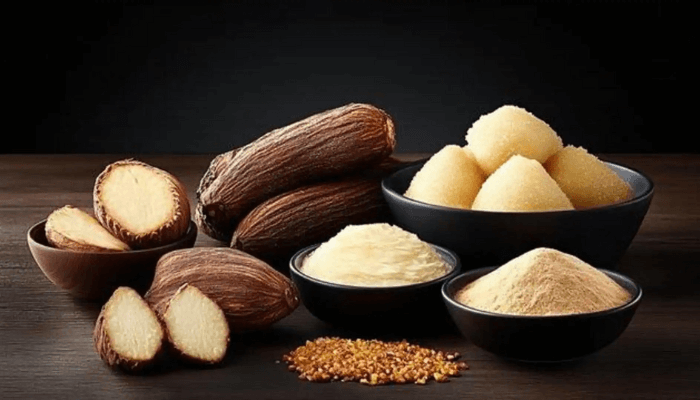
At dawn in Kaiama, Kwara State, the rhythm of pestles striking mortars fills the air. Mama Fati, her hands toughened by years of labour, sits with her daughters cracking shea nuts – just as her mother and grandmother once did.
What they produce is more than a cream; it is heritage, medicine, food, and survival.
Yet, while their butter travels the world in luxury jars stamped L’Oréal, The Body Shop, and Estée Lauder, their names are erased, their earnings a fraction of the billions shea generates globally.
This paradox lies at the heart of Nigeria’s missed opportunity: a country with the largest shea belt in the world, yet one that still exports raw nuts instead of branded, high-value butter.

Read also: Shea nut export suspension threatens $3bn non-oil exports – CPPE
Nigeria’s Hidden Treasure
Shea trees grow wild across 21 states in Nigeria, covering over 300,000 square kilometres of parklands – an area nearly the size of Italy. The trees, often called “the women’s gold,” produce nuts that are hand-processed almost entirely by women in rural communities.
Nigeria contributes 57% of the world’s shea nut supply, yet receives less than 5% of shea’s $3.5 billion global market value (Global Shea Alliance, 2023). The gap is staggering. Ghana, with smaller shea parklands, earns far more because of organised women’s cooperatives, government support, and a push towards processed exports rather than raw nut sales.
The Value Chain: Who Eats the Biggest Slice?

In Nigeria today, the bulk of shea is exported raw through middlemen. A tonne of raw nuts sells for about $300–$400. But when processed into butter, refined, and branded, that same tonne can yield products worth $2,000–$3,500 – up to 10 times more value.
Luxury brands in Europe and North America repackage shea as an exotic miracle ingredient for hair, skin, and food products. From anti-ageing creams to vegan chocolate, shea is a global phenomenon. But Nigeria, the largest producer, sits at the bottom of the value chain.
The Women Behind the Gold
Shea is not just an export; it is women’s work, women’s dignity, women’s power. Over 500,000 rural women in Nigeria depend on shea for their livelihoods. Their labour is invisible in the final product, yet without them, there would be no shea economy.
Studies show that formalising and empowering women cooperatives in the shea sector could triple incomes for rural women, improve child education rates, and strengthen local economies. In Ghana, organised women cooperatives supported by non-governmental organisations and the government export finished butter directly, bypassing exploitative middlemen. Nigerian women deserve no less.
A Superfood and a Super-Brand
Shea butter is no longer just a local balm. It is classified globally as both a superfood and a cosmetic powerhouse.
In the food industry, it is used as a cocoa butter equivalent in chocolate manufacturing.
In cosmetics, it is prized for its moisturising and healing properties.
In pharmaceuticals, it is used in ointments and creams.
The global cosmetics industry alone, where shea is a key ingredient, is valued at over $500 billion annually. Capturing even 1% more of that market through Nigerian-branded shea products could generate tens of millions in export earnings.
Why Nigeria Is Still Behind
Several challenges hold Nigeria back:
Fragmented value chains – dominated by middlemen who buy cheap and sell high abroad.
Lack of standardisation – inconsistent quality prevents Nigerian shea butter from scaling globally.
Weak government support – little investment in processing plants, certification, and market linkages.
Limited branding – while Ghana markets “Ghana Shea,” Nigeria has no global brand identity for its product.
This is why, despite being the largest producer, Nigeria lags in earnings.
The Missed Billions – and How to Capture Them
If Nigeria moved just 25% of its shea exports from raw nuts to processed butter, the country could unlock an additional $200–$300 million annually. If branded as a “Made-in-Nigeria” product, with proper certification and global distribution, the figure could rise even higher.
Domino’s Pizza is valued at nearly $20 billion for turning one food – pizza – into a global brand. Shea butter, with its skincare, health, and food versatility, has even greater potential.
Read also: Why Nigeria suspended raw shea exports -FG
Policy and Investment Opportunities
To unlock shea’s potential, Nigeria must:
Support women cooperatives with access to finance, modern equipment, and export training.
Invest in processing plants to move from raw exports to branded products.
Create a national “Nigeria Shea” brand with global certification.
Leverage trade agreements (African Continental Free Trade Agreement) to access new markets.
Attract private investment into value-added shea enterprises.
The shea sector could be a flagship Go Local project, combining culture, commerce, and community impact.
Beyond Shea: A National Movement
The shea story is a mirror of Nigeria’s wider opportunity. From jollof rice to suya, from acha (fonio) to okpa, Nigeria’s foods and natural products are global treasures waiting to be branded, scaled, and exported.
The Go Local vision is not just about nostalgia. It is about seeing economic power in the ordinary, wealth in the everyday, and global influence in what we already have.
As Mama Fati in Kaiama continues her morning ritual, the world waits. The question is not whether Nigeria’s shea butter is good enough for the global market – it already is. The question is whether Nigeria will finally claim the value it deserves.