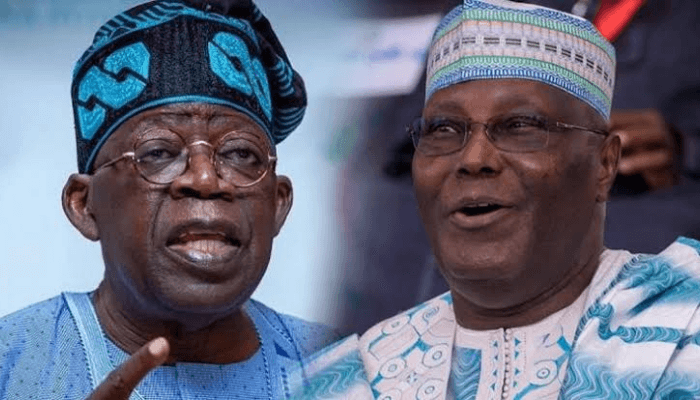
The Congress for Progressive Change (CPC), a political group once led by former President Muhammadu Buhari, is now deeply divided as the 2027 presidential election begins to take shape. Members of the party, which merged with others to form the All Progressives Congress (APC) in 2013, appear to be torn between supporting President Bola Ahmed Tinubu’s re-election bid and backing former Vice President Atiku Abubakar, who is expected to contest again.
The rift, which has been growing quietly, became public after several senior CPC loyalists held different meetings in Abuja and Kaduna. While some insist Tinubu, as the sitting president, deserves full backing from the CPC bloc within APC, others argue that Atiku represents a stronger option to wrestle power from Tinubu and the ruling camp.
Party insiders say this division could weaken the APC as 2027 draws nearer, especially since CPC members have always prided themselves as Buhari’s strongest political base. “We cannot pretend that all is well. Some of us believe President Tinubu has not done enough to deserve our support, while others insist we must stand with him as APC leader. This is tearing us apart,” a CPC chieftain from Kano said.
Already, some prominent figures have started taking sides. Former CPC stalwarts who now hold positions in government are said to be rallying support for Tinubu, emphasising loyalty to the ruling APC. On the other hand, a group of former lawmakers and Buhari-era appointees are quietly aligning with Atiku, who they claim has remained consistent and has the resources to challenge Tinubu.

Observers believe this is the first major crack in the CPC bloc since Buhari’s exit from power in 2023. Before now, the group was largely united in promoting Buhari’s legacy and ensuring its relevance within the APC. But with Buhari retired and silent on political matters, the once-solid bloc appears vulnerable.
Analysts also warn that the division could have wider consequences. The CPC arm of APC is strongest in northern Nigeria, especially in states like Katsina, Kano, Kaduna, and parts of the Northeast. Losing unity in this region could affect the APC’s ability to mobilise the votes it needs in 2027.
Read also: Kwankwaso: We are ready to join APC, but won’t be used and dumped
“The reality is that Buhari’s CPC brought in millions of votes from the North. Without a united CPC structure, APC risks losing its strongest backbone,” a political analyst in Kaduna explained. “That is why both Tinubu and Atiku are desperate to win over these loyalists.”
For Tinubu, the battle is about consolidating power and proving that his government is delivering on promises of security, economy, and infrastructure. His supporters argue that the president deserves a second term to complete ongoing projects and stabilise Nigeria’s economy. They also stress that APC cannot afford to fracture when the opposition is regrouping.

But those leaning towards Atiku say Tinubu has not lived up to expectations, particularly in tackling poverty, insecurity, and unemployment. They believe Atiku, with his long-standing political network and financial strength, offers a better chance for the North to reclaim stronger political influence.
“Tinubu has tried, but Nigerians are suffering more. Prices are high, jobs are scarce, and many of our people feel abandoned. Atiku has the experience and the vision to change things. We should not waste our loyalty on someone who is not delivering,” a CPC member from Katsina argued.
Meanwhile, ordinary supporters of CPC remain confused. Many still hold strong loyalty to Buhari and feel uncertain about who he might endorse, even though he has largely stayed away from public politics since leaving office. Some grassroots members insist they will only follow Buhari’s signal when the time comes.
This waiting game has made Buhari’s silence even more significant. Political observers say his eventual stance, whether openly declared or quietly hinted, could decide the direction of CPC members. Even without formal power, Buhari remains a respected figure, and many believe his influence in northern politics has not faded.
Opposition parties are watching closely. Atiku’s camp, especially within the Peoples Democratic Party (PDP), sees the CPC split as an opportunity to weaken APC ahead of 2027. By attracting disgruntled CPC loyalists, PDP hopes to build a stronger coalition capable of challenging Tinubu.
On the other hand, Tinubu’s strategists are already working behind the scenes to calm the tensions. Several CPC elders have been offered advisory roles and appointments, a move seen as an attempt to buy loyalty ahead of the campaigns. Still, some insiders say the efforts have not fully healed the divisions.
The bigger question is whether the CPC can ever remain a strong bloc without Buhari’s direct involvement. Many analysts believe the merger into APC gave CPC members relevance, but now that Buhari is gone, they are struggling to find a united purpose. Without him as a rallying point, CPC’s influence may fragment into different camps aligned with new political power centers.
As 2027 approaches, the rivalry between Tinubu and Atiku is expected to grow sharper, and CPC members will likely face increasing pressure to pick sides. Whether unity can be restored or whether the group becomes permanently divided will play a crucial role in shaping Nigeria’s next presidential contest.
For now, CPC is at a crossroads. Some of its leaders want to hold on to the ruling party and support Tinubu for continuity, while others see Atiku as the better hope for the North and for Nigeria. What happens in the next two years will determine whether this division is just temporary or the beginning of the end for the CPC’s political relevance.