



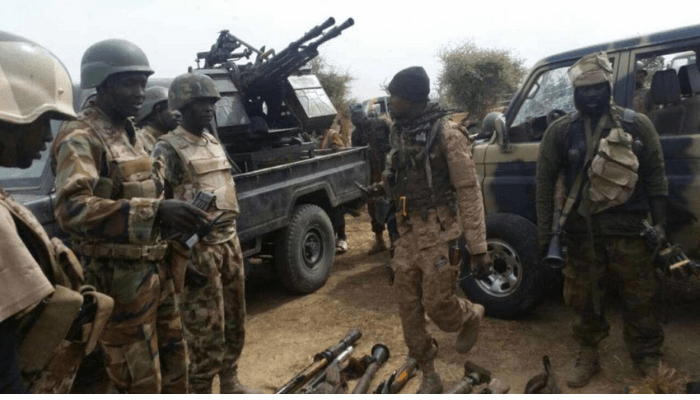
The Nigerian Army has scored a tangible operational success. Ifeanyi Eze, a high-ranking commander of the Eastern Security Network, known by the alias “Gentle de Yahoo”, was apprehended at a hideout in the Aku-Ihube area of Okigwe, Imo State. Alongside him, security forces seized weapons, ammunition, and other materials linked to insurgent activity. On paper, this is a decisive tactical achievement for a military long criticised for its uneven response to the insurgency in the Southeast.
For some, Eze’s capture signals a shift toward intelligence-driven operations. The era of purely reactive deployments seems to be giving way to a proactive strategy. The military is demonstrating that it can strike with precision, target high-value figures, and disrupt armed networks. Yet even as celebrations ripple through barracks and government offices, the broader question looms: can a single victory on the battlefield translate into lasting peace?
A tactical win, no matter how dramatic, does not automatically dismantle the Eastern Security Network or resolve the grievances that sustain it. Historical experience shows that military operations alone cannot extinguish insurgencies built on social, political, and economic discontent. Heavy-handed tactics, if misapplied, risk alienating the communities whose trust is essential for sustainable security. The capture of Eze is an opportunity, not an endpoint, and it places a clear responsibility on policymakers: to convert a military success into strategic progress.
The perspectives on the ground are more complex than the headlines suggest. Residents of Okigwe and surrounding areas may feel a sense of fragile relief. The ESN has been implicated in extortion, violence, and disruption of daily life. According to a 2024 report by the International Crisis Group, non-state armed groups in the Southeast have fostered fear, undermined social order, and depressed local economies. Any operation that weakens such groups can be a lifeline for civilians caught in the crossfire.

But relief is tempered by distrust. The Nigerian Army’s historical record in the region is fraught with accusations of human rights abuses. Operations designed to root out insurgents sometimes ensnare civilians or involve excessive force, leaving communities wary. Even a well-executed operation may be seen as a potential trigger for retaliation or collateral harm. True success, socially, is not only the neutralisation of a threat but the restoration of trust, a signal to the public that the state can protect without harming.
The legal dimension of this capture is equally important. Military victory alone does not confer legitimacy. The Nigerian Constitution, along with international conventions to which Nigeria is a party, guarantees the right to a fair trial. Amnesty International and other human rights organisations have repeatedly highlighted challenges in prosecuting alleged insurgents, from prolonged detention to opaque judicial processes. Ensuring that Eze is tried transparently and promptly is essential. It is not merely a procedural formality; it is a strategic signal. A credible trial demonstrates that the state, not armed groups, is the ultimate arbiter of justice. Conversely, a flawed process risks propaganda victories for insurgents and can fuel recruitment into the very networks the military seeks to dismantle.
Contrast this with Katsina State, where the approach has been markedly different. Only days ago, a wanted bandit leader openly attended peace talks in Faskari Local Government Area, one of the worst-hit councils in the Northwest. Instead of being arrested, he was welcomed to the negotiating table as communities sought to broker a fragile peace with armed groups. The symbolism could not be starker: in Imo, a commander was seized and paraded as evidence of state strength; in Katsina, a kingpin walked freely into dialogue, underscoring the state’s willingness, or desperation, to negotiate.
Local communities in Katsina are themselves divided. Some see negotiation as a necessary evil, a way to stem ceaseless killings, kidnappings, and raids that have devastated livelihoods. Others recall with bitterness how previous peace deals in the Northwest collapsed into betrayal, as bandits regrouped and returned to violence once concessions were granted. To them, dialogue without accountability feels like surrender, eroding faith in the rule of law. The decision not to arrest a wanted bandit in full public view creates a dangerous precedent: one Nigeria where insurgents face trial, another where bandits enjoy immunity in exchange for shaky promises.
This divergence captures Nigeria’s broader security dilemma. In one region, the state asserts authority through arrests and military raids; in another, it seeks accommodation, fearing the fallout of further escalation. Neither strategy is inherently wrong, but both reveal the fragility of Nigeria’s security architecture. Negotiation can prevent bloodshed in the short term, but without accountability, it risks normalising impunity. Military action can dismantle networks, but without dialogue and reform, it risks perpetuating cycles of violence. The real challenge is balance: how to combine force with fairness, deterrence with dialogue, and capture with conviction.

Peace studies pioneer Johan Galtung once observed that “negative peace” is the absence of violence, while “positive peace” requires justice, equity, and reconciliation. Nigeria today risks settling for negative peace in Katsina, silencing guns without addressing grievances, while in Imo, it courts further instability by pursuing justice through force alone. True stability requires harmonising the two: the discipline of law with the inclusiveness of dialogue.
Folorunso Fatai Adisa is a communication specialist and columnist for the Punch Newspaper (Friday Paper). He holds a Master’s degree in Media and Communication from the University of Strathclyde, Glasgow, and writes from the United Kingdom. Email: folorunsofatai03@gmail.com





