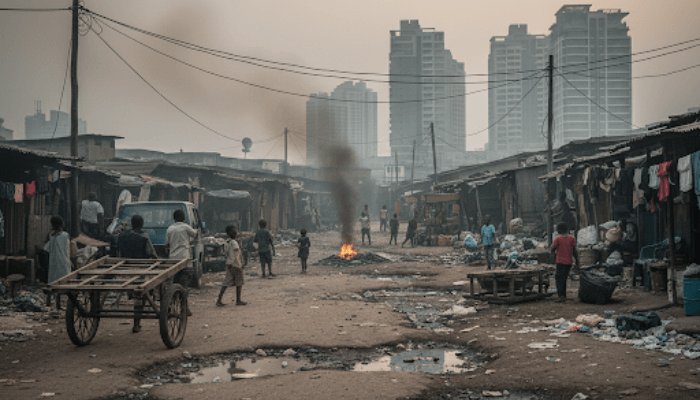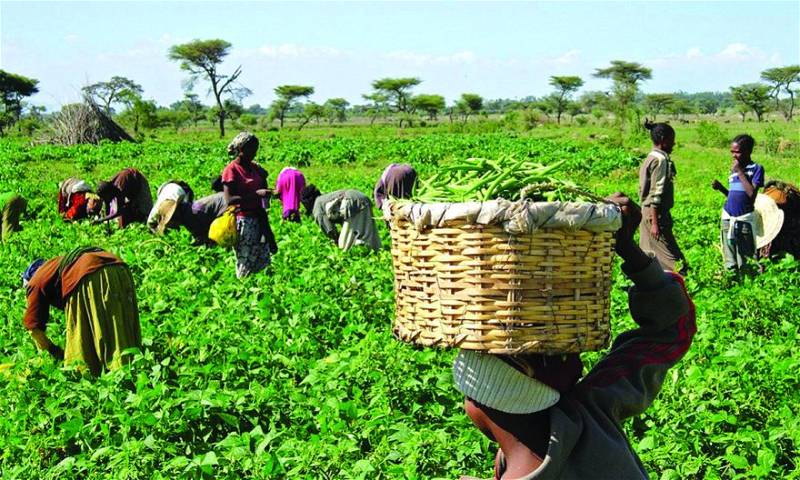
Across Nigeria’s fertile lands, from Benue’s yam fields to Kano’s tomato farms, smallholder farmers rise at dawn to till the soil. They produce crops in volumes that ought to feed the nation, yet paradoxically, hunger and high food prices persist. It is the tragedy of Nigerian agriculture: a country that both produces and starves, that celebrates harvest yet wastes nearly half of it, that talks of food security while importing staples. This paradox reveals a deeper crisis: Nigeria’s agricultural system is not broken at one point but across the chain, from farm productivity to infrastructure, from governance to climate resilience.
For too long, the national debate has been framed too narrowly around production. Successive governments have treated agriculture as though planting more seeds automatically translates to food security. Yet even bumper harvests do not guarantee that food reaches the table. Trucks carrying maize and tomatoes are stranded on impassable rural roads, while crops rot at the roadside. Where storage exists, it is inadequate; where processing plants are built, they often gather dust. Post-harvest losses of 30–50 percent each year are not just inefficiencies but acts of economic sabotage. Every rotten bag of maize represents wasted labour, wasted capital, and wasted hope.
Read also: FG promises to enhance farmers credit incentives, land registration, and a single platform
But here lies a necessary corrective: Nigeria’s problem is not only about waste. The country’s yields remain among the lowest in Africa. Nigerian farmers harvest an average of 2 tonnes of maize per hectare, compared to over 5 tonnes in South Africa. For rice, yields lag behind Asian counterparts. So even if Nigeria were to slash its post-harvest losses by half, production shortfalls would still leave the country dependent on costly imports. The paradox is therefore double-edged: Nigeria produces too little, and of what it produces, it loses too much.

Into this broken system step the middlemen. It is tempting to paint them purely as villains, and in many ways, they exploit the desperation of farmers forced to sell quickly. Farmgate prices remain rock-bottom while urban consumers pay several times more for the same produce. Yet middlemen also play a role the state has abdicated: they provide liquidity, transport, and market access in a dysfunctional system. The real scandal is not their existence but the absence of fairer, transparent market structures that would balance power between farmers, traders, and consumers.
“Without climate-smart agriculture, drought-resistant seeds, irrigation systems, and early warning systems, Nigeria risks sliding deeper into food insecurity.”
Nigeria’s failure is also political. Agricultural policy has been riddled with inconsistency and rent-seeking. Sudden border closures, arbitrary import bans, and poorly designed subsidy schemes have created uncertainty that discourages serious private investment. Infrastructure projects are announced with fanfare, only to be abandoned midway. Where other nations have acted with coherence, Nigeria has settled for slogans. Kenya leveraged mobile technology to connect farmers directly to markets. India invested in rural roads and cooperative storage, making its food system more resilient. Nigeria, by contrast, lurches from one initiative to the next without sustained commitment.
The climate crisis adds another layer of urgency. Erratic rainfall, desertification in the north, and flooding in the south threaten to further destabilise already fragile yields. Without climate-smart agriculture, drought-resistant seeds, irrigation systems, and early warning systems, Nigeria risks sliding deeper into food insecurity. The regional disparities are equally stark. Farmers in the Southwest, better connected to markets, face different realities from those in the North Central zones, where insecurity and poor logistics combine to choke supply. A one-size-fits-all solution will not suffice.
So what must be done? First, Nigeria must stop treating agriculture as a seasonal campaign promise and recognise it as the backbone of its economic survival. That requires bold, sustained investment in rural infrastructure, not just building roads but maintaining them. Cold storage chains and cooperative warehouses must be scaled, not scattered as pilot projects. Incentives should target agro-processing to ensure crops leave farms in higher-value forms, reducing waste and raising farmer incomes. Digital platforms must give farmers direct access to buyers, while targeted financing should protect smallholders from predatory lending.

Second, productivity must rise. This means investment in research, improved seed varieties, mechanisation, and extension services that actually reach rural communities. Post-harvest reforms without higher yields will leave the nation permanently short of food.
Read also: Nigeria Onion farmers lose billions of naira to substandard seeds
Third, governance must change. Policymaking must become predictable, not whimsical. Farmers and investors alike need to trust that the government will not distort the market overnight. Transparency in subsidies, partnerships, and infrastructure contracts is essential to rebuild confidence.
Fixing the chain is not just an economic necessity; it is a moral duty. Every spoiled harvest is a silent betrayal of farmers who labour in hope and families who go hungry. Yet every improvement in logistics, productivity, and policy coherence can lower food prices, raise rural incomes, and build resilience against global shocks.
The paradox of Nigerian agriculture must end. A nation that cannot move food efficiently from farm to market cannot claim to feed its people. The seeds of reform exist; what is missing is resolve. Nigeria must decide whether it will remain a land of wasted abundance or summon the will to transform agriculture into the engine of prosperity it ought to be. To do nothing is to condemn millions to hunger in the midst of plenty.