



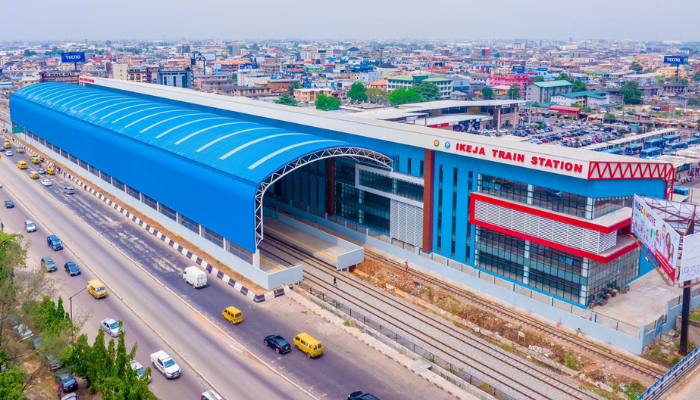
…project to create 2m jobs, pays for itself in 10 years
Nigeria has unveiled a plan to power its emerging high-speed rail network with natural gas, leveraging the Country’s vast reserves to generate 8,500 megawatts of electricity dedicated to the project.
The project is expected to be a major driver of employment, creating about two million direct and indirect jobs. Coastal cities developed around rail stations will host housing, industries, and commercial hubs, further spurring job creation and economic growth.
Sa’id Ahmed Alkali, Minister of Transportation, speaking at the 2nd International Railway Conference held on Monday in Abuja, described rail transport as central to Nigeria’s economic transformation, trade competitiveness, and regional integration under the African Continental Free Trade Area (AfCFTA).

He noted that while AfCFTA presents enormous opportunities for Nigerian businesses, efficient logistics remain critical for competitiveness.
Read also: Afreximbank, MDGIF sign MoU to mobilise $500m for Nigeria’s gas infrastructure development
According to him, the Kano–Maradi railway corridor represents more than just an infrastructure project, but a gateway to Africa’s markets, opening up new access routes for Nigerian goods into Niger Republic and beyond.
“Railways are not only about cargo and revenue; they are about national unity and economic positioning. As we modernise our railways, Nigeria is also strategically positioning itself as a logistics hub for West and Central Africa,” the Minister stated.
Alkali highlighted the environmental and economic advantages of rail transport, stressing that shifting freight movement from road to rail would reduce emissions, limit road damage, and enhance road safety.

“Rail is the greenest form of mass transport, and in today’s climate-conscious world, this will be a competitive advantage for Nigeria,” he said.
The Minister outlined three key priorities for the coming years: Making the railway an economic tool that directly serves agriculture, industry, mining, and commerce.
Securing sustainable financing through public–private partnerships, concessions, and land value capture.
Empowering Nigerians through jobs, skills development, and education in institutions like the Federal University of Transportation, Daura, and the Nigerian Institute of Transport Technology, Zaria.
Read also: Experts list gains of gas-powered energy
He further stated that the Federal Government had successfully moved railway development from the Exclusive to the Concurrent Legislative List, opening the sector to state governments and private investors.
This, he explained, would unlock new opportunities for collaboration and accelerate growth.
“Let us envision a Nigeria where our ports are seamlessly connected to factories by rail, our highways are relieved of endless trucks, our youth are employed building and running trains, and our neighbours see Nigeria as the hub of African rail logistics
“Our goal is to connect ports to factories, ease pressure on highways, reduce carbon emissions, and place Nigeria firmly as a logistics hub for West and Central Africa,” Alkali stated
Samuel Uko, Chief Executive Officer of De-Sadel Nigeria Limited, who gave an overview of De-Sadel Consortium/proposed High-Speed Rail, said the project was designed not only to modernise transport, but also to reposition Nigeria as an economic hub in Africa.
“The high-speed rail can only be powered by gas, and Nigeria is blessed as the world’s sixth-largest holder of gas reserves. Out of the 8,500MW to be generated, 3,500MW will directly serve the railway network while 5,000MW will be channelled to coastal cities and industrial zones around major rail stations, including Lagos, Abuja, Port Harcourt, and Kano”, he noted.
Read also: FG, 2 firms set to construct $60bn speed rail in Nigeria
He stressed that the initiative is structured to be self-sustaining, without plunging the country into further debt. According to him, revenue projections show the first phase of the project could repay itself within 5 to 10 years.
“With just 10% of Nigeria’s population making 10 trips annually between key routes such as Lagos–Abuja and Abuja–Port Harcourt, the network has the capacity to finance itself in less than a decade,” he said.
Also speaking at the event, Vice President Kashim Shettima, who represented President Bola Tinubu, described the project as a defining step for Nigeria’s industrial future. “Railways are not just about transport; they are engines of industrialisation, connecting raw materials to factories, farmers to markets, and people to opportunities,” he said.
Shettima noted that with Nigeria’s population projected to hit 440 million by 2050, investment in mass transportation is critical to national development and regional integration.





