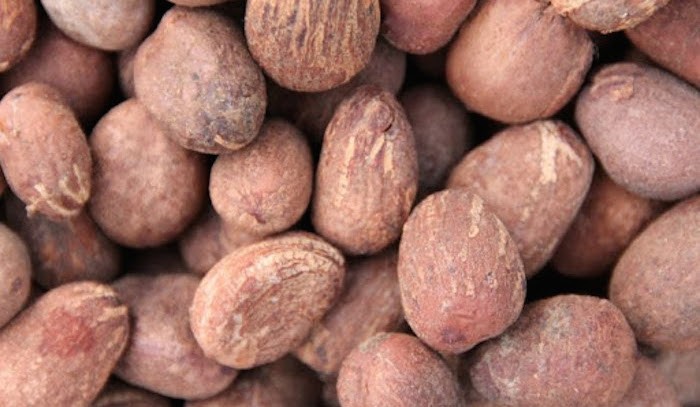
The Centre for the Promotion of Private Enterprise (CPPE) has warned that the federal government’s suspension of raw shea nut exports could derail gains in Nigeria’s non-oil export sector, which recorded more than $3 billion in the first quarter of 2025.
On August 26, President Bola Tinubu directed a six-month ban on raw shea nut exports as part of measures to encourage local value addition and industrialisation.
But in a statement on Sunday, Muda Yusuf, CPPE’s Chief Executive Officer, said the sudden implementation of the policy has created significant disruptions across the shea nut value chain, with negative implications for farmers, exporters, and the wider economy.
“The progress made in non-oil exports, over $3 billion in the first quarter of 2025, could be reversed if confidence declines.

“The ban threatens thousands of jobs in cultivation, aggregation, logistics, and trade in sheanuts. The policy effectively penalises primary producers to benefit processors, creating a zero-sum scenario rather than a shared-growth model.
“Hea nut prices have fallen by over 30 percent since the ban, eroding incomes of farmers and aggregators. Existing export contracts face potential default, exposing exporters to legal and reputational risks. Loan defaults loom large, as many exporters rely on bank financing for procurement and aggregation,” Yusuf said
According to him, while the intention to boost local processing is laudable, the abrupt ban sends adverse signals to investors, introduces policy uncertainty, and undermines confidence in Nigeria’s non-oil export drive.
Yusuf explained that Nigeria accounts for about 40 per cent of global shea nut production, giving the country strong leverage in the international market. He stressed that a well-structured, market-driven approach to value addition could create jobs, earn foreign exchange, and strengthen industrial capacity.
To mitigate the fallout, CPPE urged the federal government to adopt a phased transition framework rather than an immediate ban. The group recommended that exporters be allowed to fulfil existing contracts to avoid defaults and preserve Nigeria’s credibility in international trade.

Read also: Shea nut export ban puts Nigerian traders at risk of lawsuits – CPPE
It also advised the government to address structural challenges, such as power supply, logistics, infrastructure, and financing, that constrain local processors from competing globally, instead of relying on cheap input costs from distressed farmers.
“However, policy credibility is crucial: sudden bans on exports with immediate effect introduce uncertainty, heighten risk, and undermine investor confidence, deterring investment not just in shea but across the broader non-oil export sector,” Yusuf said.
He further called for regular consultative platforms involving farmers, processors, exporters, and financiers to promote inclusivity and ensure that farmers receive fair value for their produce.
While affirming that local value addition remains critical for Nigeria’s diversification agenda, CPPE stressed that it must be implemented in a strategic, inclusive, and market-driven manner to safeguard livelihoods and sustain export growth.
“Permit fulfilment of existing export contracts to prevent defaults and maintain Nigeria’s credibility. Address structural challenges, power supply, logistics, infrastructure, and financing, to enable processors to purchase raw materials at market prices and still compete internationally.
“Promote innovation and efficiency in processing rather than reliance on artificially low input costs.
“Avoid policies that force primary producers to subsidise processors indirectly. Establish regular consultative platforms involving farmers, processors, exporters, and financiers.
“Improve policy predictability and transparency to build investor trust,”