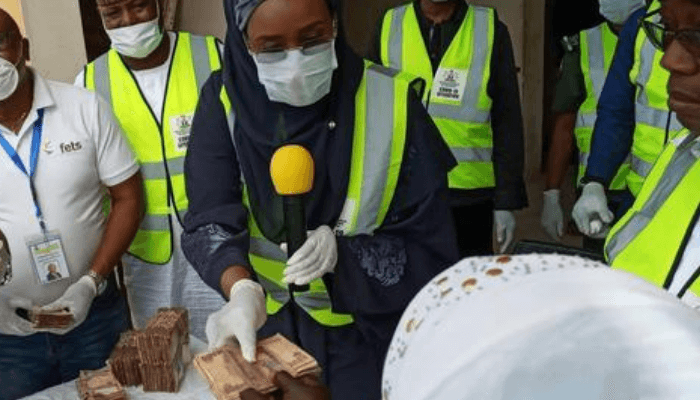
Ten months after Nigeria launched its much-talked-about cash transfer scheme to cushion the poorest households from the fallout of sweeping economic reforms, the initiative is yet to deliver on its most basic promise – timely, inclusive financial relief. Despite a target of 15 million vulnerable households, only 36 percent have so far benefited from the programme, according to PwC’s 2025 mid-year economic outlook. That means nearly two-thirds, showing millions of struggling families are still waiting for help in a cost-of-living crisis that shows no signs of abating.
“The government must accelerate the pace of disbursement, simplify verification processes for hard-to-reach populations, and ensure that the gains of macroeconomic stability are translated into real outcomes for households.”
The cash transfer programme was introduced in October 2023 as part of a broader response to the social fallout from President Bola Tinubu’s bold but painful reforms: removing the decades-long petrol subsidy and floating the naira. While these moves boosted investor sentiment and put Nigeria on a path toward more sustainable fiscal management, they also triggered the worst inflation spike in a generation, deepening poverty and sending food and transport prices to unprecedented levels.
The logic behind the cash transfer initiative was clear and commendable, which was to compensate the poor and vulnerable for the immediate shocks of reform while longer-term economic gains filtered through. But the execution has fallen far short of expectations.
PwC’s data paint a troubling picture. Of the 15 million intended beneficiaries, only 5.6 million (36%) have received any payment; merely 2.4 million (16%) have received a second tranche, and just 1.24 million (8%) have received a third, post-biometric verification.

This is not just a technical failure; it is a humanitarian lapse. For many low-income Nigerians, especially those in rural areas, these funds represented the difference between surviving and sliding deeper into deprivation. Every delayed or missed transfer is another meal skipped, another child kept out of school, another small business shuttered under the weight of inflation.
In a bid to tighten transparency and weed out ghost beneficiaries, the government introduced biometric verification via the National Identification Number (NIN) and Bank Verification Number (BVN) in April 2024. This measure was necessary, as Nigeria’s social register had long been plagued by credibility issues, but it has also proven to be a bottleneck.
Enrolling millions of people in remote, infrastructure-poor communities into the NIN system is no joke. Power outages, limited internet connectivity, and bureaucratic inefficiencies have slowed progress. Until the digital divide is bridged, digital verification risks excluding the very people the programme is meant to protect.
Despite these setbacks, some signs of macroeconomic stabilisation offer a cautious sense of hope. PwC projects that real household spending, which contracted by 0.4 per cent in 2024 and a deeper 15.9 percent in 2023, is poised to rebound in 2025, rising to N25.7 trillion. This would mark the strongest consumer recovery in three years, a welcome development in a country where over 130 million people live in multi-dimensional poverty.
Headline inflation has now decelerated for four straight months, reaching 21.88 percent in July 2025. PwC forecasts further moderation to 21.46 percent in 2025, thanks to a firmer naira, tighter monetary policy, and improving foreign exchange inflows. If this trajectory continues, the Central Bank of Nigeria may begin gradually lowering interest rates in the second half of 2025, a shift that could spur consumer credit and ease the cost of doing business.

Read also: Nearly one-third of eligible Nigerian households yet to receive cash transfers
The naira, which lost about 70 percent of its value in 2023, has also begun to stabilise, supported by portfolio inflows and foreign exchange reforms. Together with a modest projected GDP growth of 3.4 percent in 2025, lifted by higher oil output and improved performance in ICT, real estate, and finance sectors, these indicators suggest that the worst may be over.
But economic recovery means little if it does not reach the poor. The government must accelerate the pace of disbursement, simplify verification processes for hard-to-reach populations, and ensure that the gains of macroeconomic stability are translated into real outcomes for households.
As the cost of living remains painfully high, it is morally and economically imperative that the government restore credibility and speed to its flagship safety net. This means decentralising NIN registration through mobile units, leveraging community-based organisations for verification, and deploying digital wallets where possible. The private sector, particularly fintechs, can also be brought into the fold to help scale last-mile delivery with accountability.
Moreover, it is crucial to provide transparency. Nigerians deserve to know who has been paid, when, and how much. Regular public disclosures will not only rebuild public trust but also allow civil society to play a watchdog role, ensuring that funds do not fall into the wrong hands of corruption or administrative waste.
Even with improved delivery, cash transfers are a short-term fix. What Nigeria needs is a comprehensive social protection strategy that includes food security, education, healthcare, and job creation. As Dr Akinwumi Adesina of the African Development Bank (AfDB) rightly stated at a Lagos address, “welfarist policies that exponentially expand opportunities for all” must become the foundation of Nigeria’s development model.
The AfDB’s $518 million investment in agro-industrial processing zones across eight Nigerian states is a good start. But these initiatives must be linked to local employment, value chain development, and rural revitalisation. A functional economy cannot rest on handouts alone; it must provide ladders of opportunity.
Nigeria’s cash transfer scheme was born out of necessity and holds the promise of a fairer economic transition. But its slow rollout threatens to undermine its purpose. With the right interventions, technological, administrative, and political, it can still become a cornerstone of inclusive recovery. But time is running out. For millions of vulnerable Nigerians, relief delayed is relief denied.
If Nigeria is to truly move forward, social protection must not be treated as an afterthought to economic reform. It must be its foundation.