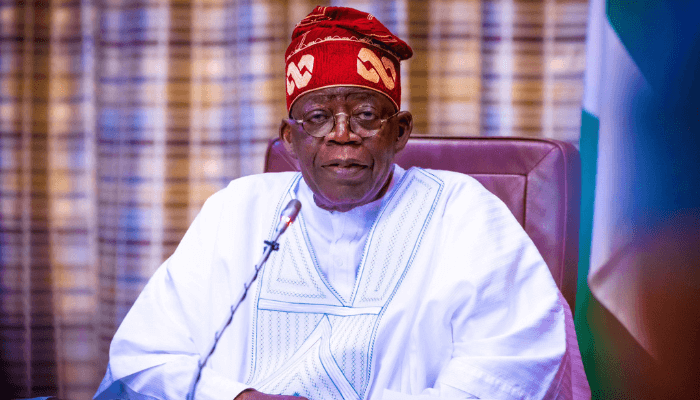
Nigeria’s overstretched public hospitals are battling soaring electricity bills, as subsidy approved by President Bola Tinubu remains stalled one year on, leaving facilities with costs that threaten life-saving services.
The subsidy, approved in August 2024, was in response to the crippling impact of high energy costs on hospital operations, especially after the Nigerian Electricity Regulatory Commission (NERC) adjusted tariffs in April 2024.
Under the new structure, ‘Band A’ consumers, those promised at least 20 hours of daily supply, saw rates leap from N68 to N209.50 per kilowatt-hour, an increase of more than 200 percent. Many teaching hospitals fall into this category because of their heavy and continuous demand for power.

President Tinubu, however, approved a 50 percent electricity subsidy for these public hospitals and educational institutions to ease their financial burden.
Tunji Alausa, the then minister of state for Health, said the subsidy, to be implemented by the power ministry, aims to lower energy tariffs. The initiative is expected to help hospitals, universities, and colleges redirect funds toward improving service quality in health care and education.
But instead of relief, public hospitals are drowning under rising energy bills that drain budgets and cripple services, leaving patients to bear the cost of a promise deferred.
In wards and intensive care units, the beeping of ventilators and dialysis machines now competes with the relentless ticking of prepaid meters consuming the naira by the second.
Mohammad Aminu, president of the Medical and Dental Consultants Association of Nigeria (MDCAN), confirmed that the electricity subsidy policy has not been implemented.

“It is not being implemented up till today. No hospital is benefiting. I was recently at a meeting with the chairman of chief medical directors of hospitals and he confirmed to me that the policy has not been carried out. The burden of electricity bills remains,” he told BusinessDay.
“Public hospitals are under a serious burden. They cannot keep the lights on for long without significantly straining their finances. This has become a major challenge,” he noted.
According to him, some tertiary hospitals receive monthly electricity bills of more than N100 million, with intensive care and special units particularly vulnerable as power cannot be interrupted.
Read also: States’ coffers bulge but roads, schools, hospitals languish
The president added that this cost burden is impacting on the cost of care, because hospitals have to make ends meet. He explained that as hospitals divert a large share of their internally generated revenue to electricity costs, patients are now being asked to pay for basic consumables.
“Now patients are having to buy even the simplest consumables because most of the hospital’s internally generated revenue goes towards settling electricity bills. That is the reality we are facing,” he said.
“Before the era of power decentralisation, had you ever heard of hospitals where human lives depended on uninterrupted power being cut off from supply? Yet, today, they can be disconnected. Energy costs are now beyond the reach of both public and private hospitals, adding to the already heavy overheads of running healthcare facilities,” he further said.
True Picture
Across several public health facilities, the figures tell the story. At Aminu Kano Teaching Hospital (AKTH), monthly electricity bills rose from N26 million–N31 million to more than N100 million, peaking at N119 million. Lagos University Teaching Hospital (LUTH) recorded N69 million in March 2024, before its bill shot up to N252 million the following month. In Anambra State, Chukwuemeka Odumegwu Ojukwu University Teaching Hospital (COOUTH) saw its monthly bill soar from N4.55 million to N19.8 million. Abubakar Tafawa Balewa University Teaching Hospital (ATBUTH) in Bauchi paid N11 million in electricity bill in April, which surged to about N50 million in May.
A House of Representatives investigation paints the picture further. It revealed that Ahmadu Bello University Teaching Hospital pays N75 million monthly in electricity bill, or N2.5 million per day; Abubakar Tafawa Balewa Teaching Hospital pays N50 million (N1.66 million daily); Jos University Teaching Hospital N31 million (N1.03 million daily); while University of Nigeria Teaching Hospital, Nsukka, spends N50 million monthly (N1.66 million daily).
The University College Hospital (UCH) in Ibadan, Nigeria’s oldest teaching hospital is one of the hardest hit. Disconnected by the Ibadan Electricity Distribution Company in October 2024 over an outstanding N495 million debt, the hospital endured 107 days without power, relying on generators, inverters, rechargeable lamps, and even solar-powered fans provided by staff and desperate patients.
Medical training stalled, research was frozen, and maternal and newborn care were severely disrupted. Under the Band A tariff regime, UCH said its monthly bills ranged from N80 milllion–N99 million.
When BusinessDay contacted the ministry of health on the implementation of the subsidy, Tashikalmah Hallah, special assistant to Muhammad Pate, coordinating minister of Health and Social Welfare, said he was not aware of the subsidy policy.
Also contacted, Alaba Balogun, the ministry’s director of Press, did not respond at the time of filing this report.
At the ministry of power, Bolaji Tunji, special adviser to the Minister of Power, noted that the ministry is not implementing the 50 percent subsidy. He deflected responsibility, questioning the role of the health ministry in implementing the subsidy.
“What is the Ministry of Health doing? What have they done? Did they send any memo to the Power Ministry? Let the ministry tell us what they have done about implementation. The policy has been there for a whole year. For us, we are running our own programme, the Energising Education Programme (EEP), which promises a 50MW solar mini-grid,” he said.
The EEP is currently designed to provide off-grid, dedicated power plants and rehabilitated distribution infrastructure for 37 federal universities and seven teaching hospitals.
Health experts note that the energy crisis has severe consequences such as surgeries being postponed, vaccines getting spoilt due to inadequate refrigeration, and emergency care being compromised.