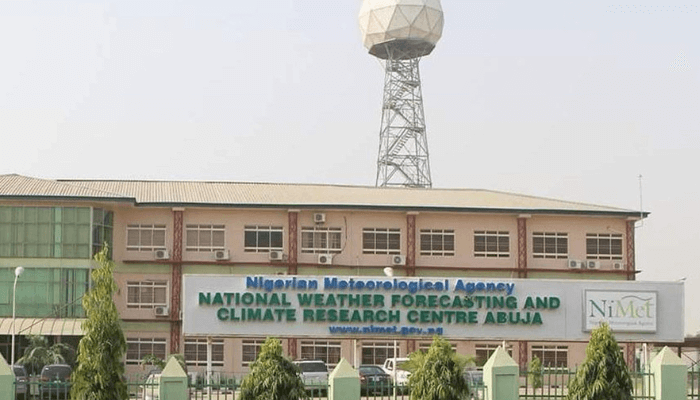
The Nigerian Meteorological Agency (NiMet) has marked a significant milestone in its quest for innovation and digitalization by replacing its traditional manual flight folder system with an electronic flight folder (e-flight folder).
This cutting-edge tool provides virtual access to a comprehensive suite of flight briefing applications, including weather reports, to pilots and airlines, thereby facilitating informed decision-making and enhancing safety protocols.
During a stakeholders’ forum held in Lagos, Charles Anosike, Director-General and CEO of NiMet, unveiled the Aeronautical Meteorology Bulletin, a groundbreaking publication designed to promote a deeper understanding of meteorology in the aviation industry.
This bulletin aims to empower airlines, pilots, air traffic controllers, and ground services to anticipate and manage weather-related challenges more effectively.

“Creating a safer and more trustworthy weather-ready aviation environment is pivotal to our success as we strengthen and expand our quality management systems, including ISO certifications,” Anosike emphasized.
Notably, the recent certification of Enugu Airport has brought the total number of ISO-certified airports to five, with Lagos, Abuja, Kano, and Port Harcourt already on the list. He said plans are underway to add more airports to this esteemed list.
Anosike highlighted NiMet’s unwavering commitment to observing and monitoring the Nigerian atmosphere for potential hazards, taking meticulous records of meteorological elements, and making accurate weather and climate predictions across various timescales.
The agency’s timely communication of weather and climate information has been instrumental in providing reliable early warnings that safeguard critical sectors, including aviation, agriculture, marine and blue economy, water resources, energy, health, disaster risk reduction, building and construction, and telecommunications, he said
The Director-General also spotlighted NiMet’s flagship product, the Seasonal Climate Prediction (SCP), a vital early warning tool for farmers, livestock practitioners, and other sectors of the economy.

Read also: NiMet launches centralised data platform to enhance aviation safety
The SCP provides crucial information on the onset and cessation dates of the rainy season, length of the rainy season, annual total rainfall, dry spell occurrence, little dry season, temperature forecasts, climate and health, and their socio-economic implications.
Furthermore, NiMet has implemented a co-production process, engaging relevant stakeholders in weather-sensitive sectors to craft informed, user-tailored weather forecasts. These forecasts are translated into Hausa, Yoruba, Igbo, and Pidgin to enhance uptake and facilitate better planning and climate-smart decision-making.
Farouk Umar Ahmed, Managing Director of the Nigerian Airspace Management Agency (NAMA), underscored the significant impact of climate change on the aviation industry, citing disrupted flight schedules, route changes, increased risk of accidents, and heightened pilot and air traffic control workload, leading to stress and fatigue.
Ahmed, represented by Tayo John, Director of Operations at NAMA, emphasised the need for domesticated and tropicalized solutions to address the challenges posed by climate change.
As professionals in various fields, Ahmed stressed that it is imperative to proffer workable solutions to the climatic issues affecting society, with the ultimate goal of preventing disasters on the ground or in the air.
In his goodwill message, Alex Badeh, Director-General of the Nigeria Safety Investigation Bureau (NSIB), commended NiMet for fostering collaboration and inclusivity through the stakeholders’ forum.
Badeh highlighted the critical importance of early warnings in enhancing safety and resilience across sectors, particularly in agriculture, disaster management, and transportation. He praised NiMet’s contributions to safer transport operations, noting that the agency’s weather insights have informed safety investigations and recommendations.