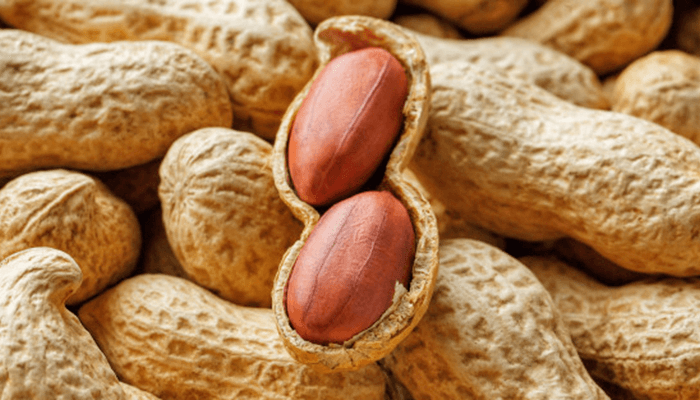
Nigeria is projected to harvest about 4.3 million metric tons of groundnuts in the 2025 farming season, which will be slightly higher than the 5-year average of 4.269 million metric tons, harvested last year in the country.
The northeast state of Bauchi will be producing about 12 per cent of the total volume of the groundnuts, thereby topping the list of the nineteen states in the northern part of Nigeria, where the commodity is being grown.
Nigeria is currently ranked as number one in Africa, where groundnut is grown, followed by Sudan, which ranked number two, and Senegal, Cameroon, Mali, and Burkina Faso, ranked as number three, four, five, and six, respectively.
Read also: ‘Sustainable farming practices offer numerous benefits for smallholder farmers’

According to industry experts, Nigeria, which used to be a major groundnut exporter in the 60s, is said to be aiming to regain its position as a major global exporter of groundnuts, which is in high demand in markets like Europe and Asia for both raw and processed products.
Information generated by the United States Department of Agriculture, International Production Assessment Division, seen by BusinessDay, revealed that West Africa accounts for the biggest production of groundnuts in Africa.
The commodity, which is a common household snack eaten all over Nigeria, known as ‘Gyada’ in Hausa, ‘Epa’ in Yoruba, and ‘Ahuekere’ in Ibo, Edo Languages, is associated with many festivities in many parts of the country.
Groundnuts are a staple ingredient in Nigerian cuisine and are used to prepare various snacks, including roasted, boiled, and fried groundnuts, and are also processed into products like peanut butter, peanut soup (a substitute for egusi soup), and sweets like kuli-kuli.
The crop which grows best along the Sudan Guinea savannah of ecologies of Nigeria, is the second largest contributor to the vegetable oil pool in the country, contributing about 23 per cent of all the vegetable oil that is produced by the country.

Refined groundnut oil is used mostly by food processing industries: the crude oil is sometimes employed in soap manufacture, although high prices are said to be restricting its usage for this purpose in recent times.
From the point of view of substitution, economic considerations are said to be more important than technical characteristics, as the oil has few specific end-uses for which it could not be replaced by other oils.
The Groundnut, which grows best along the Sudan Guinea savannah of ecologies of Nigeria, is the second largest contributor to the vegetable oil pool in the country, contributing about 23 per cent of all the vegetable oil that is produced by the country.
Groundnut growing requires at least five months of warm weather with rainfall or irrigation equivalent of 600 millimetres or more during the growing season, which implies that it can be grown almost all year round.
The USDA`s information indicates that the northwest state of Kaduna, as well as Benue and Niger states in the north-central, will be producing seven per cent (7%) of the commodity each, next to Bauchi, which is producing the bulk of the 4.3 million tonnes that the country is producing this year.
Read also: Industrial farming booms as CSOs raise concerns over JBS $2.5bn investment
Taraba, Kwara, and Jigawa will be producing six (6) per cent each of the total production, followed by Nassarawa and Borno state, which will be producing five (5) per cent, respectively. Next are: Kano, Zamfara, Kebbi, and Kogi, which are producing four (4) per cent, respectively.
While Gombe, Adamawa, and Katsina will be producing three (3) per cent each, and Sokoto will be two (2) per cent of the number.
A food nutritionist, Halima Musa, who is based in the commercial city of Kano, said that groundnut meal serves as a valuable feed ingredient in animal rations, noting that, as a concentrated food, pound for pound, it has more protein, minerals and vitamins than beef and liver.
She said that commodity contained more fat than heavy cream and more food energy (calories) than sugar, adding that peanuts also serve as excellent human snacks, either solely or in combination with other nuts.