…backs zoning of presidency, diaspora voting
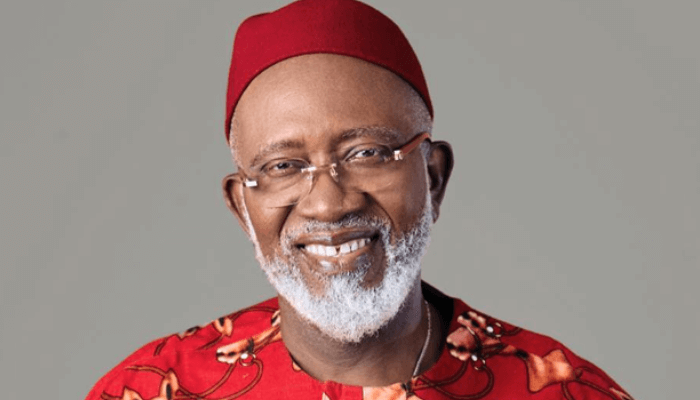
Athan Achonu, a non-serving senator and Labour Party Governorship candidate in the 2023 Imo State elections, has warned that Nigeria is losing out on a multi-billion-dollar opportunity by failing to legalise and regulate cannabis cultivation and processing.
Speaking to journalists on Monday in Abuja at a press briefing on the state of the nation, Achonu said, “The global legal cannabis market is projected to exceed $100 billion before the end of the decade, yet Nigeria has failed to take any concrete steps to participate.”
He said, “Nigeria is sleeping on a potential multi-trillion-naira industry while other nations are cashing in.

“The global legal cannabis market is projected to exceed $100 billion by the decade’s end.
“It is time for Nigeria to wake up, legalise, regulate, and strategically tap into the lucrative plantation and export market of medicinal and industrial cannabis to avoid the same mistake we made with palm oil.”
Read also: Nigeria has highest cannabis usage worldwide with 20m users, $15.3bn spent yearly – Report
He pointed out that countries around the world, including African neighbours, are already building strong cannabis economies while Nigeria continues to drag its feet.
“We are being left behind. Look at who is profiting: the United States and Canada, where legal sales in North America reached $30 billion in 2023; Germany, which has Europe’s largest medical cannabis market worth over €2 billion and is moving towards full legalisation; Portugal and the Netherlands, which have become continental hubs for cultivation and export, attracting massive foreign investment; Israel, which is a world leader in cannabis research and technology, exporting high-value medical products; and Thailand, which made history as the first Asian nation to legalise medical cannabis, aiming to capture a multi-billion-dollar slice of the regional market,” he said.

Achonu noted that even smaller African countries are moving faster than Nigeria.
The senator added, “Our neighbours, Lesotho, Zimbabwe, and Malawi, have established legal export frameworks, attracting international partners and generating significant new revenue for their economies.
“Meanwhile, we continue to miss the chance to turn our natural advantages into wealth.”
He described the potential benefits as enormous, stressing that cannabis could be “Nigeria’s green gold.”
According to him, legalisation would diversify the economy, create jobs, attract foreign investment, generate tax revenue, and open doors for medical research and treatment.
“The question is not if the world will legalise and regulate cannabis, but when? Nigeria has the perfect climate, agricultural expertise, and entrepreneurial spirit to become a dominant player in this emerging global industry.
“The world is not waiting. We must not wait any longer. It is time to legalise, industrialise, and monetise. Our economic future depends on seizing this opportunity,” he said.
Achonu urged the Federal Government and lawmakers to act decisively, adding, “Let’s cultivate prosperity. Let’s export growth. Let’s invest in Nigeria’s green gold.”
The former lawmaker also addressed the question of governance stability, calling for the zoning system to be enshrined in the Constitution.
According to him, zoning should go beyond the simple North-South arrangement to deliberately rotate the presidency among the six geopolitical zones.
“To achieve lasting inclusivity and stability, our zoning arrangement must be constitutionalised.
Read also: The debate over Cannabis
“It should be made operational not just for the North and South, but to deliberately rotate the Presidency amongst the six geopolitical zones, starting with the two zones, South-East and North-East, which have not held that position since our democratic dispensation”, he said.
He argued that such a system would guarantee fairness and reduce political tension.
“More importantly, when it comes to any zone, the zone should be allowed to have its eight years uninterrupted.
“If that person who has been elected is not doing well, the other five zones will impeach him, so that somebody else who is more capable from that zone can complete his tenure.
“This is to ensure stability, and not when one zone is ruling, another person from a different zone will jump into the ring to scatter it, thereby causing instability and unnecessary political tension,” Achonu said.
He also commended some policies of the current administration, including the removal of fuel subsidy, the push for local arms production, tax reforms, and the 30 percent local processing requirement for raw materials before export.
However, he stressed that implementation and accountability remain critical.
On the fuel subsidy removal, he said, “The proceeds which were distributed constitutionally to States and Local Governments have not yielded the desired result of enhancing the quality of life of citizens.
“Most of these governors have shown no convincing evidence in their use of these proceeds to affect the States’ Human Development Index.”
He proposed that more funds be allocated directly to local governments since they are closer to the people and can be held accountable for mismanagement.
Achonu also called for immediate action on diaspora voting, stressing that Nigerians abroad remitted $20.93 billion in 2024, four times the value of the country’s foreign direct investment for the same year.
“It is a paradox that Nigerians in the diaspora, who are monumental contributors to our economy through remittances and knowledge transfer, are disenfranchised,” he said.
“With current technology, it is laughable that we have not created a secure digital platform for them to vote.”
Read also: Reps step down cannabis cultivation licensing bill
On security, he welcomed President Bola Tinubu’s call for local arms production and urged the government to harness institutions such as the Projects Development Institute (PRODA), Enugu, to achieve self-sufficiency in defence technology.
“Security is the foundation of development. Without safety, no investment, no economy, and no society can thrive,” he said.
Concluding, Achonu said his proposals were not partisan but patriotic interventions aimed at fostering unity, stability, and development.
“I have experienced political combat and still harbour long-standing dreams for the stability of my country.
“I will therefore continue to promote and pursue the fulfilment of these proposals and support any government that aligns with them,” he added.