|
Getting your Trinity Audio player ready...
|
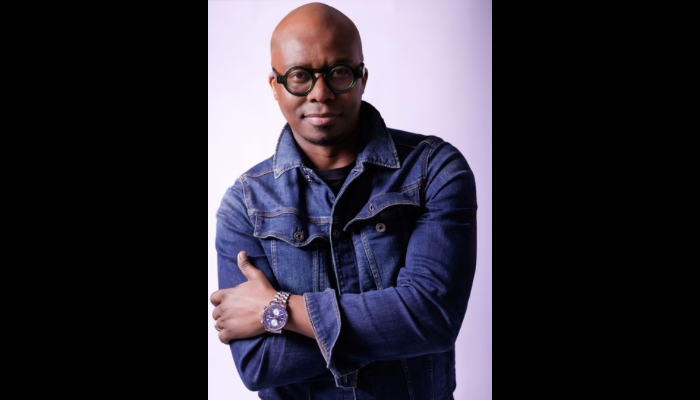
Monde Twala is the senior vice president and general manager, Paramount Africa, as well as the lead, BET International.
Drawing from his over two decades experience in the industry, he has been driving the development and growth of powerhouse music, youth and entertainment brands such as MTV, MTV Base and BET Africa as well kids and family brands Nickelodeon and Comedy Central across the African continent.
In this interview with Obinna Emelike, Twala highlights the need for safe online space and content for Africa’s youth, encapsulated in Room of Safety campaign, which is being done by MTV Base in partnership with MTN, the essence, impact so far, how to identify and report online harm, among related issues. Excerpt:
What is the essence of MTV Base’s partnership with MTN on the Room of Safety campaign?

I am quite proud about this particular project because I think it is not only just a natural extension of a vision and a mission that we have had as Paramount Africa. We are a youth brand and I am very proud about reflecting content that is relevant for the youth, by the youth, for Africa, by Africans. So, I think the partnership with MTN was just such a great fit and synergy.
MTN had done quite extensive research around online safety for children. And they came up with research. The research paper is actually called Help Children Be Children.
They engaged with us because obviously we have been working in the youth pop culture space.
But going beyond just entertainment content and entertainment formats, we have previously done initiatives around mental health. We have done initiatives around elevating gender challenges and gender issues. Particularly mental health was a big piece that we started working on.
And when MTN came to us to see how they could collaborate with us; it was just the perfect fit because the online space has had an impact on young people.

Of course, technology at one level is an enabler. But on another level, the realities of technology is that, particularly online content, can be harmful.
It can have its negative impact on young people from a mental health perspective, from a behavioral perspective and from an abusive perspective in terms of just the many challenges that young people are faced with. And I think that gave birth to the Room of Safety format. This is a great content format that is really anchored by research, but also executed with the flair, the entertainment, and the pop storytelling culture that resonates with the youth across the market.
The research was also African research. MTN did this research across multiple regions: East Africa, Southern Africa, West Africa, across key markets. And the findings were really good.
Young people were telling us in the research some of the not-so-great experiences online, whether it is inappropriate content, cyber-bullying, or improper approaches that they are getting on social media platforms. All of that does create some kind of instability in terms of mental health and safety.
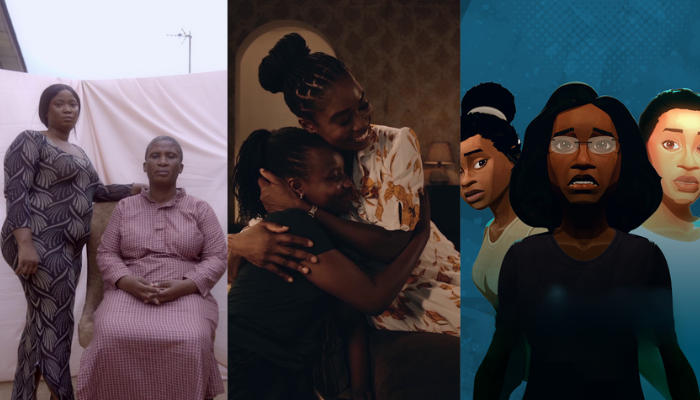
And we came together and felt that it would be appropriate to come up with some guidelines, and with some content and storytelling in their voice. Give them the voice and the platform to actually talk about those experiences. And that is what Room of Safety is.
And whilst doing that, making sure that the educational elements are pointing them to the relevant tools to help them navigate online platforms that are inappropriate, that there is sufficient reporting, it is important that we make the tools accessible and make them also the campaign and the storytelling relatable so that it can then deliver better awareness and change behaviour. I think, if you guys look at this, you analyse our market, you know, Africa is a young continent.
We are the youngest continent in the world. With deep culture, we are rooted in our culture and heritage. So, that also means that we are a learning continent.
We are constantly improving and learning. And I think this initiative and partnership with MTN is very progressive. And I am very proud of this partnership.
And I think it also really instills confidence in our ability to influence, shape, and structure safe spaces for young people online. And creative solutions of how we can all deal with mental health, how we can deal with social bullying, how we can deal with inappropriate content and report it.
The tools are there, but they don’t know how to access the tools to report inappropriate content online and be able to filter the right, the wrong, and also feel that they are empowered and have a voice to take action against inappropriate content online, obviously the series is rolling out. We have rolled out the series over the last couple of weeks.
It has been well received. The beauty about it is that already, we see positive results in terms of driving engagement. Young people are having conversations with each other about safety and harmful content online.
Young people are having conversations with their parents now more than ever. So, what it is also doing is creating a cross-generational appeal in terms of really elevating and showcasing lived experiences that can shape and change behaviour. It is also creating a better online future for all of us and, you know, across different generations, particularly for young people and young children who are not of age, they need more guidance and support. I think that is what we are trying to do with this initiative.
What other impacts are you expecting from the campaign?
I think the impact for me is about driving engagement. Highlighting the threats that exist online, particularly misinformation, cyberbullying, and change behaviour. I think it does take a while, of course, but already what if you look at the engagement in terms of the series rolling out on air, it has been great.
The digital engagement we are seeing has been great and it is pointing us in the right direction. In fact, what is already happening is that we are seeing a lot of other tech partners coming on board, to see how they can also help and influence.
We launched the campaign in Johannesburg and companies like Meta, TikTok and others were there.
A lot more of the online platforms are actually quite supportive and they all have the tools for reporting online harm. You can report threats, threatful content, harmful content.
You can go to a lot of these platforms, but no one knows how. So, this is a long-term campaign. We are building the blocks as we move forward and hoping to build more of it.
But it is research-based already. So, the research is pointing us in a direction where we actually need to then make sure that in a measurable way, we can roll out and encourage responsible online practices that build confidence and empower young people on the continent. And that is what it is.
So, it is in the early days. We are in our fifth week rolling it out. But so far, it has been good in terms of just driving social media engagement.
Also, from a ratings perspective, we are getting good traction. And now we are rolling it out and need as many partners on board to help us show up for the youth in their voice, anchored by storytelling that is educational and can continue to drive advocacy across industries.
What role will young people play in all these to be safe?
I think the first piece in terms of the role and expectation that we have is that this is going to drive engagement. We want to drive engagement.
Young people must engage young people. The format itself from its core conceptually is research-based. So, it is a youth-led research movement that is really informed by young people where they tell us their own experiences online.
So, obviously we have crafted it in a storytelling format that is educational and that can also help promote digital safety, and maybe, define digital safety. Digital safety to me versus you is different because we all are consuming content online. Very different actually. Very, very different.
But think about children. Children do approach online platforms with naivety, with less filters than we would. And how do they filter authentic information to misinformation? You look at what AI is doing, especially some of the AI-driven creative content that is out in the market now may not be safe. One needs to ask if they are appropriate or inappropriate.
How do you filter that? And that is what we are exploring around the Room of Safety. It is going to be content that really speaks to what the youth experience is online. Hopefully, we can share the information and the tools that can then advance their behaviour and how they use online platforms in terms of just applying key filters.
That is what we are hoping for and the vision we have for this campaign in terms of how it can really create lasting change.
What about information sharing?
You know, it starts with a conversation. If I am able to have a conversation with a 16-year-old about what they are, you know, and as parents, we don’t know what our kids are watching online. We as parents are actually, I think, are behaving in a worse off position.
We don’t even understand what tools are available for them to report inappropriate content that they see online or inappropriate experiences that they encounter online. So, I am encouraged by MTN’s vision. I think it is a great synergy and it aligns with our vision in terms of how we have been showing up for young people over time.
Mental health, I think, is another pillar that we all need to be very intentional and proactive about. How do we help young people deal with the impact? You just go online now, there are lots of things, appropriate and inappropriate.
There is inappropriate messaging, cyber bullying. How do we help online youthful communities to be safe, filter content or report online harm? The reality is that we all are Africans.
Africa has the youngest population in the world. And technology is going to impact how we learn and how we behave.
Technology is going to impact how we make decisions and it has been very important for us to be very, very proactive of a telco player in the telco industry, a player like MTN, to advance such initiatives that promote a safe digital future. I think that is also another key filter in this initiative.
How are you using positive messaging like Inside Life and Hustle Dairies to change negative content out there for youth?
I have been doing this for many years and working with young people to cultivate storytelling and entertainment content that cannot only reflect who they are, but help them to be authentic. So, such storytelling has to be authentic to make a positive impact. I am a great believer that Africans, as Africans, we do not watch content for pure escapism. Africans watch television content across multiple genres, but with a key filter to learn something, for a take out, for an experience that is more enriching, that can enrich their lives in some form or way.
I am a big advocate for edutainment formats. If you think of MTV Sugar over the years, if you look at some of our local content we have done over the years, they follow the edutainment format. This is the third season of Inside Life. We started Inside Life showcasing celebrities because people love celebrities. We all love a little bit of gossip.
We all love to know what happens behind closed doors in some of our big celebrity lives. So, we love that, but with Hustle Diaries, we took it one step further, we leverage pop culture.
We have seen some of the personalities on the show are up and coming, some are big and popular, but they come from somewhere. They were not born celebrities. What was their hustle? I think what the show does is also, especially in such tough economic times, is we are all looking for hope and inspiration.
We are all looking for stories that showcase resourcefulness, that showcase and highlight how you can, how much you must be determined and ambitious to succeed. I think the continent and young people of the continent are looking for those kinds of stories. They are looking for stories of hope.
They are looking for entertainment, but they want entertainment that resonates, that is authentic, and that is real. Like, reality formats in this realm really work well, and they have been working well and performing well for our youth audiences for many years. What you will see in this season is also different.
It is the hustle. So, you are going to get that rawness. You are going to get honesty, because we are going back to where we came from, we all come from a village.
We all come from a heritage. Yes, maybe they are big celebrities now, but they come from somewhere. And what will that journey be? Your journey inspires someone else, and it elevates someone else’s dreams. It says to us in challenging times that, yes, we can win. Yes, there is light, and we can win at the end of a journey.
A journey starts somewhere, and we are all chasing dreams. It is obviously, Inside Live Diaries is shot and produced here in Nigeria, and also really is a reflection of just how Nigeria has become the capital of entertainment on the continent. You look at Afrobeat, you look at Nollywood, you look at just pop culture in general, Nigeria is really spearheading Africa on the global scale in a beautiful way.
From our side, we are very proud to really highlight and showcase fresh talent in an authentic way. Beyond just entertainment and escapism, there is much deeper purpose, and I think everyone is going to enjoy this season. It is really raw, but it also carries a lot of hope and ambition that is going to help a lot of us as Africans and young Africans to really chase their dreams.