|
Getting your Trinity Audio player ready...
|
Nigeria is gearing up to host the Intra-African Trade Fair (IATF) 2027, following the announcement on Wednesday in Algeria.
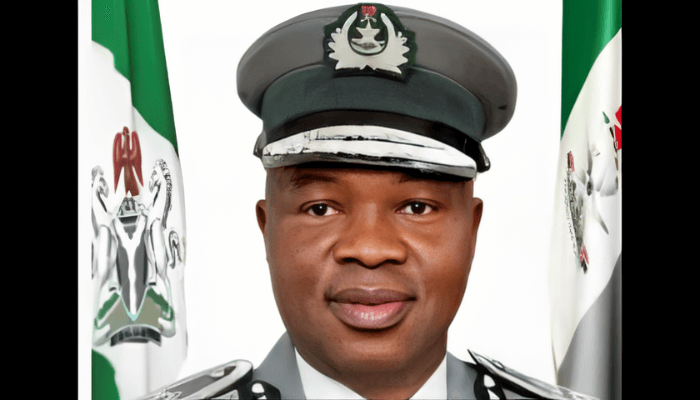
Bashir Adewale Adeniyi, Comptroller-General of the Nigeria Customs Service (NCS), calls for a “whole-of-society” approach to ensure the country delivers a world-class event.
Speaking with journalists during a media interview at the IATF 2025 in Algiers, he expressed both excitement and urgency as Nigeria prepares to welcome trade delegations from across the continent and beyond, come 2027.
“As Nigerians, we cannot help but be proud that we’re hosting IATF 2027,” he said. “But it goes beyond government efforts. What we’ve seen here in Algeria shows clearly that hosting a successful trade fair of this magnitude requires contributions from every part of society, public and private.”

While security, immigration, and customs will handle the logistics of people and goods moving in and out of the country, the CG stressed that visitors’ overall experience will depend on much more from transportation and accommodation to hospitality and cultural readiness.
“The most important thing is the feeling we create for our guests. Will they find it easy to move between venues? Will they feel safe and welcome? These are national questions, not just agency matters.”
On the role of the Nigeria Customs Service, he emphasised that preparations will begin to ‘streamline temporary admission procedures’ for international exhibitors who will bring in goods for display.
“We will have dedicated desks and streamlined processes at all entry points,” he said. “It’s a simple system; goods are logged on arrival and checked upon exit. If any remain behind, duty is paid. We want this process to be seamless.”
The CG also acknowledged some of the broader trade challenges discussed at IATF 2025, including poor intra-African connectivity, infrastructure deficits, and regulatory bottlenecks. He noted that Nigeria is addressing these by improving port efficiency, introducing dedicated export terminals, and rolling out digital customs systems.

With trade volumes already rising due to recent reforms, including the Lilliput Export Command in Lagos, Nigeria is positioning itself as a trade facilitation leader not just a host country.
“The real success of IATF 2027 will depend on how well we work together,” the Customs CG said. “Nigeria has what it takes, but we must coordinate, collaborate, and deliver.”
As IATF 2025 continues in Algiers, Nigeria is already building momentum not just to host Africa, but to showcase its readiness for deeper continental trade integration.
Responding to balancing revenue collection targets with trade facilitation strategy, he said, “As for balancing revenue collection with trade facilitation, we are very deliberate. While we are mindful of our targets, we focus more on how we achieve them. We are examining the entire trade ecosystem to find improvements that benefit importers and exporters.”
To ensure that processes that cause delays at the ports, those that frustrate exporters, are addressed, he said, “we have already begun taking action. First, we have created a dedicated export terminal in Lagos called the Lilliput Command. Around 70–80 percent of our exports are routed through that terminal. It serves as a central hub where exporters complete their documentation before moving their goods to the various other terminals in Lagos for physical shipment.
“One of the initiatives we’ve implemented in collaboration with terminal owners is the use of barges to move containers. This helps avoid long delays at port gates and eases access into the port. We’re already seeing remarkable progress. Export volumes, both in quantity and value are beginning to increase.”