In my earlier article published in ThisDay newspaper edition of 01 December, 2024 titled ‘Azegba Eya–Simon Ekpa Parallelisms and Divergences,’ I compared and contrasted the character traits of an Uda Nọkwọ Elugwu-Ezikeọba folk trickster, Azegba Eya and Simon Ekpa, the self-styled leader of a “Biafra Government in Exile.” My aim then was to underscore both the humorous and harmful perlocutionary dimensions of their speech acts. In the end, I concluded thus: “Azegba’s swinging safari and Ekpa’s content creation might share the same absurd comedic value, but the stakes in Ekpa’s case demand more than a village laugh; they demand accountability, justice, and the restoration of peace in Igbo land.”
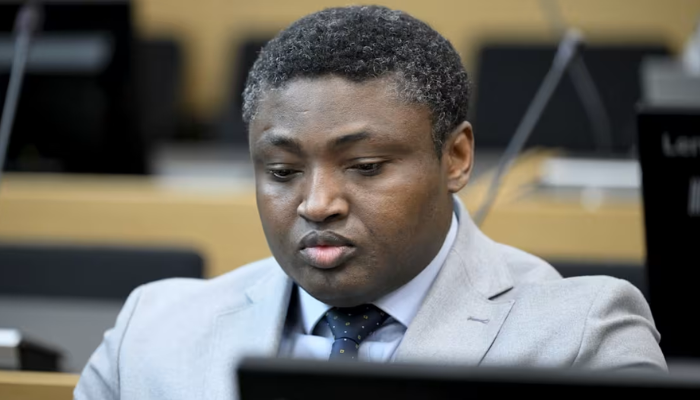
One feels vindicated given that the Finnish judicial system has now risen to the occasion by serving justice to Simon Ekpa decisively. In its unanimous ruling, the Päijät-Häme District Court sentenced the 40-year-old former municipal politician from Lahti to six years in prison after convicting him on multiple terrorism-related offences. The charges included participation in the activities of a terrorist organisation, incitement to commit crimes for terrorist purposes, aggravated tax fraud, and violations of the Lawyers Act. According to court documents, Ekpa had sought to promote the independence of the so-called Biafra region in southeastern Nigeria through illegal means, equipping armed groups with weapons and explosives via his contacts.
With this verdict, Finland has demonstrated that in societies where justice systems function, no individual can trivialise violence as social media “content creation” without facing legal consequences. The Finnish system moved from arrest to conviction within a space of ten months. By contrast, in Nigeria, a similar case involving Nnamdi Kanu has dragged on for over four years without closure, despite the enactment of the Administration of Criminal Justice Act (ACJA) 2015, which was specifically designed to prevent such delays.
Let’s pause for a moment to trace the Simon Ekpa trajectory from “content creation” to terrorist conviction. When Ekpa was first arrested and arraigned in Finland, he reportedly dismissed his activities as nothing more than “social media content creation.” In other words, his broadcasts, which ordered “sit-at-home” campaigns, incited violence, and threatened non-compliant citizens with death, were, in his telling, mere theatrics. Nigerians familiar with Azegba Eya’s proverbial lore could not miss the parallel. When Azegba was caught red-handed by village vigilantes stealing kola nut in the plantation, he claimed he was merely swinging, wondering if people will no longer swing again simply because Uda has instituted a local vigilante. (“Madụ atkẹẹgtẹ akpa mọgụ nẹ Ụda họrụ oche”). The absurdity is striking: both men, when confronted with the consequences of their actions, retreated into comic denials.

But while Azegba’s antics invited laughter, Ekpa’s left corpses on the streets of urban areas and rural communities of southeast States of Abia, Anambra, Ebonyi, Enugu, and Imo. The Finnish court, however, was unimpressed, hence the swift judgment. What Ekpa sought to trivialize as “mere content creation” was, in truth, perlocutionary speech with deadly consequences. His words, transmitted through YouTube videos and social media broadcasts from the comfort of Finland, translated into burnt markets, dead bodies, and paralyzed communities thousands of kilometers away. The Finnish court’s verdict is, therefore, not merely a legal milestone but a symbolic puncturing of the dangerous myth that digital agitators can hide behind the veil of “content.”
The Nigerian version of Nnamdi Kanu case brings into sharp focus on a justice system in loose chains. The swiftness of the Finnish process stands in sharp contrast to the Nigerian experience. Since Nnamdi Kanu’s re-arrest in June 2021, his trial has meandered through adjournments, preliminary objections, jurisdictional disputes, and endless delays. Four years on, justice has neither been delivered nor denied; it has simply been suspended. This is particularly galling because Nigeria already has on its statute books a law designed to prevent precisely this kind of judicial paralysis.
The Administration of Criminal Justice Act (ACJA) 2015 was enacted to reform and harmonize Nigeria’s criminal justice system. Among its key objectives are speedy justice, protection of rights, restorative justice, uniform standards, and technological integration. Yet, in practice, the ACJA has become another example of Nigeria’s reformist paradox: bold on paper, timid in implementation. The law is clear; the spirit is willing; but the institutions are weak. Judicial officers overwhelmed by case backlogs, ill-prepared prosecutors, and political interference at the highest levels ensure that cases linger endlessly.
Nnamdi Kanu’s legal saga is littered with landmark rulings that, on paper, should have delivered liberty; yet, in practice, have not. In April 2022 a Federal High Court judge struck out eight of the 15 counts brought against him, finding that some charges lacked substance. (cf. https://www.vanguardngr.com/2025/07/court-fixes-oct-10-to-rule-on-motion-to-stop-nnamdi-kanus-trial/?utm) The Abuja Division of the Court of Appeal went further on 13 October 2022, ordering that Kanu be discharged and acquitted and directing his immediate release, a dramatic judgment driven in part by findings that his abduction from Kenya to Nigeria may have violated lawful process. (cf. https://www.theafricareport.com/250583/nigeria-2023-buhari-in-dilemma-as-court-orders-release-of-separatist-leader-nnamdi-kanu/?utm)
That sequence, however, did not yield freedom. The Federal Government appealed and the Supreme Court subsequently reversed the Appeal Court’s decision, ruling that Kanu must still face trial — a reversal that left many observers stunned and raised fresh questions about finality, forum and enforcement in politically charged cases. (cf. https://thenationonlineng.net/treason-trial-why-supreme-court-reversed-kanus-acquittal/?utm)

Complicating matters further are independent findings abroad about the legality of Kanu’s transfer to Nigerian custody. Courts and tribunals outside Nigeria — including recent Kenyan judicial determinations and commentary from UK legal observers — have expressed concern that his abduction and rendition involved grave procedural and human-rights breaches. A Kenyan court has characterized the rendition as unlawful and awarded damages, while UK legal bodies have publicly registered “deep concern” about the treatment he endured following his transfer. These judgments and observations have become part of the juridical record that ought to have influenced Nigeria’s response. (cf. https://www.doughtystreet.co.uk/news/court-appeal-expresses-deep-concern-treatment-british-citizen-nnamdi-kanu-detained-nigeria?utm_)
Throughout this period, an array of prominent figures and institutions – from South-East governors and members of the National Assembly to civic groups and human-rights advocates -have repeatedly called for Kanu’s unconditional release or for the speedy, transparent conclusion of his trial. (cf. https://www.vanguardngr.com/2024/07/ipob-tinubu-under-intense-pressure-to-let-nnamdi-kanu-go/?utm) Indeed, the Governor of Enugu State, Dr. Peter Mbah, observed in his address to the recently concluded NBA Conference in Enugu that Nnamdi Kanu’s case was the first issue he took up with President Tinubu when he had the first meeting with him. Despite periodic meetings with federal authorities and a stream of public appeals, these entreaties have yet to cut ice with the powers-that-be. The political calculus and institutional inertia that appear to underlie successive refusals to act on judicial pronouncements only deepen public distrust and give fresh oxygen to secessionist narratives.
Taken together, these rulings and repeated public appeals form an empirical pattern: Nigerian and international courts have raised serious legal and human-rights questions about Kanu’s detention and transfer; domestic appellate courts have at times ordered his release; yet, successive administrations have failed to translate those orders and public pleas into immediate, meaningful action. The result is legal limbo, a festering problem that undercuts public confidence in the rule of law and sanctions the very impunity the justice system is meant to correct.
The unfolding scenario brings us to interrogate the cost of delayed justice. Justice delayed, it is said, is justice denied. The lingering Kanu trial has left Nigeria’s southeast in a state of suspended animation. Every adjournment is a political event, every postponement a spark for speculation, every delay a wound to public trust. The failure to resolve Kanu’s case decisively has provided fertile ground for agitators like Ekpa to thrive. His rhetoric of “sit-at-home” gained traction precisely because the Nigerian state projected indecision and dithering.
It is telling that while Finland has jailed Ekpa, the Nigerian state has neither convicted nor acquitted Kanu, thereby prolonging the agony of millions caught between separatist violence and state lethargy. The contrast could not be starker: a European country with no direct stake in Nigeria’s internal conflicts has acted with clarity and speed, while Nigeria itself dithers in endless procedural circles.
What are the lessons from Finland, from which Nigeria may wish to draw and perhaps resolve to revisit Kanu’s case with the urgency of NOW? The first is that the law must be allowed to run its course without political interference. Finnish judges did not fear that convicting Ekpa would spark riots in Helsinki or Lahti; they applied the law as it stood, confident that institutions could manage the fallout. Nigerian judges, by contrast, operate in a climate where every high-profile trial is shadowed by political pressure, ethnic suspicion, and security fears.
Second, Finland demonstrated the importance of technology and forensic investigation. Ekpa’s broadcasts, financial transactions, and contacts were meticulously tracked, documented, and presented in court. Nigeria, despite having similar legal provisions under ACJA, often lacks the investigative rigour and prosecutorial discipline to build airtight cases. Instead, cases collapse on technicalities, or are adjourned endlessly because witnesses fail to appear or files go missing.
Third, Finland’s example highlights the necessity of distinguishing between free speech and incitement. Democracies must protect the right to dissent, but no democracy can tolerate speech that directly fuels violence and terror. Ekpa crossed that line, and Finland rightly treated him not as a harmless “content creator” but as a participant in organized criminality. Nigeria too must draw this line clearly and enforce it consistently.
Nonetheless, beyond Ekpa and Kanu, the broader lesson is that Nigeria’s justice system must rediscover both its efficiency and its credibility. The failure to resolve politically sensitive cases undermines public faith, emboldens criminals, and destabilizes communities. Speedy trials are not merely a procedural ideal; they are a national security imperative. If Finland can move from arrest to conviction in ten months, why should Nigeria require four years—and counting—for a single trial? The question is not rhetorical; it is existential. Every day of delay erodes the authority of the state; every adjournment deepens public cynicism; every procedural misstep strengthens the hand of agitators.
Simon Ekpa may have dismissed his agitation as mere “content creation,” just as Azegba Eya once claimed he was merely “swinging.” But Finland has shown that when content crosses into terror, laughter is not enough; justice must speak. Nigeria must now find the courage to let justice speak too. It is telling that while Finland has moved with speed and decisiveness to jail Simon Ekpa, the Nigerian state has neither convicted nor acquitted Nnamdi Kanu, thereby prolonging the agony of millions trapped between separatist violence and state lethargy. The contrast could not be starker: a European country with no direct stake in Nigeria’s internal conflicts has acted with clarity, while Nigeria dithers in endless procedural circles denominated by seemingly interminable amended charges. This is irony at its most biting.
The irony deepens even further when one considers that the Nigerian government itself has applauded Ekpa’s conviction in Finland. Minister of Information and National Orientation, Mohammed Idris, hailed the ruling as “a major victory for the Nigerian people in the collective fight against terror,” while the Chief of Defence Staff, General Christopher Musa, and the Attorney-General of the Federation, Lateef Fagbemi, echoed similar commendations. Yet, the same government that celebrates justice abroad appears to savour the fruit of cognitive dissonance by seeming to deny it at home. Nnamdi Kanu remains in prolonged detention despite multiple court orders in his favour. If Finland’s verdict is “good news,” then surely, what is good for the goose should also be good for the gander. Justice cannot be selective, and credibility demands consistency.
Finland has, in effect, delivered justice on Nigeria’s behalf, applying the rule of law with greater urgency than the state whose sovereignty is under direct threat. And in prolonging Kanu’s legal limbo, Nigeria has not only undermined its own judicial credibility but also perpetuated the suffering of its citizens in the South-East, where sit-at-home orders and violent reprisals continue to erode daily life. The Azegba Eya proverbial lore of “swinging when caught” may carry a comedic absurdity; but in this national parallel, the irony is tragic given that justice delayed is no longer justice denied; it is justice weaponized.
Our conclusion rests on this maxim: justice is the first duty of the State. The conviction of Simon Ekpa in Finland is a reminder that justice systems can still work when institutions are strong and laws are enforced without fear or favour. For Nigeria, it is a moment of painful self-reflection. The ACJA 2015 was supposed to usher in a new era of speedy, efficient, and rights-respecting justice. Instead, we are confronted with the paradox of a law that promises much but delivers little. The stakes could not be higher. The southeast remains restive, scarred by years of violence, disrupted by sit-at-home orders, and disillusioned by the endless Kanu trial.
In the end, the lesson is clear. It is time the fate of Nnamdi Kanu, the proverbial ram strapped chronically to the tenterhooks of the dithering Nigerian judicial system, is, as a matter of urgency, decided fairly, transparently, and justly. The Nkanu Igbo proverbial lore warns against the paralysis of indecision in matters that demand firm action: A ne-egbu ebule, shị gbuo ebule; egbugu ebule, shị tọọ ya ẹgbụ (“Let the ram be killed if fate so decrees; otherwise, let the ram be let off the tethers”). The wisdom is unmistakable: dithering benefits no one. What Nigeria needs is not more adjournments but decisive justice – justice that is swift, fair, and seen to be done. Anything less is an abdication of state responsibility. Kpo!
Prof Agbedo is of the University of Nigeria, Nsukka, a Fellow of Royal Dutch Institute, and Public Affairs Analyst