…Prisons overpopulated by awaiting trial inmates
…Delayed judgment impinges on inmates’ rights, freedom
…Nigeria must draw lessons from Finnish justice system
Ineh Ekubor, an auto mechanic, will not forget October 20, 2020 in a hurry.

That day, he was manhandled by some security men, who were in search of inmates, who fled after a prison break at Oko in Benin City.
His saviour was the quick intervention by a senior Army officer at Ekenwan Barracks, whose car he was servicing.
Sadly, some young men have been missing since then and may probably be languishing in jail as replacement for the escaped prisoners.
Yet, many have been incarcerated in jails across the country for offences they never committed.
Sadly again, they are abandoned to fate and harsh conditions of the prisons despite their innocence.

According to Ehis Izokhia, an Abuja-based human rights lawyer, the conditions of Nigerian prisons are so bad that you don’t wish an enemy to witness it.
He decried that the ugly situations have made it impossible for the prisons to become “correctional centres,” as many criminals became worse after gruesome experiences in jail, while the innocent turned criminal after their release.
“For me, the change of our prisons’ nomenclature to correctional centres is wrong because nobody is correcting anyone.
“It is survival of the fittest in there, prison officers don’t care, death is common and the slow justice system worsen inmates’ predicaments,” Izokhia decried.
The deplorable conditions of Nigerian prison and the untold stories of inmates are a source of worry for concerned citizens who now question the statutory obligations of correctional centres across the country.
Considering the poor conditions and other inhuman realities, many are insisting that the prisons have become training ground for criminals, instead of reformatory, which the government intended it to be with the change of its nomenclature from prison to correctional centre.
“If it is correctional, it means most inmates would be treated with human face, shown better ways to earn living than crime, taught self-sustaining skills, good manners and will not be seen as condemned criminals,” Chijoke Umelahi, another lawyer, argued.
He argued further that if the correctional centres truly correct criminals in their care, crime and the consequent crowd in prisons will reduce.
“We all can say that the reverse is the case today. How many of those who leave our prisons turn out good. They are worse off and go back to crime because of the harsh prison conditions that harden them and the economic hardship. Some end up going back to jail within a short time of their release,” Umelahi said.
Read also: Panel urges reforms in Nigerian correctional system
Moreover, Izokhia lamented that some inmates are also learning bad habits, especially those leaning towards perverts, whose promoters are influencing them with promises of freedom.
Many have said that rather than reforming inmates, the inhuman treatment and situations in the prison make them to become the more hardened. They argue that it was this reason that even after they are released from the centres, some of them become worse by going back to more dangerous and despicable crimes.
“It is in prison that some notorious criminal gangs are born, kidnapping and drug cartels, and sadly prisons are becoming breeding ground for perverts as their promoters latch onto the deplorable conditions to recruit people, who come on board after their freedom. Yes, it is happening,” Izokhia said.
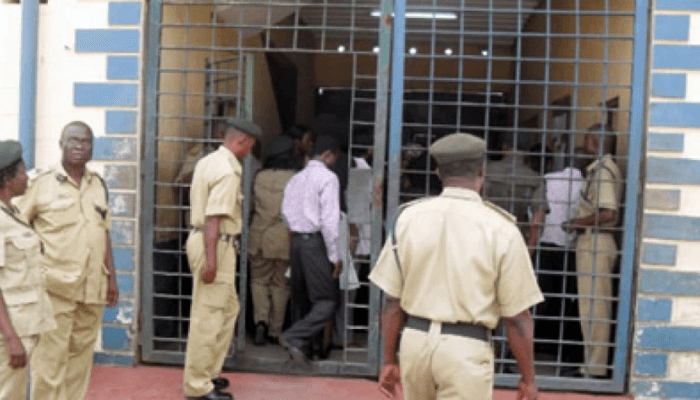
Also of grave concern, especially for the Nigerian Correctional Service (NCoS) is the overcrowded facilities across the country.
Many observers also worry over the growing crisis, despite the questionable budgetary priorities of the service.
Inusa Jato, an executive of a human rights and human trafficking non-government organisation, decried that half of the inmates at Kuje Prison in Abuja have no reason to be in jail if the justice system is working optimally.
Blaming the overcrowded prison population on the dysfunctional justice system, Jato decried that many, (both innocent and guilty) are increasingly denied justice due to delays in Nigeria’s justice system, despite all the reforms.
According to data from the NCoS, there are over 82,847 inmates across the country’s 240 correctional centres as at April 2025.
The staggering figure is nearly double of the 50,083, intended capacity of all.
The Nigerian Correctional Service also revealed that over 56,000 of the inmates, about 68 percent of the total prison population, are awaiting trial.
As shocking as the data may sound, it points to a growing crisis, which the Nigerian Correctional Service is grappling with, amid grave consequences for the country.
Reviewing the data, Jato lamented that out of the 82,847 inmates, it means that less than 27,000 are convicted.
“Our work as an NGO often requires us to visit prisons, courts and also to follow some human rights abuse cases. To say the least, some of the things we see are shocking.
“Many are incarcerated not because they have been found guilty, but because of a slow justice system,” he said.
Citing Simon Ekpa’s case, he commended the efficient Finnish justice system, which gave verdict on the case within a short period, though not in favour of Ekpa.
“He was convicted and sentenced to six years in imprisonment this September on terrorism.
But those who called for his trial in Nigeria know that Ekpa will never get justice in five years here. Nnamdi Kanu is still there even when the court ruled in his favour,” Jato said.
Umelahi also agreed that speedy justice will save the situation, depopulate prisons and enable the correctional centres to truly do correctional jobs rather than punishing inmates.
He insisted that a speedy justice system is necessary because lawyers are abandoning many cases today due to the delays.
“Talking about the lapses in the judiciary system will look like we lawyers are fighting the system. No, we are not.
“There are ugly trends that are not just frustrating to a lawyer, but also anti-developmental for the justice system in the country.
“How can an inmate be awaiting trial for five years and when he eventually gets justice, he may be incarcerated for two years.
“That is wastage of people’s destiny, lack of confidence in the system and also huge cost for the government for feeding them that long,” he said.
Izokhia toed the same line, saying that the huge budgetary allocations for correctional centres can be saved and used for more developmental projects if there is a speedy justice system.
It would be recalled that during a budget presentation before the senate in December 2023, Haliru Nababa, comptroller-general of the NCoS, revealed that the service spends N800 daily feeding its 900 dogs, while the inmates survive on N750 per day, which is N250 per meal.
Though it is dehumanising to hear that the correctional centres spend more on dogs than the inmates, that is the reality, which can be addressed, according to some observers.
“The government will spend less if it depopulates the prisons, soaring numbers of those on awaiting trials will reduce if justice is fast, if the budgetary allocations meant for correctional centres are judiciously used, there will be no excuses like no fuel, no car or no police to take inmates to court for hearing. With all these, there will be no need for the many dogs being fed more than humans,” an anonymous senior civil servant observed.
However, others think that the government should be honest in addressing the root cause of crime, which is the persisting hardship.
They also urged for the implementation of reforms with human face as many are pushed to the wall already, with crime as the only option for those with less morals.
“Lucky Dube, the late South African reggae star, sang that the government should build more schools than prisons. Yes, our government should fight the root cause of overcrowded prisons, hold handlers of the correctional centres accountable for their budgetary allocations and stop the interference in the judiciary system, which slows justice,” the anonymous senior civil servant said.