…says current health financing g insufficient for 220 million Nigerians
…seeks greater private capital to meet health needs
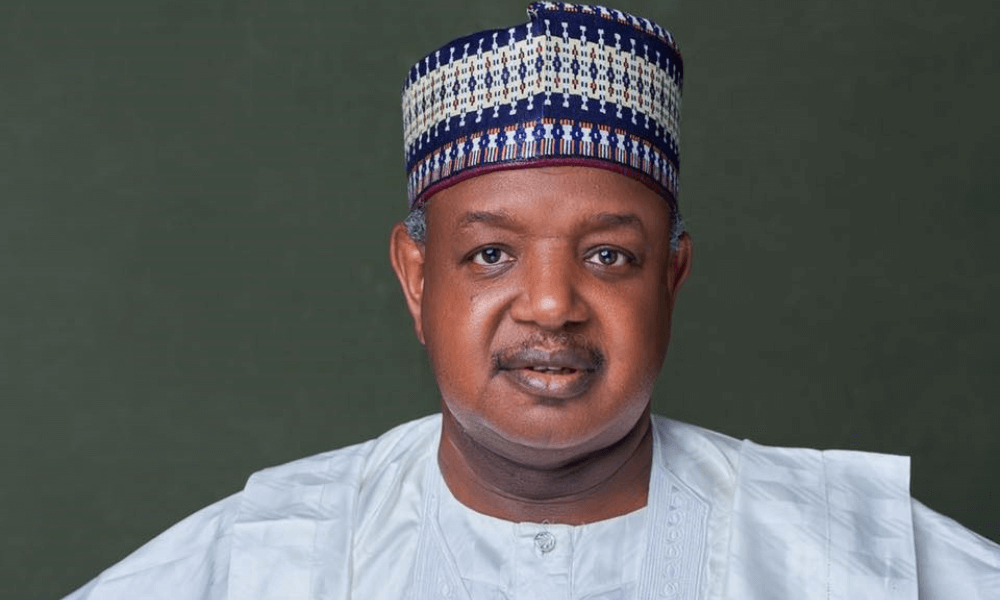
Minister of Budget and Economic Planning, Senator Abubakar Atiku Bagudu, has said that Nigeria requires significantly more private capital to complement public resources to meet the healthcare needs of over 220 million citizens.
Speaking at the National Health Financing Dialogue in Abuja, Bagudu explained that while the government has expanded its budgetary allocations to health and education under President Bola Tinubu’s Renewed Hope Agenda, the current combination of public and private funding remains far below the level required to deliver adequate services.

He noted that Nigeria’s reforms in revenue mobilisation, coupled with increased federal and state budgetary allocations, have boosted development partners’ and investors’ confidence. However, he stressed that the scale of available financing still lags what is needed to transform the sector.
“Despite the reforms and our determination to get it right, the combination of public and private resources is still insufficient to meet the health care needs of over 220 million Nigerians,” Bagudu said. “We are also not yet accessing private capital in the quantum required or at pricing that is comparable to what investors find in other countries,”
The Minister maintained that Nigeria’s large population, absorptive capacity, and ongoing economic reforms present a compelling case for greater private investment. He added that platforms such as the National Health Financing Dialogue provide an opportunity to highlight both the country’s needs and its readiness to attract sustainable health sector financing.
Read also: Health insurance is now compulsory as Tinubu mandates compliance for procurement, licensing
According to him, the government’s priority remains creating an enabling environment for investment, crowding in private sector financing through strong public commitments, and ensuring that resources are channelled effectively to improve health outcomes.

Bagudu further commended private operators already providing world-class health facilities and diagnostic services in Nigeria, saying their successes demonstrate the profitability and viability of the sector. He urged both local and international investors to take advantage of the opportunities available.
In his remarks, Uche Amaonwu, Country Director of the Gates Foundation in Nigeria, stressed that even within a constrained fiscal environment, available funds can still be deployed strategically to support evidence-based policymaking, strengthen implementation capacity, and incentivise action across the healthcare system.
Amaonwu reaffirmed the Foundation’s commitment to Nigeria’s health sector, pledging continued support for policies and programmes aimed at saving lives, reducing financial hardship caused by medical expenses, and ensuring universal health coverage.
“We are encouraged by the energy and collaboration demonstrated at this Dialogue. Our hope at the Gates Foundation is to help convert this momentum into lasting impact for the Nigerian people,” he said.
He commended the Nigerian government and its partners for taking bold steps toward building a sustainable health financing system that guarantees equitable access to quality healthcare for all citizens.
“It truly inspires me to see government at all levels, federal, state, and local working alongside the private sector, civil society, academia, and development partners with one vision: to achieve a health system that delivers quality and equitable care for every Nigerian,” Amaonwu said.
He highlighted key achievements that have raised optimism about the country’s health reforms, including the recent signing of a compact designed to align the entire health development ecosystem under a sector-wide approach. According to him, this new framework pools resources from multiple stakeholders to ensure equity and sustainability.
Amaonwu also pointed to practical instruments such as the Basic Healthcare Provision Fund (BHCPF), which continues to incentivise collective financing across the system, and reforms under the leadership of Kelechi Ohiri, Director General of the National Health Insurance Authority (NHIA), which have brought health insurance to the centre of policy discussions.
“These are very practical interventions that make reforms less abstract. We are excited to see these structural and concrete actions taking shape because this is how we can truly build the path to sustainability,” he noted.