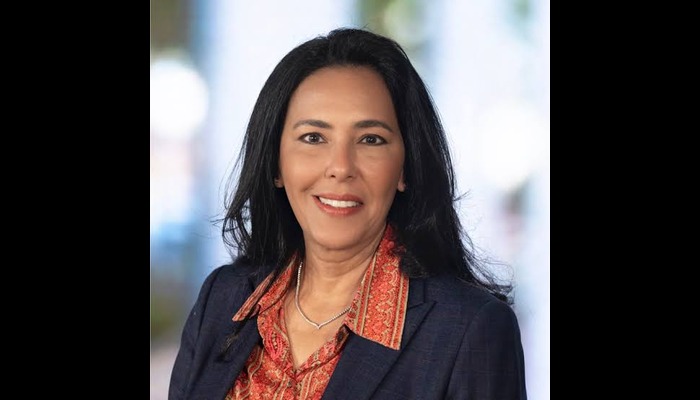
Dr. Dahlia Khalifa, regional director at the International Finance Corporation (IFC), has noted the importance of rapid artificial intelligence (AI) adoption in Nigeria, citing how AI-assisted tutoring in Nigeria helping 800 students achieve the equivalent of two years of learning in just six weeks.
She therefore called for urgent investment in Africa’s digital infrastructure and skills, stressing that AI and digitalisation could unlock transformative growth for the continent.
Speaking at the inaugural Gitex Africa Nigeria event in Lagos, Khalifa also cited AI’s impact across the continent.
She highlighted how AI-enabled drones reduces medical delivery times in Ghana and Rwanda from hours to 30 minutes, and AI imaging tools detects diseases such as tuberculosis and cervical cancer with 90 percent accuracy.

“In agriculture, digital platforms are connecting smallholder farmers with idle machinery, improving yields and resilience against climate change. In finance, AI-powered credit scoring is giving millions of unbanked Africans access to loans, fuelling entrepreneurship,” she said.
AI, she argued, offers Africa a unique opportunity to leapfrog development barriers. “AI is already reshaping the global economy. It is slashing costs, boosting productivity, and unlocking waves of new innovation,” she said, noting its potential to add $15 trillion to global GDP by 2030.
“For Africa, AI is not just about efficiency. It is about transformation,” she added.
She described Lagos as a city that is not only the beating heart of Nigeria’s economy, but also one of the most dynamic hubs of innovation in Africa and is a centre of creativity, resilience, and ambition.

“We are at a defining moment. Digitalisation is no longer an option. It is happening,” she told delegates of policymakers, entrepreneurs, and investors.
Read also: GITEX Nigeria: IBM, Meta, MTN, other global tech leaders support drive for $1trn economy
Africa’s youth as a competitive advantage
Khalifa underscored the demographic realities shaping the continent’s future.
Africa’s population is expected to rise from 1.5 billion to 2.5 billion in 25 years, with 600 million young people entering the job market.
“This is the fastest growth in the world,” she said. “With more than 60 percent of Africans under the age of 25 and smartphone adoption rising steadily, Africa is home to one of the largest pools of digital natives in the world. This is not just a demographic fact. It is our greatest competitive advantage.”
She pointed to the rapid expansion of Africa’s digital economy, projected to add $180 billion to GDP by 2030, equivalent to 6 percent of total output. “Digital transformation will, we estimate, create 230 million jobs,” Khalifa said. “These are not abstract numbers. They represent the livelihoods of our youth.”
Read also: GITEX Nigeria berths as NITDA signs MoU with organisers
Risks and gaps
While the potential is extraordinary, Khalifa warned of significant risks if Africa fails to act decisively.
“Unless Africa invests in infrastructure, including energy, broadband, and digital connectivity, as well as skills and responsible regulation, these benefits could bypass us,” she cautioned.
She noted that African businesses face technology costs up to 35 percent higher than in other regions, while infrastructure deficits, digital literacy gaps, and limited financing slow adoption.
“The price of addressing these challenges is too enormous not to,” she said.
Role of public-private partnerships
Khalifa stressed the importance of collaboration between governments, businesses, and international partners.
“Infrastructure is the foundation, but entrepreneurship is the engine,” she said. “To seize this opportunity, we need reliable broadband, robust data centres, modern digital infrastructure, and sustainable energy. We also need to invest in skills and training programmes that prepare Africa’s youth for the jobs of today and tomorrow.”
The IFC, she noted, has already financed over $6 billion in Africa’s digital infrastructure in the past decade, including investments in data centres, fibre networks, and affordable broadband.
“We are also backing the entrepreneurs who are driving this innovation,” Khalifa said. “Companies like TradeDepot and Andela are training technologists, expanding access to digital services, and creating jobs for thousands.”
Africa is ‘Quantum leap-frogging’
Khalifa closed her address with a call to embrace digitalisation as a collective mission. “We are not catching up. We are leapfrogging, and dare I say, we are quantum leapfrogging,” she said.
“By harnessing AI and digital technology responsibly, and by building the right partnerships, Africa can shape a digital economy that is inclusive, innovative, and globally competitive. That is a future that AI can enable in Africa, and that is why we are all here today.”