West Africa remains one of the world’s most established offshore energy hubs. For decades, countries across the region have built infrastructure and developed engineering capabilities to exploit its significant hydrocarbon reserves.
Along the Gulf of Guinea, nations including Ghana, Gabon, and Cameroon are actively exploring ways to maximise value from their offshore assets. Among them, Nigeria stands out as uniquely positioned to leverage its mature energy base, fresh momentum, and a shifting ownership landscape.
Nigeria takes the lead
Already one of Africa’s largest economies, Nigeria could rank as the world’s 14th largest GDP by 2050, ahead of South Korea, Italy, and Canada and is projected to grow from 227 million people today to nearly 360 million by mid-century. Energy will be a key driver of Nigeria’s economic development, but the sector hasn’t always been able to deliver on its potential, held back by underinvestment, regulatory uncertainty, infrastructure gaps, and a mixture of frictions impacting the business landscape, from regulatory ambiguity to infrastructure bottlenecks and informal practices.

The creation of the Nigerian Upstream Petroleum Regulatory Commission (NUPRC) has introduced greater transparency and confidence in the upstream sector. At the same time, the opening of the Dangote Refinery with a number of other new refineries planned, marks a shift toward capturing more value from domestic resources by processing crude locally, reducing reliance on imports, improving energy security, and strengthening the broader industrial base.
A firm foundation
Advanced fabrication and infrastructure, companies and engineering talent give Nigerian operators a strong footing. According to the International Energy Agency, natural gas production has increased by more than 200% since 2000, a clear sign of capability.
Recently, this foundation has been strengthened by the transfer of assets from international oil companies to Nigerian operators. This transition marks a new chapter, giving local companies the ability to lead and retain value domestically.
We’ve worked in Nigeria for over 15 years, but this moment marks a real step change. There’s a new level of momentum, ambition, and ownership and it’s a genuinely exciting time to be here.

A better type of local content
This step change is bringing with it a different kind of expectation around local content. Historically, meeting obligations often meant checking boxes by routing contracts or training hours through Nigerian firms without meaningfully building skills or capability. That approach is no longer fit for purpose. Nigerian regulators, engineers, and companies are expecting that local content is delivered in a way that truly benefits the domestic industry and talent pool.
In this environment, the role of international firms is focused on contributing specialist expertise while local companies lead delivery. One example is our collaboration with Intrepid Energy Limited, where Aquaterra delivers custom subsea intervention tooling and engineering support for maintaining and enhancing production from mature offshore wells. It’s a focused partnership, designed to build lasting local capability, rooted in existing infrastructure and operational realities.
Intervention first
At Aquaterra, our expertise lies offshore where operators are now moving fast to meet ambitious national targets, including a push from the NUPRC to add one million barrels per day to production in the next 12-24 months. Unlike the IOCs before them, many firms are stepping in with tighter capital and are addressing existing infrastructure that varies in condition and status. That’s leading many to take a phased approach where they unlock immediate returns to fund what comes next.
In that context, well intervention campaigns can often be the logical starting point: restoring output from shut-in or underperforming wells through wellhead maintenance, stimulation, or re-entry. These interventions are well suited to the local environment. Short offshore distances, a moderate wave climate, and skilled Nigerian teams all support fast, lower-cost deployment, generating early returns while laying the groundwork for what comes next.
Our work with Intrepid Energy Limited (IEL) is a clear example of this strategy in action. The project includes a multi-well intervention campaign, supported by a custom seabed-to-surface well access package, TRT tieback tooling, which provides production bore and annular access, a lightweight well pressure control system, and an ISO 13628-7 qualified open water intervention riser with an integrated tensioning system. Deployed by jack-up or lift boat, it offers a cost-effective and operationally efficient alternative to using floating vessels – supporting reduced intervention costs while maintaining high safety and performance standards. It’s a tailored solution, enabling intervention operations to be delivered locally, and focused on maximising value from existing offshore assets.
Read also: TotalEnergies continues African oil & gas expansion with new offshore acreage in Nigeria
New fields, new approaches
When existing opportunities have been fully leveraged, the focus naturally shifts to new infrastructure, provided the economics support it. The phased, intervention-led approach works best when there’s something to build on. But in fields without that foundation, upfront development presents a different opportunity, with different capital requirements, timelines, and technical demands.
In these scenarios, there are multiple development options to consider in order to strike the right balance between capital and operating expenditure, while also enabling early monetisation of the asset and generating cash flow to support future, larger-scale infrastructure plans.
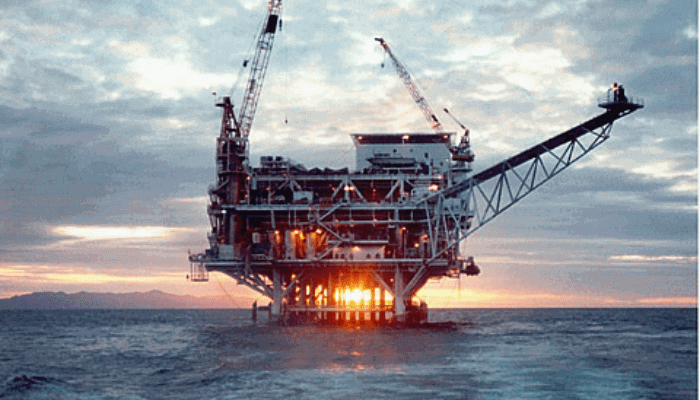
Traditional dry tree solutions include monopiles, jackets, and conductor supported platforms (CSP), as well as mobile offshore production units (MOPUs) based on either new build lift boats or converted jack-up rigs.
Subsea approaches also offer a proven alternative. In shallow water conditions, typically less than 130 metres, jack-up rigs have been used for decades to drill wells and install standard 13 5/8 inch and 18 3/4 inch subsea wellheads and trees. Liftboats can also support certain workover operations and are often used to deploy production or well test equipment. Despite the proven track record of these approaches, they’re often overlooked due to perceptions around cost or doubts that jack-ups can handle the full scope.
In reality, in many other parts of the world marginal fields rely on subsea trees to be commercially viable and more are installed or planned in waters between 20 and 130 metres than in deeper water. This approach is particularly effective for single-well tiebacks or short-life projects, where costs are lower and equipment can be recovered and redeployed.
Larger developments use it too. In regions like the UK, Norway, and Trinidad, it’s common to see four to eight-slot subsea hubs built around 18 3/4 inch trees and this approach could also be considered for Nigeria’s offshore developments.
Modular systems and deployment strategies
MOPUs can serve as a first step, enabling fast-tracked production while full-scale planning continues. They can be especially practical in shallow-water West African conditions where water depths and seabed profiles support simple mooring and where seasonal weather patterns offer long, uninterrupted work windows. MOPUs have many designs ranging from systems that moor with all the production equipment up next to a basic wellhead platform to converted jack ups with top tensioned production systems spanning the water column with no additional structural support.
For more permanent installations, a platform is likely to be the preferred solution. Depending upon the well count, something as minimal as a monopile platform with a small deck may suffice, or where there are more wells, or where a heavier topside is needed, a jacketed platform or CSP may be the best approach. A CSP in particular has benefits in that its structural efficiency translates directly into lower fabrication costs, more efficient production timelines, and easier installation.
With Nigerian yards delivering topsides and subsea structures locally, and simple designs enabling deployment by jack-up rigs or lift boats, modular systems offer a more economic route to production. Aquaterra’s own Sea Swift platform is a good example. Designed for speed and adaptability, it can be fabricated locally and deployed using regional marine assets.
That logic also extends into operations. With abundant solar resources across the region, powering platforms renewably has become a practical option. By integrating solar power, operators can reduce diesel usage, limit refuelling trips, and extend remote run-time, cutting both emissions and operational overhead. In Angola, for example, Aquaterra recently delivered a fully autonomous solar-powered platform for a major operator. Designed for complete off-grid functionality, it eliminated the need for fuel runs and reduced offshore personnel exposure, while still supporting stable production.
Reinventing the well
So far, the emphasis has been on boosting production and understandably so. But the energy transition is firmly on the radar. Many of the operators, partners, and regulators we speak with in Nigeria are actively considering what comes next, and how today’s offshore investments can support a lower-carbon future.
At the national level, Nigeria is already making progress on renewables. In 2022, renewable sources accounted for 24.5% of total power generation, ahead of countries like the US and Japan. Within the offshore sector, carbon capture and storage (CCS) is one of the most prominent long-term opportunities under discussion. Nigeria’s existing infrastructure and subsurface knowledge positions it well to take a leading role for the region. The work already underway to assess and understand today’s well stock, through analysis and re-entry, will directly impact the technical and economic viability of future CCS projects, while delivering near-term benefits.
A regional model in the making?
This combination of short-term pragmatism and long-term planning holds broader implications for the Gulf of Guinea region. If Nigeria can deliver economic, efficient, and sustainable offshore production, its approach may well become the regional template.
While the primary focus rightly remains on national development, there’s also growing potential for Nigerian firms to support offshore projects beyond their borders. The combination of operational experience, local fabrication, and engineering depth is creating a platform that could, over time, serve wider West African demand. That potential is still taking shape, but the ingredients are there.
Stewart Maxwell, Technical Director and Ben Cannell, Innovation Director, Aquaterra Energy