|
Getting your Trinity Audio player ready...
|
A new report has established that 11.2 million more women than men experienced moderate or severe food insecurity in sub-Saharan Africa in 2024.
This was revealed in an overview of The Status of Women in Agrifood Systems in Sub-Saharan Africa Report released on Tuesday by the Food and Agriculture Organization of the United Nations (FAO), the Natural Resources Institute of the University of Greenwich (NRI) and African Women in Agricultural Research and Development (AWARD) during the Africa Food Systems Forum in Dakar, Senegal.
The Report revealed that the region had seen a sharp rise in the prevalence of food insecurity over the last decade.
“According to the most recent data, around 64 percent of the population, with 11.2 million more women than men, are affected. Almost 40 percent of women aged 15–49 in sub-Saharan Africa are anaemic. Moreover, many women in the region face serious occupational health risks in agrifood systems, and gender-based violence is pervasive,” it said

The report noted that while women make up almost three-quarters (73%) of the workforce in food processing and services, the figure drops to only 3% in transport, highlighting the tendency for women to be concentrated in roles closely aligned with domestic and reproductive work.
“Meanwhile, more than 90% of employed women in the region work in the informal sector. Their work remains largely under-recognised and undervalued, which limits women’s visibility and influence”, the Report noted.
“In 28 of the 33 sub-Saharan African countries for which data on agricultural land ownership are available, men are more likely than women to own land or hold secure land rights. Systemic barriers limit women’s access to not just land, but also water and forests, which are necessary for their own and their family’s well-being and livelihoods.
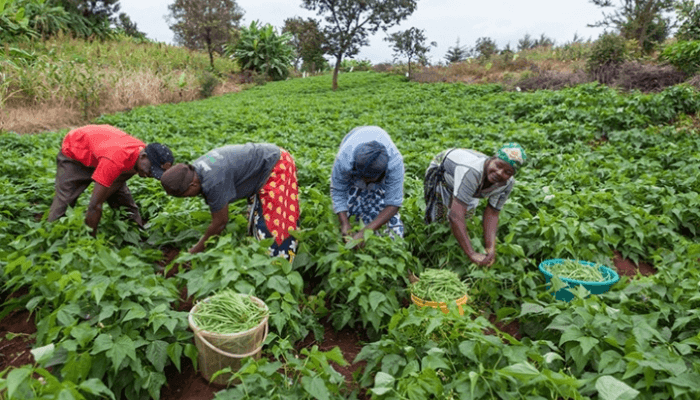
“In sub-Saharan Africa, approximately three out of four working women (76%) are employed in agrifood systems, and women make up 49% of the agrifood systems workforce. Within agrifood systems, women’s employment in off-farm segments – such as production, processing, distribution, consumption and packaging – is increasing across the region, rising to 29% in 2022 from 21% in 2005″, the Report added.
The Report highlighted that in sub-Saharan Africa, women are recognised as carriers of culture, knowledge and social cohesion within agrifood systems.

It suggested that greater investment in women’s empowerment could boost social justice and unlock inclusive growth, food security, and climate resilience.
Securing African women’s rights to natural resources and ecological repair are also essential for achieving gender equality, enhancing their agency and economic opportunities, and increasing their resilience to climate, environmental, health, and economic shocks”, the Report noted.
Presenting the Report in Dakar on behalf of FAO, NRI, and AWARD, Susan Kaaria, AWARD Director, emphasised that gender-transformative approaches could be effective in tackling the root causes of inequality and boosting women’s agency.
“Achieving gender equality and empowering women in agrifood systems is both a moral imperative and an effective policy choice. It is key to social justice as well as unlocking inclusive growth, food security, and climate resilience,” said Kaaria.
Abebe Haile-Gabriel, FAO Assistant Director-General and Regional Representative for Africa, said, “Agrifood systems across sub-Saharan Africa are powered by women’s informal, domestic, and subsistence work. Investments and enabling policies are needed to create more formal wage-paying jobs for women, and social protection programmes must be expanded to safeguard women’s livelihoods.”
Lora Forsythe, Associate Professor in Gender, Inequalities and Food Systems at NRI opined that “Positive change already exists in sub-Saharan Africa which is directly addressing the inequalities faced by diverse women in the region– such as collective action towards women’s land rights, addressing gender based violence, and leadership in agroecological movements and natural resource governance– while there is a long way to go, these changes can improve women’s livelihoods and wellbeing, as well as ensure women’s priorities are more meaningfully represented in decision-making,”