…Return of periwinkles, aquatic life, evidence of remediation success in some Ogoni creeks
A top official of the Hydrocarbon Pollution Remediation Project (HYPREP) has made it clear that funding constraints were no more the problem of the cleanup.
This declaration came to the open when a team of top journalists from the Zone ‘F’ of the Nigeria Union of Journalists (NUJ) embarked on inspection tour of cleanup sites in Ogoni, Rivers State.
Enuolare Mba-Nwigo, Head, Communications of HYPREP, who led the team round the sites also said most other constraints blocking cleanup progress have been reduced or eliminated due to what he said was the proactive responses from the Presidency.

One of such he mentioned was the request to help convert oil vandals to oil asset protection activists. He said some of those previously destroying oil assets now help to mount campaigns against such practices.
Before, the most strident complaint was lack of funds, which was said not to be out of lack of money but drawdown processes.
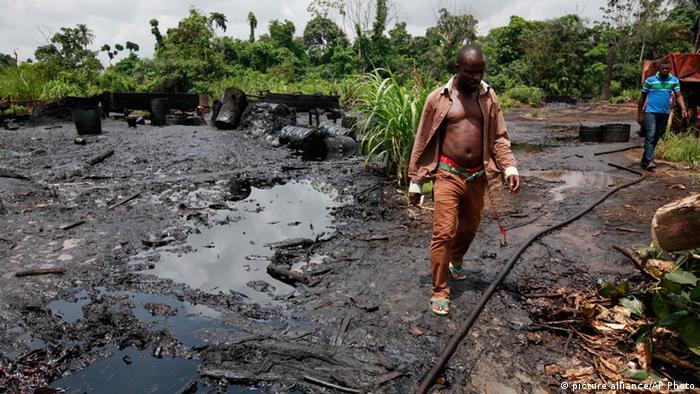
The United Nations through their Environmental Programme (UNEP) had carried out assessment of the pollution in Ogoni (four LGAs of Eleme, Tai, Khana and Gokhana). Upon comclusion, the UNEP in their 2011 Report recommended $1bn cleanup fund to be paid by the polluters to begin clean up exercise.
The takeoff delayed until 2016 when the Muhammadu Buhari-led administration created HYPREP and ordered them to start work. The initial activities were said to be very slow and difficult as a result of protocol, bureaucracy, and cumbersome drawdown processes.
The then SPDC that deposited the fund had always told newsmen that money was available but that it was about meeting the stringent procedures to access the funds. Many non-governmental organisations (NGOs) working with HYPREP as observers confirmed the drawdown headache matter.

Now, HYPREP says such funding difficulties were no more the problem. They chose the presence of dozens of newsmen around the region to make the clarification.
A major highlight of the tour is visit to mangrove areas to see how nature is returning to most Ogoni communities.
The team also visited the Mangrove Restoration site, Bomu, in Gokana LGA, where the HYPREP spokesman said remediation has since been concluded. He said as such, HYPREP has since commenced the restoration of mangrove to provide breeding ground for fish stocks and other marine creatures affected by oil pollution.
HYPREP explained that all three species of mangrove, the red, black, and white previously existing in the area but were lost to oil pollution would be restored bringing the area closer to what it used to be.
They also confirmed to journalists that ecological normalcy is gradually coming back to the Bomu waterfront as sea foods such as periwinkles and fishes which formed the mainstay of livelihood for the fishing community, are now returning since the environment is now conducive for breeding.
Also some people from the local community were sighted harvesting periwinkles around the area a development which the HYPREP spokesman attributed to the success of the ongoing remediation and restoration project.
The Spokesperson further confirmed that since some species such as the blood cockles or clam may not be able to return, HYPREP in partnership with the Institute of Oceanography University of Port Harcourt, is culturing the species and will soon reintroduced it into the restored mangrove.
Mba-Nwigo, who took the NUJ delegation on the tour of project sites, told the Journalists that HYPREP has provided water in 40 communities of Ogoni in line with the recommendations of the UNEP Report on the Clean-up of Ogoniland.
HYPREP also confirmed that of the targeted 560 hectares, they have covered 525 hectares with a total of 1.4m mangrove seedlings.
Also, workers were seen on site at the Ogoni Specialist Hospital located in Kpite Tai. The project valued at over N20bn is expected to provide access to specialist healthcare.
Beyond the Specialist Hospital, HYPREP told the Journalists that they were also strengthening primary health centres in the different communities of Ogoni to enhance access to quality healthcare delivery as part the recommended livelihood support to the people.
On the level of work done on the remediation of soil and ground water in Ogale Eleme, HYPREP confirmed that the contractor who has been on site for over one year and six months and has completed 80% of the job and is expected to handover a fully remediated site to the community by October 2025, subject to Nigerian Oil Spill Detection and Response Agency (NOSDRA) Certification.
Read also: HYPREP coordinator says three mangrove species restored in Ogoni land
The HYPREP Communications head further stated that the sites which were categorized into simple medium and complex sites were getting the desired attention as they said HYPREP has concluded work on most of the sites except the complex sites located in residential areas. He said these ones call for specialized and advanced technology.
Mba-Nwigo emphasized that HYPREP was implementing the twofold recommendations in the UNEP Report, remediation and provision of livelihood. He said this was expected to be carried out over a period 30 years, simultaneously.
He also said that beyond the provisions of training and starter packs to the people of Ogoni, HYPREP has also embarked on an aggressive sensitization and value reorientation to ensure that provisions were put to a judicious use for maximum effect in the communities.
HYPREP also noted that the ex-artisanal refiners were also engaged to drive sensitizations on the negative impacts of such illegal oil refining, a move which, according them, has yielded desired results.
The Centre of Excellence and Environmental Restoration Ogoniland, built by HYPREP as an incubator for environmental research, policy and innovation, which is now nearing completion as assessed during the inspection, is expected to be inaugurated before the end of 2025.
These visible milestones made the NUJ leaders to give thumbs up to HYPREP for level of work done in Ogoniland, and called on the Federal Government to replicate same in other parts of the region.
The leadership of the NUJ Zone F, South -South, expressed satisfaction with the level work done by HYPREP in the ongoing Clean-up of oil polluted sites in Ogoni land.
They made the position known at the conclusion of the on-the-spot assessment of some of the projects undertaken by HYPREP such as People Water Project in Kporghor Community and the Ogoni Specialist Hospital Kpite Tai, Mangrove Restoration Project in Bomu Gokana, Center of Excellence Bori in Khana and the soil and ground water remediation sites in Ogale Eleme LGAs which make up the Ogoni ethnic nationality in Rivers State.
Opaka Dokubo, National Vice President NUJ (Zone F South-South) who led the delegation and spoke to Journalists on behalf of the leadership, said that the inspection has also revealed that beyond the soil and ground water remediation, HYPREP is also doing a lot in the area of livelihood programmes as prescribed in the UNEP Report on the Clean-up of Ogoni.
He commended HYPREP, Federal Ministry of Environment, and the Federal Government for the remediation and restoration work in Ogoni and urged the people of the area to take advantage of the projects and programmes of HYPREP to ensure maximum impact.
Dokubo said that the cleanup of oil polluted sites in Ogoni was expected to serve as a pilot scheme. He called on the federal government of Nigeria to extend the exercise to other parts of the Niger Delta, as he said the entire region had continued to suffer the adverse effects of the decades of oil exploration.
Earlier, Nenibarini Zabbey, a professor, who is the HYPREP Project Coordinator, who was represented by another professor, Damian-Paul Aguiyi, Director Technical Services, tasked Journalists to investigate the activities of HYPREP and freely avail their findings to the public. He said this would help inform and sensitize the people on the activities of HYPREP and its success stories.
Zabbey also stated that HYPREP was open to constructive criticisms from journalists and other members of the public as it would also help keep HYPREP on track in its efforts to deliver the task at hand.
Water at Kporghor:
At the HYPREP Water Station Kporghor Community in Tai LGA which was the first port of call, HYPREP said the water facility which has been in use for over one year was providing portable water that he said met the World Health Organisation (WHO) specification for Kporghor and Gio communities. They are two communities which were the only core riverine communities. Tai LGA whose dominant occupation is fishing, has for decades, suffered severe loss of livelihood due to pollution of rivers.