|
Getting your Trinity Audio player ready...
|
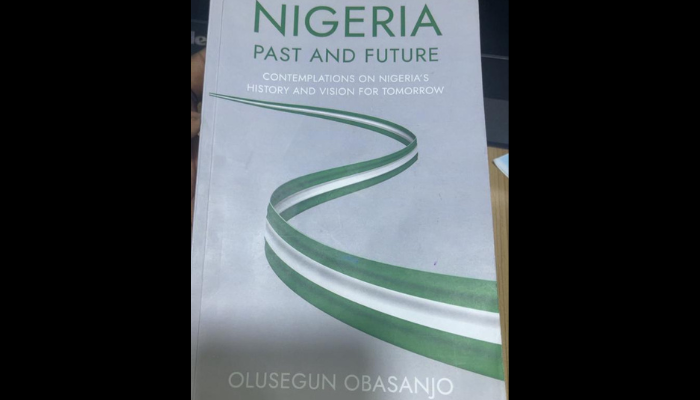
Author: Olusegun Obasanjo
ISBN: 978-978-62034-3-0
Number of pages: 228
Published in Nigeria 2025 by the Olusegun Obasanjo Presidential Library Foundation.

In Nigeria: Past and Future, Olusegun Obasanjo presents a candid and urgent examination of the country’s deteriorating political and judicial systems, highlighting the systemic failures that continue to hinder national progress particularly under the Fourth Republic. The former president leverages his extensive experience to diagnose systemic rot, especially within the judiciary and the electoral process, raising urgent warnings about the nation’s trajectory. The book blends history, personal insights, and sharp critique, illuminating Nigeria’s challenges and suggesting that its future depends heavily on reclaiming integrity and justice.
Obasanjo opens his analysis by lamenting the progressive erosion of the judiciary’s integrity. He traces this decline across Nigeria’s four major political eras but emphasizes the accelerated deterioration during the Fourth Republic. His tone is somber, reflecting a deep disappointment with a branch of government once respected as a pillar of democracy. He bluntly states: “The reputation of the Nigerian judiciary has steadily gone down… The rapidity of the precipitous fall… is lamentable.” This sets the tone for the entire book, which argues that the judiciary no longer serves justice but has become a commodity. This commodification, he warns, threatens Nigeria’s stability by substituting justice with “despair, anarchy, and violence.” Obasanjo’s wider argument that the rule of law in Nigeria has been critically undermined, and that this erosion has consequences that ripple through every other institution.
Obasanjo’s critique sharpens in his examination of Nigeria’s electoral system. He explicitly targets the Independent National Electoral Commission (INEC), especially under the leadership of Professor Mahmood Yakubu, whom he accuses of corruption and undermining elections since 2015. He argues that INEC’s actions have distorted the will of the people: “No matter what the will of the people may be, the Chairman of INEC since after the 2015 election had made his will greater and more important than the will of the people.” This scathing observation captures a crisis of legitimacy that taints every election, reducing them to charades rather than genuine democratic exercises. Obasanjo’s personal anecdote about visiting a state in the North adds a humanizing dimension to his critique, illustrating the tangible fallout of electoral manipulation on governance and public trust.
Building on his earlier points about the judiciary’s decline, Obasanjo moves to the judiciary’s complicity in electoral malpractice. He charges that judges frequently override the will of millions of voters, corruptly siding with political interests. “Most politicians believe in the will of the tribunal judges, court of appeal judges and supreme court judges,” he writes, highlighting a perverse inversion of democracy where court rulings often subvert electoral outcomes. Obasanjo’s belief that Nigeria’s electoral crises are not just about flawed processes but about systemic corruption within the judiciary that enforces these flawed results. His assertion that “two out of three, three out of five [judges] corruptly override the will of millions of voters” is a damning indictment of the courts, further underscoring the depth of institutional rot.
Perhaps the most explosive part of the book is Obasanjo’s direct accusation against the late former President Muhammadu Buhari. He alleges that Buhari colluded with the judiciary during his election challenges, implying a transactional relationship where judges received financial and career rewards in exchange for favorable rulings. “Buhari threw caution to the wind… financially, he topped it up with appointments for them no matter their age and their ranks,” Obasanjo asserts. This exposes what he views as a deeply entrenched patronage system, where political power brokers buy influence within the judiciary to secure their electoral victories. The implication is that this corruption at the highest level not only delegitimizes election results but also entrenches a cycle of impunity and cynicism among Nigerians.

In his concluding reflections, Obasanjo warns of the dire consequences of the commodification of justice and electoral manipulation. When “justice is only available to the highest bidder,” he argues, society is pushed towards “despair, anarchy, and violence” rather than “justice, order, and hope.” He paints a bleak picture of a country where courts are “courts of corruption rather than courts of justice,” where electoral losers are advised to seek redress from institutions fundamentally compromised. The result is a public disillusioned with democratic processes, vulnerable to instability and breakdown. This section serves as a call to action, urging Nigerians and their leaders to restore integrity to the judiciary and electoral processes if the country is to survive and thrive.
Nigeria: Past and Future is a powerful, if sobering, examination of Nigeria’s democratic deficits. Obasanjo’s narrative combines personal experience with broad political analysis, giving the reader insight into the complexities of governance in Africa’s most populous nation. The book’s strongest feature is its fearless critique of institutions that many shy away from criticizing so openly the judiciary and INEC. By laying bare their failings, Obasanjo forces readers to confront uncomfortable truths about Nigerian democracy.
However, the tone throughout is heavily critical, bordering on despair at times. While this underscores the gravity of the problems, some readers may wish for more constructive proposals alongside the diagnoses. The book’s primary value lies in its candid illumination of corruption’s corrosive effects.
Olusegun Obasanjo’s Nigeria: Past and Future is a vital contribution to discussions on governance and democracy in Nigeria. It offers a stark warning about the consequences of eroded judicial integrity and compromised elections. For anyone interested in understanding Nigeria’s political landscape, this book provides crucial historical context and unflinching analysis, even if its prognosis is grim. Obasanjo’s candid reflections demand attention not just from scholars and policymakers but from all Nigerians who care about the future of their country. If justice is reclaimed and institutions reformed, Nigeria’s future could still be brighter than its troubled past.