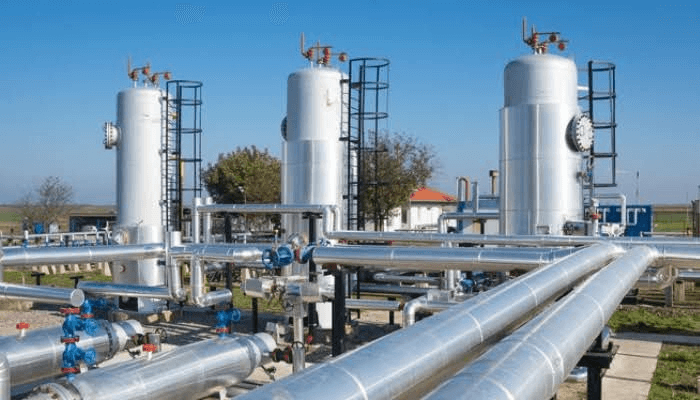
Nigeria’s energy sector has long struggled with a paradox: vast natural gas reserves on the one hand, but a persistent lack of infrastructure to process, distribute and utilise them on the other. For decades, limited gas processing facilities, inadequate storage and distribution systems, and scarce refuelling stations have hindered the adoption of gas as a cheaper, cleaner alternative to liquid fuels. This has kept households and businesses dependent on petroleum products, driving up costs and slowing the transition to sustainable energy.
In response to this challenge, President Bola Tinubu in January 2024 inaugurated the Governing Council of the Midstream and Downstream Gas Infrastructure Fund (MDGIF). Chaired by the Minister of State for Petroleum Resources (Gas), with Mr Oluwole Adama as Executive Director, the Fund was designed to close Nigeria’s long-standing infrastructure gap and align investments with the country’s energy transition, industrialisation, and energy security goals.
Since its establishment, MDGIF has already extended support to 16 companies, among them FEMADEC Energy Limited, Topline Limited, Asiko Energy Holdings Limited, Ibile Oil and Gas Corporation, Rolling Energy Limited, Nsik Oil and Gas Limited, Ant Energy Limited, Amari Energy Resources Limited, Sub-sea 9 Gas Limited, Deemah Integrated Services Limited, LNG Arete Limited, VTT LNG West Africa Limited, Geospectra Energy Limited, Waterdance International Concepts Limited, WishnefiskyGlobal Limited and Ssonic Petroleum Limited.
The projects supported under the Fund are at different stages of development, but many are already making measurable progress. FEMADEC Energy Limited, for instance, is rolling out compressed natural gas (CNG) refuelling stations across 20 universities. Five of these stations — at Obafemi Awolowo University (Osun State), Yakubu Gowon University (Abuja), Ahmadu Bello University (Zaria), Federal University of Technology (Owerri), and University of Uyo (Akwa Ibom) — have been commissioned, with more due before December 2025.

Other projects are moving at pace. Asiko Energy Holdings is building a terminal in Ijora, Lagos, with 5,000 MT LPG/Propane and 13,200 MT LNG storage capacity. Scheduled for commissioning in the third quarter of 2026, it will strengthen supply for both households and industries. Topline Limited is advancing a 5MMSCFD mini-LNG plant in Oghara, Delta State, designed to produce LNG for industrial and domestic use; commissioning is targeted for late 2025. Similarly, Ibile Oil and Gas Corporation has reached 60 per cent completion on its plan to build 15 CNG stations, expected to come online in the last quarter of 2025.
Rolling Energy Limited is constructing LCNG and CNG refuelling outlets at ten sites across Abuja, Kano, Kaduna and Borno States. With fabrication and installation in progress, delivery is anticipated in the first quarter of 2026. Nsik Oil and Gas Limited has also achieved 45 per cent completion of its CNG refuelling stations, with commissioning slated for the same period.
Delivering energy infrastructure on this scale requires significant lead times, given the complexities of procurement, design, regulatory approvals, financing, and coordination among contractors, regulators and host communities. Typically, these processes take years before projects move from planning to physical commissioning. Yet MDGIF has sought to compress these timelines. Its first six projects were launched in October 2024, and within months some were already operational. More schemes are scheduled to come online by late 2025 and early 2026, underscoring the Fund’s drive for early impact.
This accelerated pace is beginning to yield results. The expansion of CNG and LNG facilities is already lowering transport and energy costs for households and businesses, while reducing dependence on imported fuels. Industrial users are gaining access to more reliable and affordable gas supply, which supports growth and job creation. The projects also contribute to Nigeria’s energy transition by scaling up the use of cleaner fuels in line with global decarbonisation goals.
As the Fund scales its activities, its economic and social impact is expected to deepen. By widening access to gas, MDGIF is enhancing energy security, stimulating industrial output, and creating thousands of direct and indirect employment opportunities across engineering, logistics, manufacturing and services. The Fund has also emphasised robust governance, insisting on transparency, oversight and active partner engagement to ensure that every naira invested translates into visible benefits for communities nationwide.

“Our mandate is to turn potentials into prosperity,” said Executive Director, Mr Oluwole Adama. “We are focused on delivering high-quality gas infrastructure that supports cleaner energy use, drives industrial growth and improves livelihoods. We will sustain rigorous oversight, timely reporting and active engagement with partners so that every project delivers value for money and lasting impact.”
With early wins already visible and more projects approaching completion, the MDGIF is positioning itself as a catalyst for transformation in Nigeria’s energy sector. By bridging critical infrastructure gaps, the Fund is not only enabling gas to take its rightful place in the country’s energy mix but also laying the foundations for broader economic and social development.