The Lagos Chamber of Commerce and Industry (LCCI) and partners are actively courting investors to tap opportunities in Nigeria’s high-growth sectors such as energy, ICT, agriculture, manufacturing, health, and automobile.
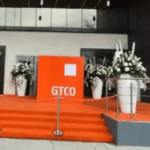
Business leaders, global institutions, and government officials who converged at the LCCI International Business Conference & Expo 2025, themed ‘Invest Nigeria,’ noted that tapping opportunities in these critical sectors could boost productivity, create jobs, and position the country as a gateway to Africa’s trillion-dollar continental free trade market.
Gabriel Idahosa, president of LCCI, described the gathering as a strategic convergence of investors, entrepreneurs, and policymakers determined to chart a new path for investment in Africa’s largest economy.
Idahosa stated that Nigeria is well-positioned to attract global capital seeking resilient, high-growth markets, citing the country’s ongoing reforms in fiscal and monetary policy, ease of doing business, and sector diversification as key steps toward improving investor confidence.

He urged foreign investors to explore opportunities across Nigeria, emphasing that the country’s untapped markets in agriculture, technology, and real estate hold significant potential.
He also called on foreign investors who are getting to know Nigeria to look beyond Lagos, saying, “Lagos is not the only game in town. There’s a lot more in the other 35 states.”
In his remarks, Abubakar Momoh, minister of regional development, highlighted the country’s economic growth and investment opportunities under President Bola Ahmed Tinubu’s administration, stating that Nigeria’s rich natural resources offer opportunities in sectors like agriculture, solid minerals, renewable energy, and ICT.
Momoh added that opportunities in these sectors have passed and are waiting to be harnessed.
He noted that the tax incentives, special economic zones, capital allowance for research and development incentives, capital-intensive projects, and granting companies in the qualifying industry a tax holiday of three to five years, extendable in some cases, as some of the measures put in place by the government to attract investors to the country.

He added that while incentives alone cannot guarantee the best of confidence, the federal government has also taken bold steps to strengthen institutions, streamline processes, and continue to join reforms that cut red tape, reduce bureaucracy, and improve Nigeria’s ease of doing business through the Presidential Enabling Business Environment Council (PEBEC).
The conference brought together diplomats from different countries, including Ireland, Rwanda, Tanzania, Germany, and Thailand, to explore Nigeria’s economic outlook and called for deliberate action to leverage these opportunities for mutual benefit and regional integration.
Christian Ebeke, resident representative of the International Monetary Fund (IMF), highlighted the need for more Foreign Direct Investment (FDI) and productive banking sector credit for these sectors, describing them as the engines of Nigeria’s next phase of growth.
Ebeke noted that Nigeria attracts relatively little FDI and ranks among the lowest compared to other markets in terms of credit extended by the banking sector to private businesses.
Read also: LCCI calls for stronger incentives, stable tax regime to boost FDI
He emphasised that addressing governance gaps, including corruption and weak government effectiveness, is crucial to improving Nigeria’s overall business environment.
Speaking on Nigeria’s macroeconomic outlook, Ebeke explained that although prices are not falling, the pace of increase is slowing, which provides some relief for businesses, underscoring the importance of administrative reforms to cut bureaucracy and enhance transparency in public administration as a way to attract and sustain investment.
Eghosa Osaghae, director general of the Nigeria Institute of International Affairs, highlighted Nigeria’s pressing need to strengthen its fundamentals if it hopes to position itself as a competitive investment destination.
Osaghae pointed to challenges such as electricity, security, and infrastructure as core issues driving away manufacturers and industries to neighboring countries like Ghana and Togo.
“We have challenges that also require us to position ourselves as an investment destination; we must address the fundamentals. Electricity, that’s key infrastructure, renewal, the kinds of things that we talk about all the time, these are fundamental to investment, whether it is domestic or foreign direct investment,” he said.
Osaghae cautioned against speculative investment, which he described as financialism, emphasising the importance of real sector-driven investment that supports manufacturing and industrialisation, and urged investors to think long-term, scale innovation, and commit to joint prosperity.
He described what many investors come into Nigeria with suitcases and portfolios and live with huge money as ‘financialism, drawing water from an empty well,’ a term from a book written by Bola Tinubu and Brian Browne, explaining that such investors are not interested in strengthening manufacturing or driving industrialisation, but rather chasing immediate gains.
“What Nigeria needs as an engine room for development is industrialisation and manufacturing, and these would be the pillars of the reforms, and that’s what we need. We want to be a productive economy, not a speculative economy, where everyone makes money for doing nothing.
“Nigeria no longer wants to be a client zone that is dependent on foreign-driven manufacturing and industrialisation. We don’t want to be driven by import substitution industrialisation. We want a homegrown industrial base,” Osaghae said.