



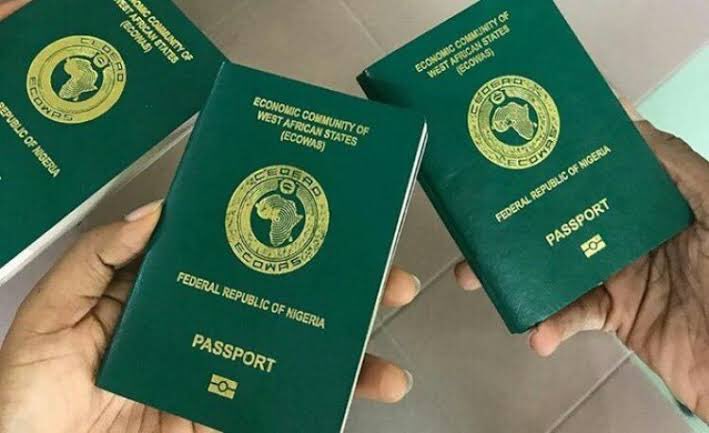
The Federal Government has justified its decision to double passport fees to N100,000 and N200,000, arguing the increase is essential to improve service quality, eliminate corruption, and speed up document processing.
The Nigeria Immigration Service (NIS) announced on Thursday that new charges will take effect from 1st September 2025 for passport applications within Nigeria. The 32-page, five-year passport will cost N100,000, whilst the 64-page, 10-year version will be priced at N200,000. However, fees for Nigerians applying from abroad will remain unchanged at $150 and $230, respectively.
Second price increase in 12 months
The announcement marks the second significant fee increase in just over a year. In August 2024, the government approved substantial hikes that saw the 32-page booklet rise from N35,000 to N50,000, and the 64-page version jump from N70,000 to N100,000. The latest increase effectively doubles those already elevated charges, marking a dramatic shift in the cost of obtaining Nigerian travel documents.
Speaking at a mid-tenure performance retreat in Abuja, Interior Minister Olubunmi Tunji-Ojo stated that the new pricing structure was designed to address long-standing issues with passport issuance, including lengthy delays and systemic extortion.

Read Also: Tinubu defends foreign trips, says “every handshake translates to prosperity for Nigerians”
“Our target is clear: within one week of enrolment, every Nigerian should have their passport in hand. Not just timely delivery, but quality passports that reflect our integrity as a nation,” he said.
The minister explained that under the previous system, applicants sometimes endured waits of up to seven months or were forced to pay bribes as high as N200,000 to expedite their applications. Tunji-Ojo shared his own experience of the flawed system, describing how he was compelled to pay substantial bribes even whilst serving as a senior government official.
“Even when I was chairman of the House Committee on NDDC, I had to pay hundreds of thousands to get a passport for my 12-year-old daughter. That era is over,” he said.
New technology and processes
The government also says it has invested in a centralised personalisation centre, which it claims is the largest of its kind in Africa. This facility can reportedly print passports five times faster than the previous system, with approvals now completed within 24 hours.

A key reform involves stripping Passport Control Officers (PCOs) of their authority to approve or delay applications, a change the minister described as crucial for eliminating corruption. “Some PCOs had so much power that they could decide not to print a passport until they were settled. That abuse of power ends now,” Tunji-Ojo declared.
The minister also emphasised that the reforms were designed to safeguard the integrity of Nigerian travel documents, citing security concerns about fraudulent passports. “My responsibility is not just to make passports available, but to ensure that anybody carrying it is a Nigerian. If you are not a Nigerian, you cannot carry it. It’s about our national integrity,” he said.
He referenced a case where a Ugandan woman was allegedly caught with a Nigerian passport she had purchased for $1,000, highlighting the security risks of the old system. According to the NIS, all passport applications must now be processed through the new centralised system, reducing direct human contact and aiming to restore credibility to Nigeria’s travel documents.





